
Directors' Update
Books, Books, Books

This month the Theodore Roosevelt Association bestows its book award – the most prestigious prize given to an author of a distinguished text about Theodore Roosevelt. The 2025 winner is Dr. Andrew Porwancher who wrote American Maccabee: Theodore Roosevelt and the Jews (Princeton University Press). At a ceremony at the Explorers’ Club in New York City, Dr. Porwancher will accept the award. Co-Director of the Center and the TRA’s Public Historian Michael Cullinane will discuss Dr. Porwancher’s research at the event. Here is a brief review of the book.
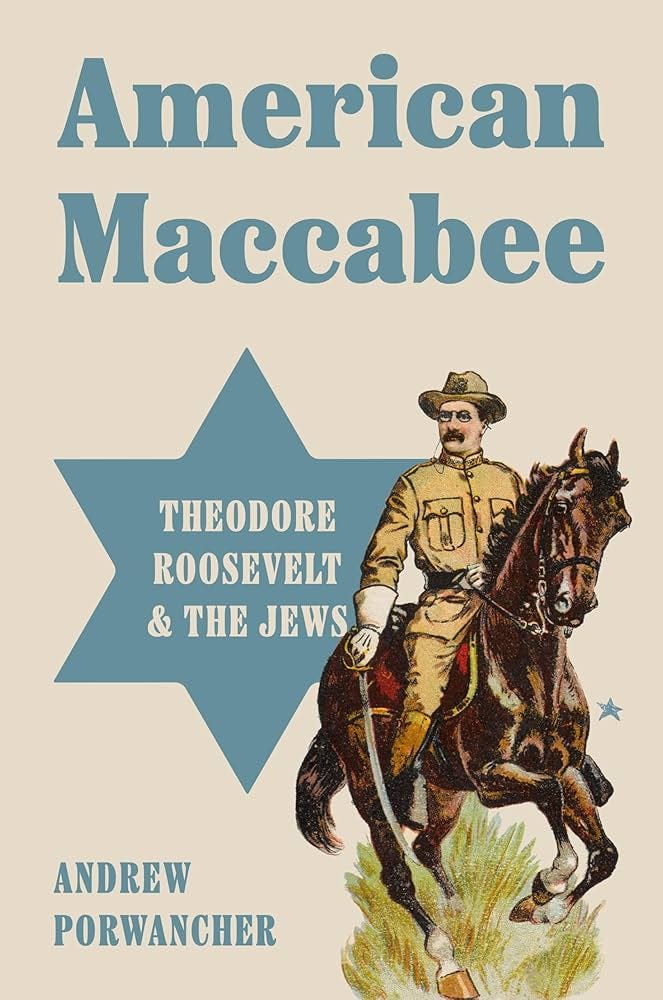
Theodore Roosevelt, like most presidents, has attracted intense scholarship. The obscure and the obvious have found coverage in books and articles. And yet, glaring omissions persist. Perhaps one of the greatest oversights has been Roosevelt’s relationship with Jewish Americans and Jews abroad. It seems particularly surprising given that Roosevelt, as president, appointed the first Jewish Cabinet officer (Oscar S. Straus as secretary of Commerce and Labor). That fact aside, Roosevelt had a complicated and often inconsistent take on Jews and Jewishness, which might explain the reluctance for scholars to take on the subject. We should be grateful that Andrew Porwancher has. His book American Macabee: Theodore Roosevelt and the Jews fill the gap and does so without eschewing the many complexities inherent in the period and the man.
Porwancher aptly points out that Roosevelt’s life did not “comprise an endless succession of Jewish matters,” rather Roosevelt’s views and policies intersected in certain ways and at certain times that had a substantial influence on Jews (14). By acknowledging the peripheral nature of Jewish issue in Roosevelt’s life and presidency, Porwancher does not diminish its significance. Jewish advisors like Oscar Straus had as much sway as recognizable confidants like Henry Cabot Lodge, and more authority on certain issues. New York City banker Jacob Schiff has often been subordinated in studies of Roosevelt. Biographers readily tell about J. P. Morgan’s relationship with the president, whereas Schiff had a considerable pull and spoke frequently to Roosevelt about economic matters. Porwancher’s coverage of Roosevelt’s rhetoric might remind readers of Gary Gerstle’s impression of Roosevelt as being a “divided character,” a man who preached about the virtue of egalitarianism while criticizing the hyphenated American. This has become a consensus view that fittingly accounts for Roosevelt’s civic ideology. He could vacillate between xenophobia and xenophilia. With Jews, Porwancher presents him as a leader who expressed philosemitism at times and yet repeated common antisemitic tropes.
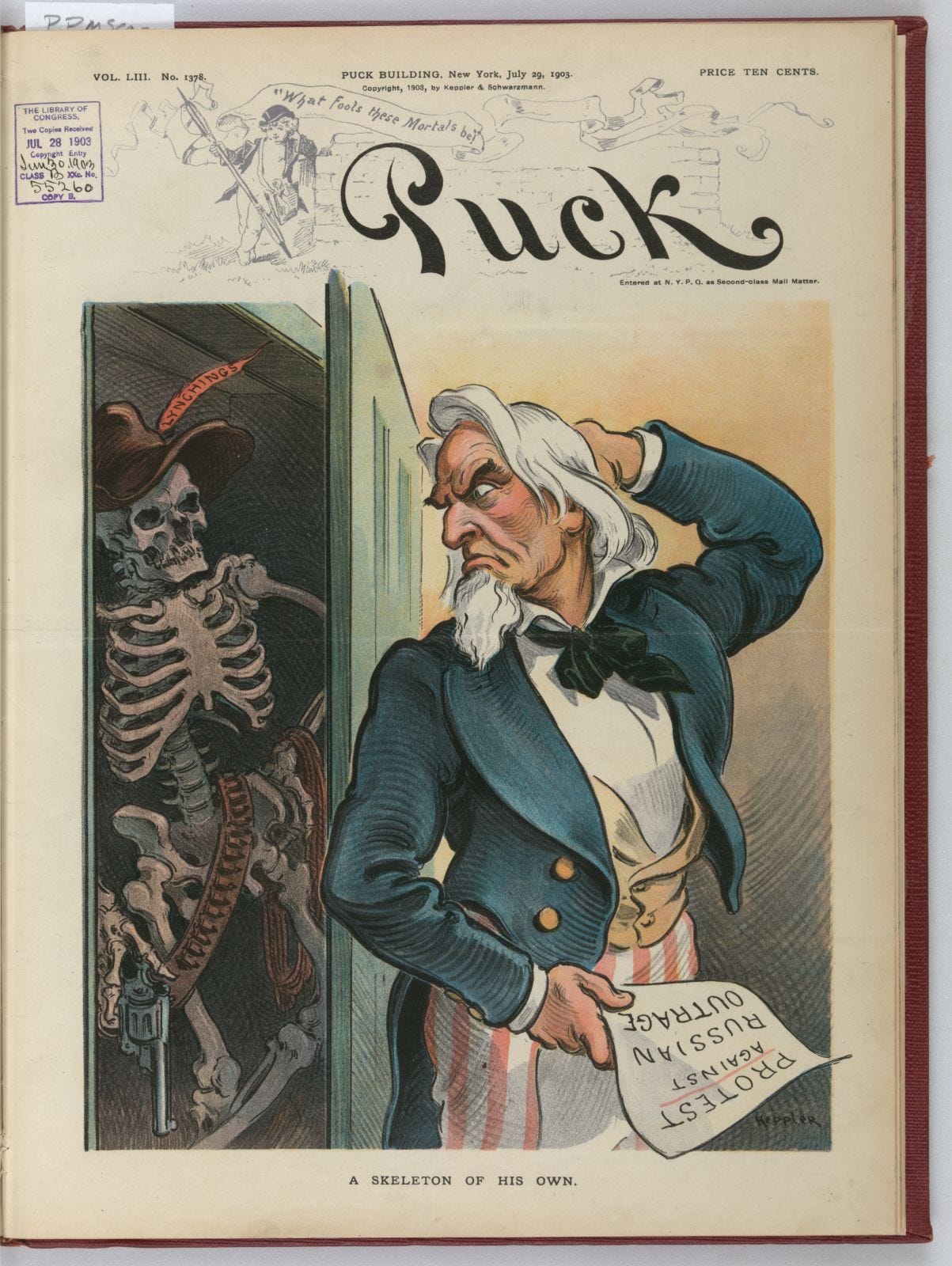
The key to unlocking Roosevelt’s swing between these two sentiments, according to Porwancher, is domestic politics. Above all, Roosevelt was a political animal attuned to identity politics. He courted the Jewish vote throughout his career, from the New York Assembly seat he won in 1882, to the New York governorship in 1898, and the 1904 presidential election. He avoided an all-out rebuke of the Russian pogroms for fear that the tsar would criticize the political violence against African Americans. Indeed, the Russian authorities would issue a stinging attack on lynching in the American South in response to Roosevelt’s scolding. The tsar’s deplorable human rights record tainted Roosevelt’s view of the Russian Empire and it had geopolitical implications. When Roosevelt came to mediate the Russo-Japanese War, he saw the Russian Empire as a dwindling serfdom incapable of caring for its people or modernizing a multi-ethnic population.
The Jewish press is a rich source for Porwancher. Roosevelt had a strong command over many journalists – a detail not lost in this book. Managing the media led to Roosevelt’s electoral and legislative successes. His positive impression among Jewish-Americans owed much to the newspapers. Editors were quick to compliment Roosevelt for his inclusion of Jews in the Rough Riders regiment. Occasionally, the press complained that Roosevelt acted out of political expediency but the dailies also credited him with speechmaking that favored the Jewish community.
Porwancher is thorough if not comprehensive. American Maccabee covers several important episodes, but it leaves room for further research. The title of the book derives from the Jewish revolutionaries that made Hanukkah famous. The Maccabee is intended to represent the martial spirit of the Jewish people, a characteristic that Roosevelt had applauded. The concept of a martial spirit originates with racial hierarchies and the sociological studies of Roosevelt’s time. The British revered Sikhs and Irish people for martial qualities and celebrated their ability to fight as soldiers. Roosevelt made a similar assumption about the Maccabees, conferring attributes from an ancient, legendary battle upon an entire community of people. Roosevelt’s ideas of race and civilization get some coverage in Porwancher’s book, although not as much as one might expect given the title. Of course, studies about scientific racism and the confounding nature of race and progressivism can be found elsewhere, but they rarely explore Jewishness exclusively. The intersection of religion and race in the mind of Roosevelt remains an interesting avenue of exploration.
Likewise, during Roosevelt’s lifetime, the Great War looms as the most important period for the Jewish people. The Balfour Declaration and the growth of Zionism in this era stretch beyond Porwancher’s reach. His book ends when Roosevelt leaves the White House, however, the ten remaining years of Roosevelt’s life are a crucible of racialized thinking and nation building. Tucked away in the endnotes of the epilogue, Porwancher hints that Roosevelt’s post-presidential career deserves a book all its own. Given how well-written and researched American Macabee is, the community of Roosevelt scholars and enthusiasts wait patiently for this follow up.
Thoughts at the Theodore Roosevelt Center itself have also turned to books, though in a slightly different manner! Those of our followers who have not yet had the opportunity to visit us here in Dickinson, North Dakota, may be unaware that in addition to the digital library that the Theodore Roosevelt Center is creating (and which serves as our most significant function), we also have a developing physical research library. Over the years the Theodore Roosevelt Center has accumulated a number of books, both from our own purchases and from donations of collections. Additionally, when we relocated to our current space in 2022, we were able to ingest the Special Collection of Roosevelt-related materials from Dickinson State University’s Stoxen Library. Altogether, we currently have a collection of over 1000 volumes dealing with Theodore Roosevelt, the Gilded Age and Progressive Era, and North Dakota topics (though with a fair number of duplicates of some titles in there). We keep a portion of these books in or near our offices for internal research purposes, but most of these are available for use by students, members of the public, and any visitors who come our way.
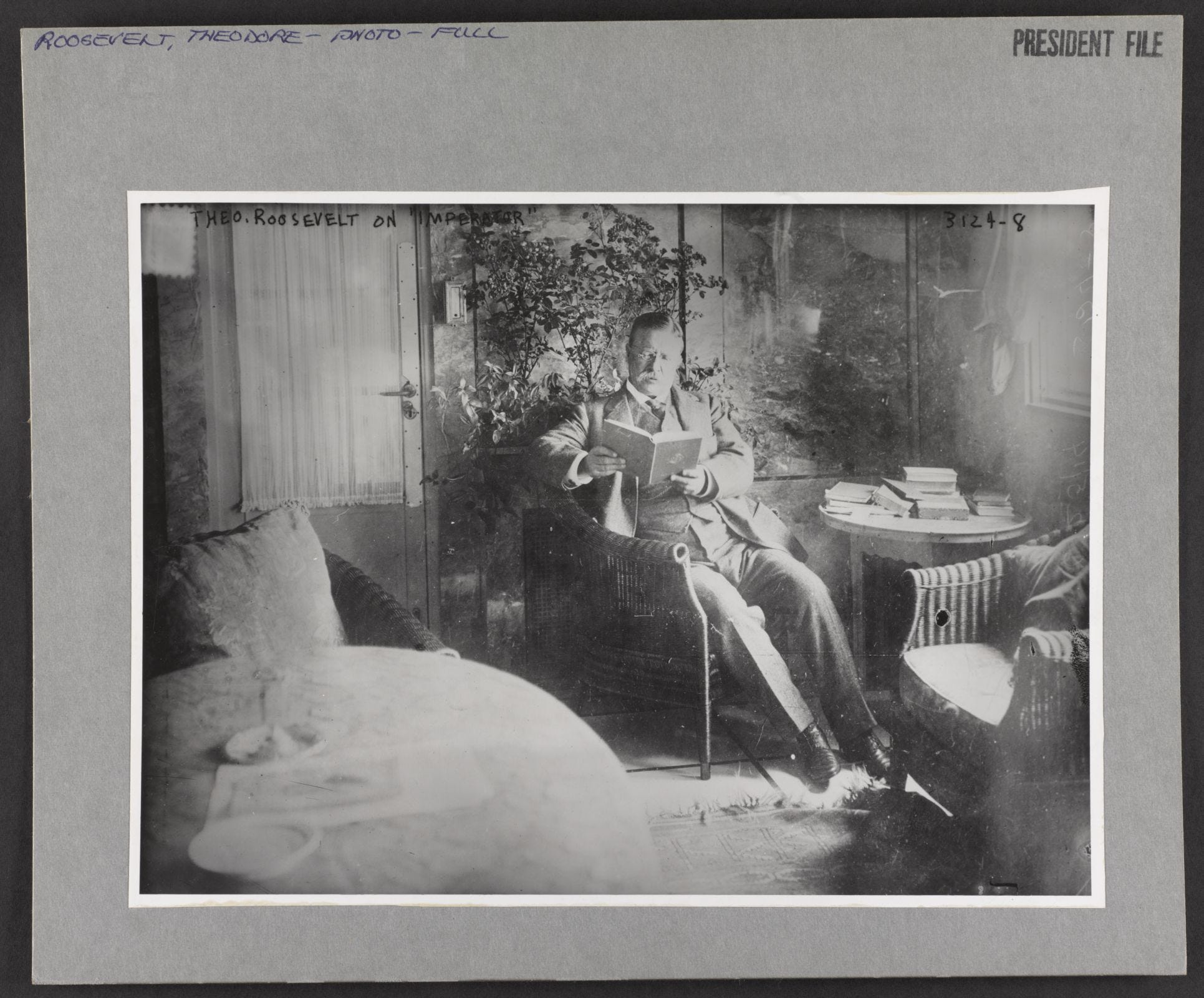
The reason for our current consideration of our physical book collection is the addition of a number of new volumes—we were generously sent a collection of a hundred or so volumes from Louisiana State University at Shreveport’s International Lincoln Center, and the need to add these to our inventory has also given us the opportunity to address several other collections that have come in. Since we’ve met our cataloging goal for the year (as mentioned in the previous Directors’ Update), we have a bit more freedom currently to get our physical collections in order, and we’re considering the best way to handle these volumes and artifacts. While we have a rough spreadsheet of books we’ve created for in-person use here at the TRC, we’re currently exploring ways that we may be able to ingest our collections into our content management system for easier searching and presentation to visitors! This doesn’t mean digitizing the books themselves, but rather creating records for them to record metadata like you might see about books in your own public library—title, author, publication date, condition notes, number of copies, and location. We especially want to make a list of our holdings available to people who are interested in visiting us. While we are primarily a digital library providing access to primary sources, we want people to know we also have a wealth of secondary sources on Theodore Roosevelt and his era, and are more than happy to receive visitors looking to do research!
We anticipate receiving additional books from new collections in the near future, so we’re hoping to get this situation figured out quickly! Keep your eyes peeled for a listing of books we have in our collections soon. In the meantime, if you’re interested in visiting us, reach out to us at dsu.trcenter@dickinsonstate.edu or through our Contact Us form - and we’ll get you our current listing of the materials we have available for public use!