
Friday Fun
Mustache March: Theodore Roosevelt and Facial Hair

by Rachel Lane
In honor of Mustache March, a tradition in which members of the US Air Force grow facial hair in memory of triple-ace Colonel Robin Olds, this Friday Fun post will be a deep dive on Theodore Roosevelt and facial hair. We’ll look not only at facial hair he sported but also examine some of his opinions on other men’s facial hair.
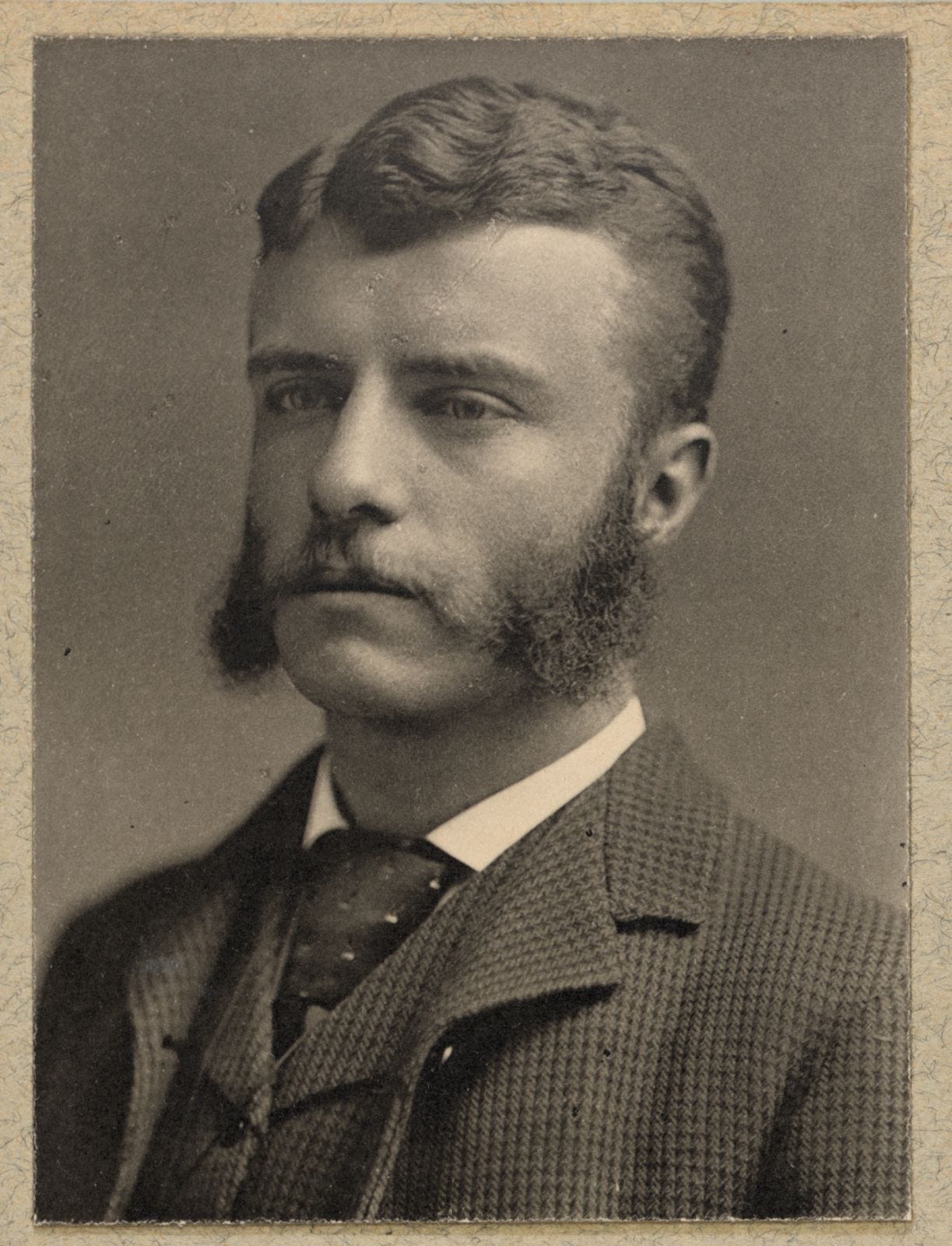
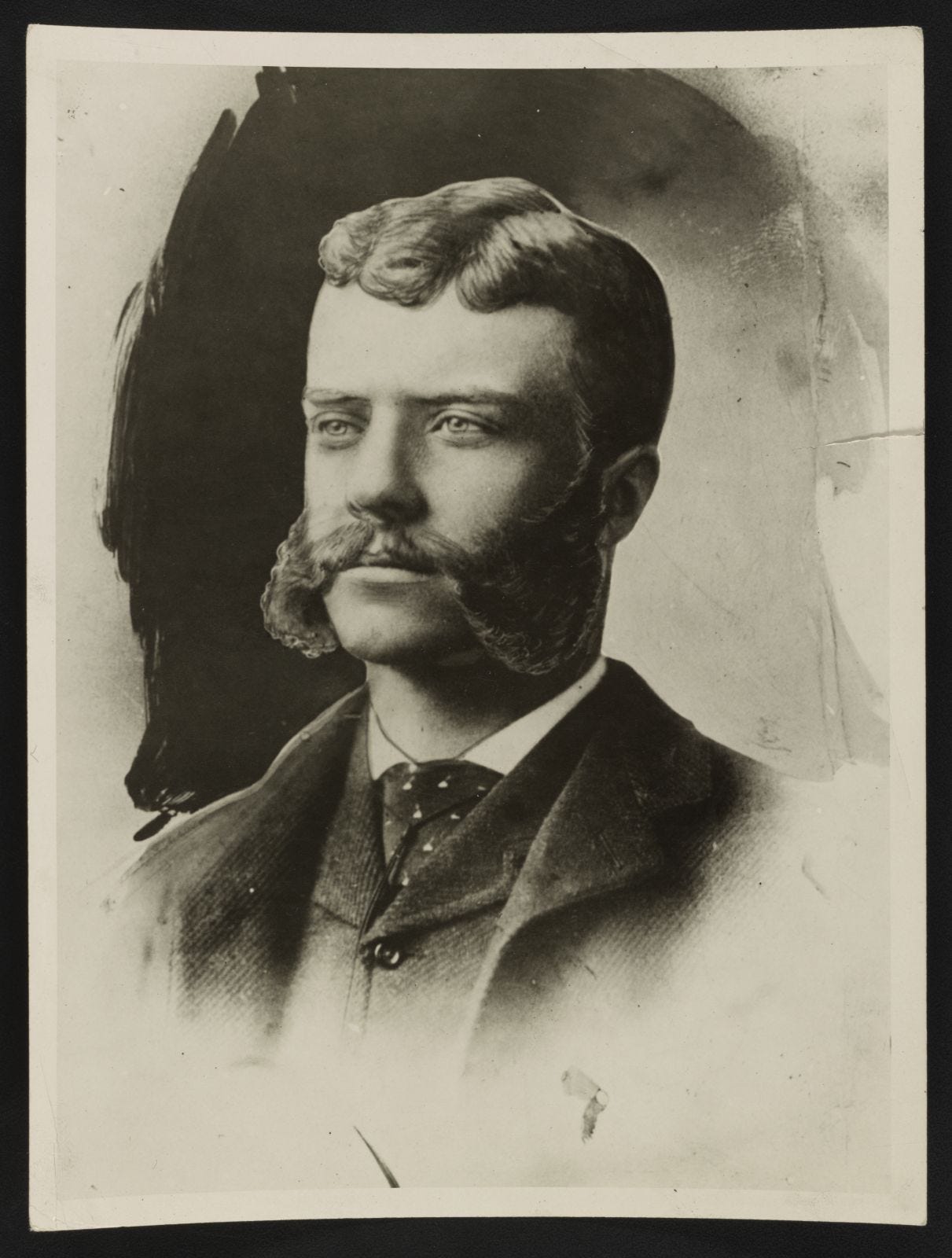
Before donning his distinctive moustache, like many young adults, Roosevelt experimented with different types of facial hair during college and his early twenties. We’ve included photographs of his various looks in chronological order below, including his thick mutton chops from the early 1880s!
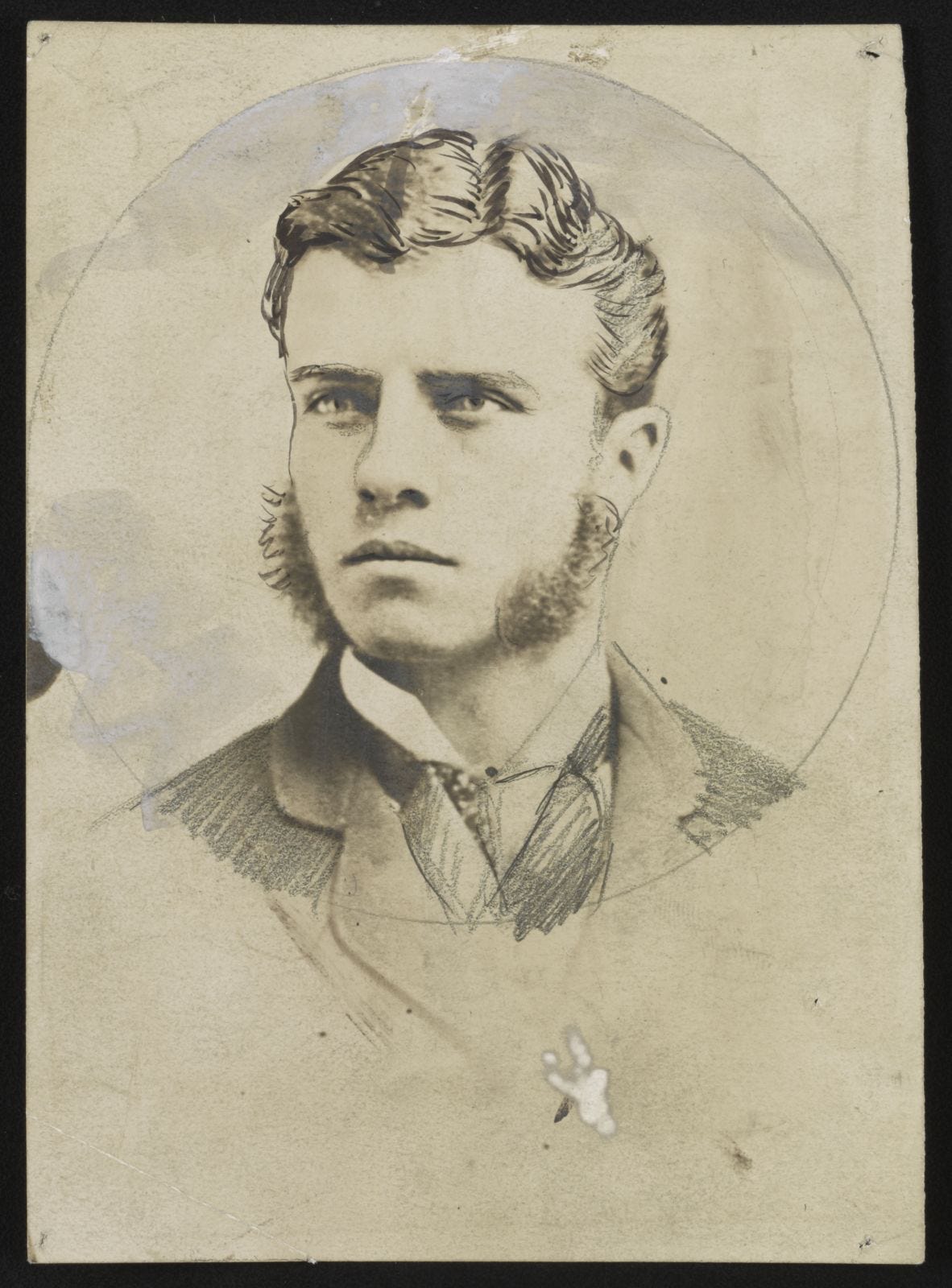
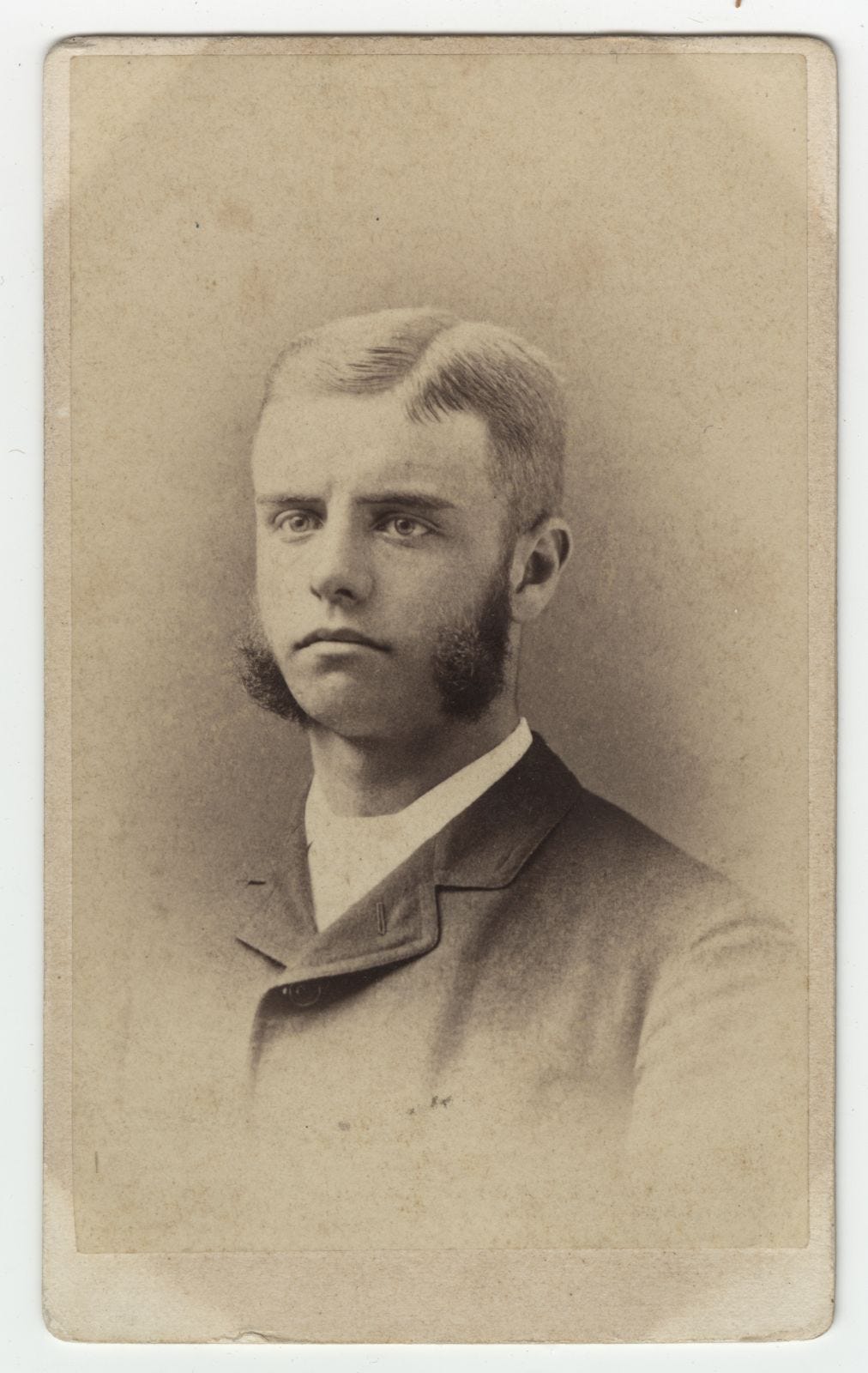
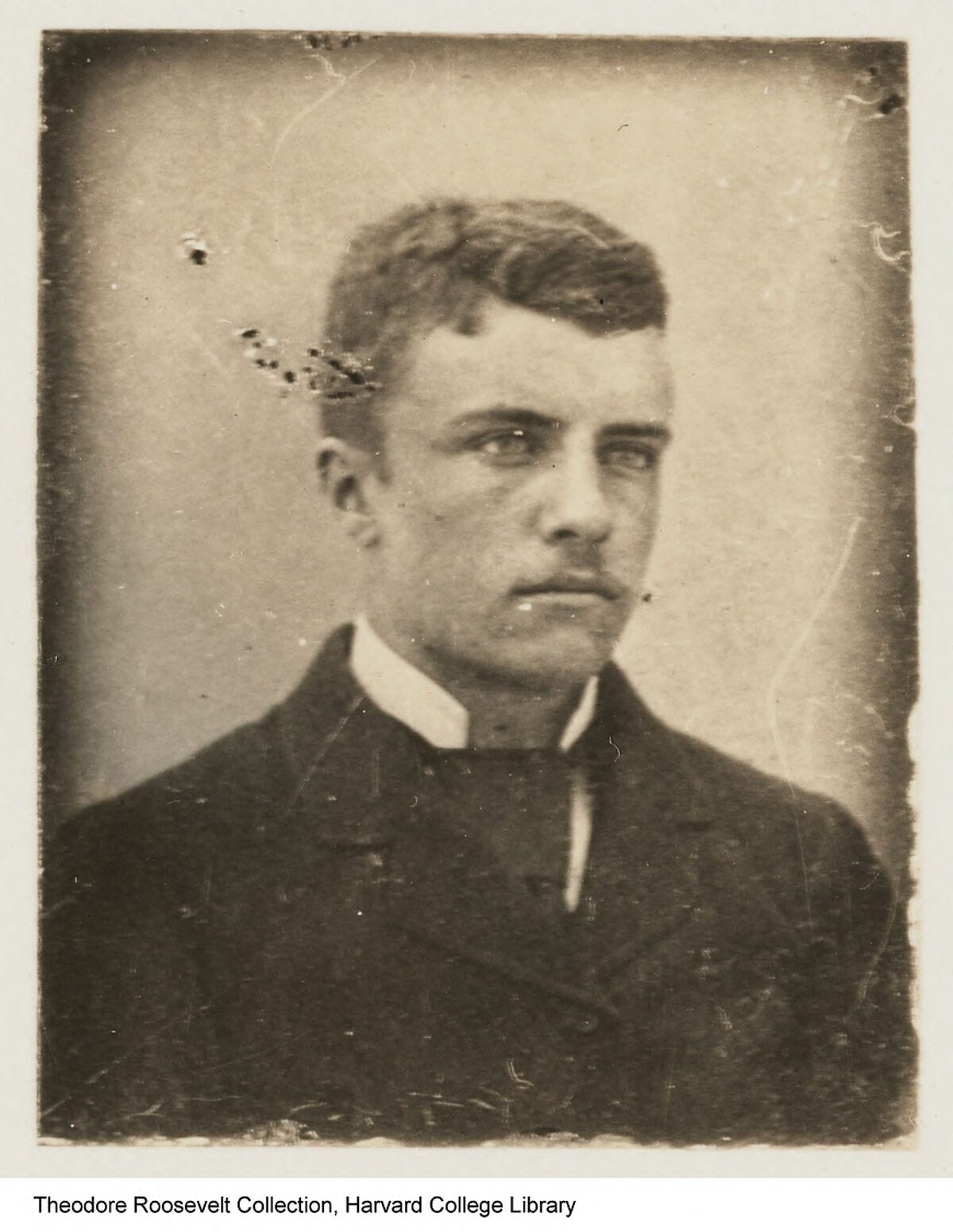
Roosevelt even tried the clean-shaven look in college, devoting a good portion of a letter to his sister Corinne in May 1878 talking about his lack of facial hair: “At last the deed is done and I have shaved off my whiskers! The consequence, I am bound to add, is, that I look like a dissolute democrat of the fourth ward. I send you some tintype I had taken for distribution among my family and friends.”
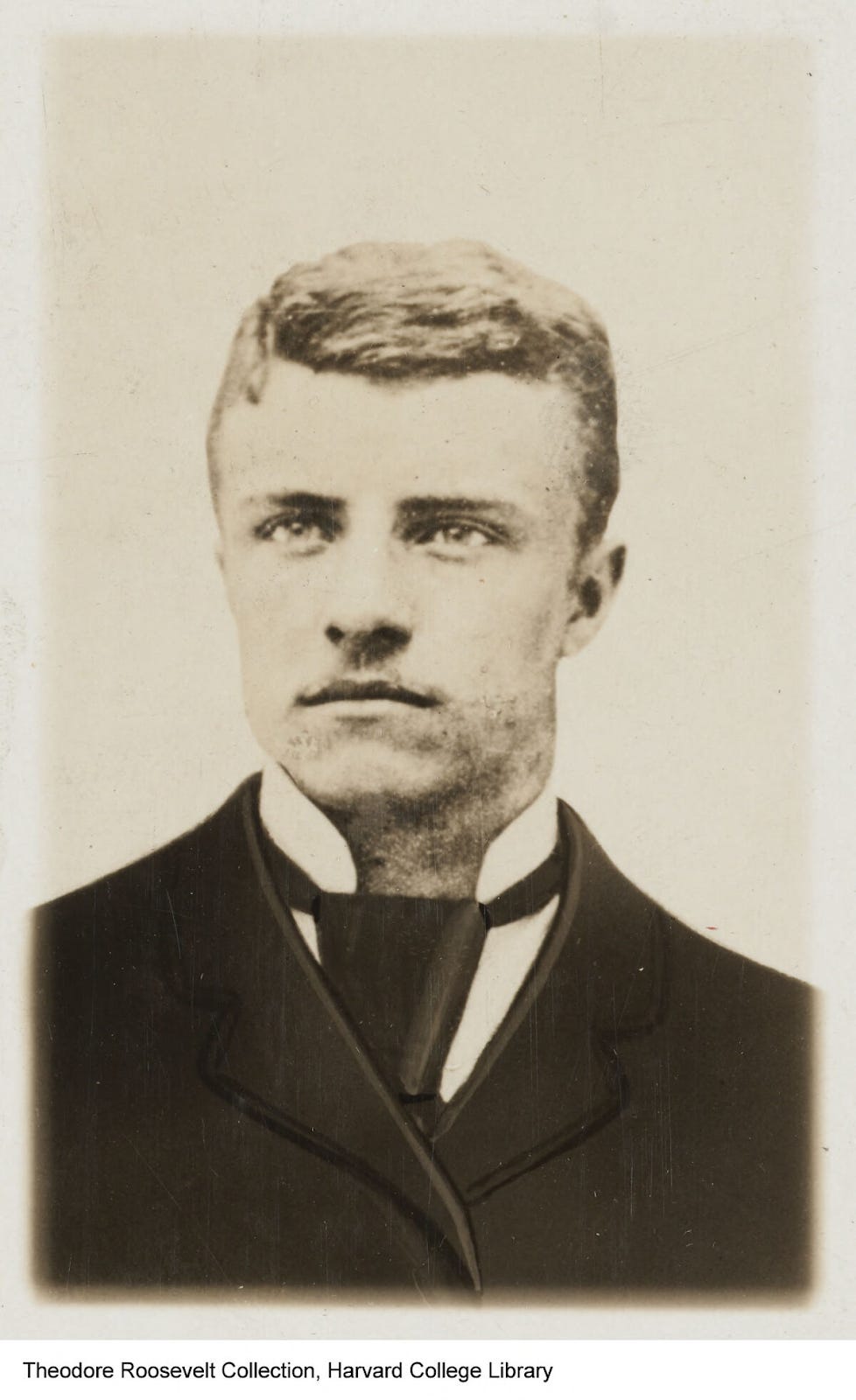
Roosevelt liked the front views, one of which is included above, writing, “The front views are pretty good; although giving me an expression of gloomy misery that I sincerely hope is not natural.”
He was not as sure about the side views, one of which is included below: “The side views do not resemble me any more than they do Michael Angelo or John A. Weeks.”
By 1883, Roosevelt appears to have settled on his mustache—a particular type of mustache common in the late 1800s known as “the walrus.” In case you don’t immediately know what a “walrus mustache” is, we’ve included a definition from an advertisement for Colgate’s Rapid-Shave Cream in 1923 below.
“Whiskers, like furniture, show the influence of certain periods. The Buffalo Bill period, the Paint-Brush period, and the Weeping Walrus period are typical. The walrus mustache was notable for its dichotomic droop. In addition to covering the wearer’s upper lip, it trailed down along the sides of his mouth, like vines dangling from a window-box, and came tardily to a conclusion in the wide, open spaces.”
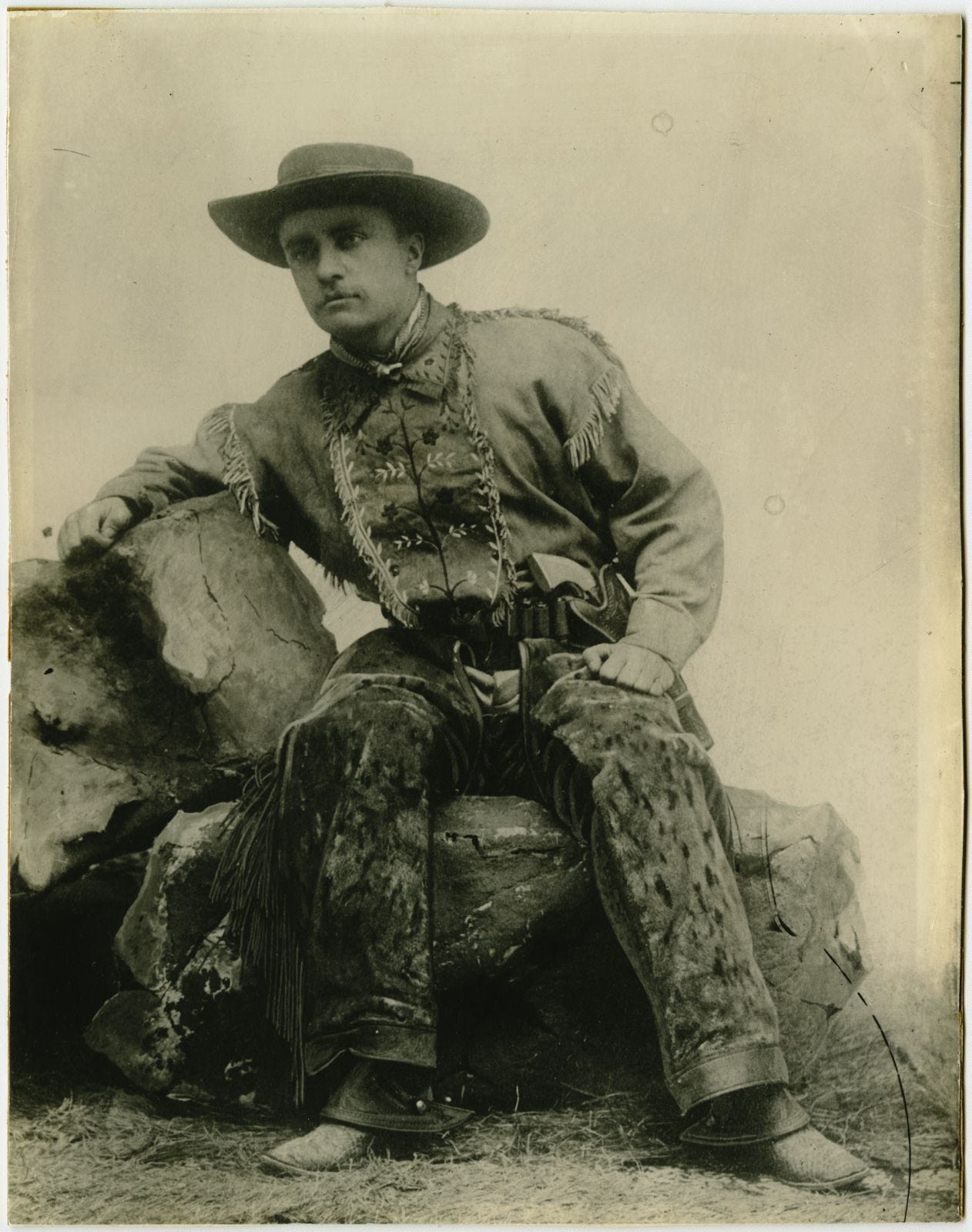
We’ve also included two photographs from 1883 of Roosevelt with his mustache in case you haven’t seen them before so you can get a sense of what a young mustachioed Roosevelt looked like.
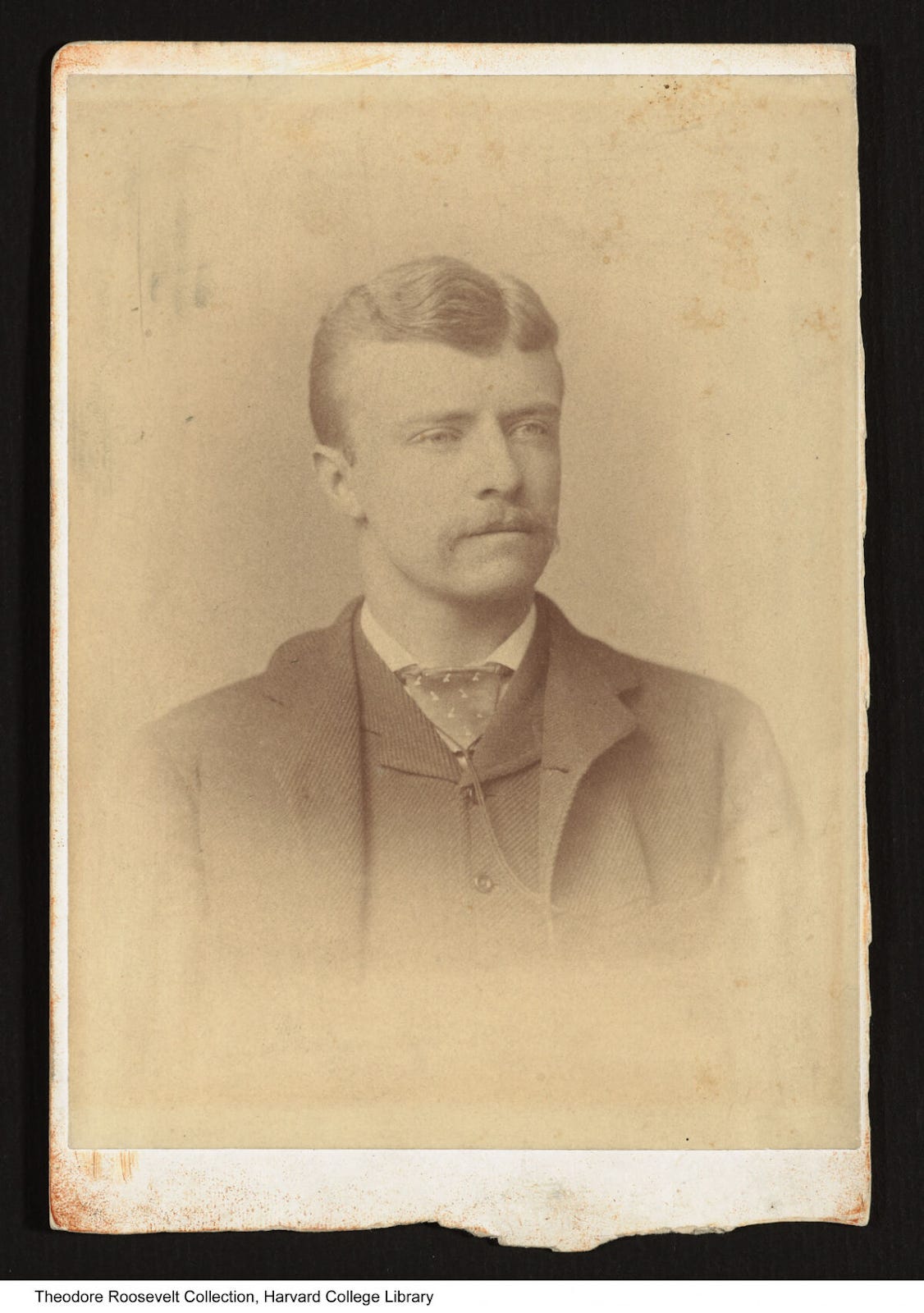
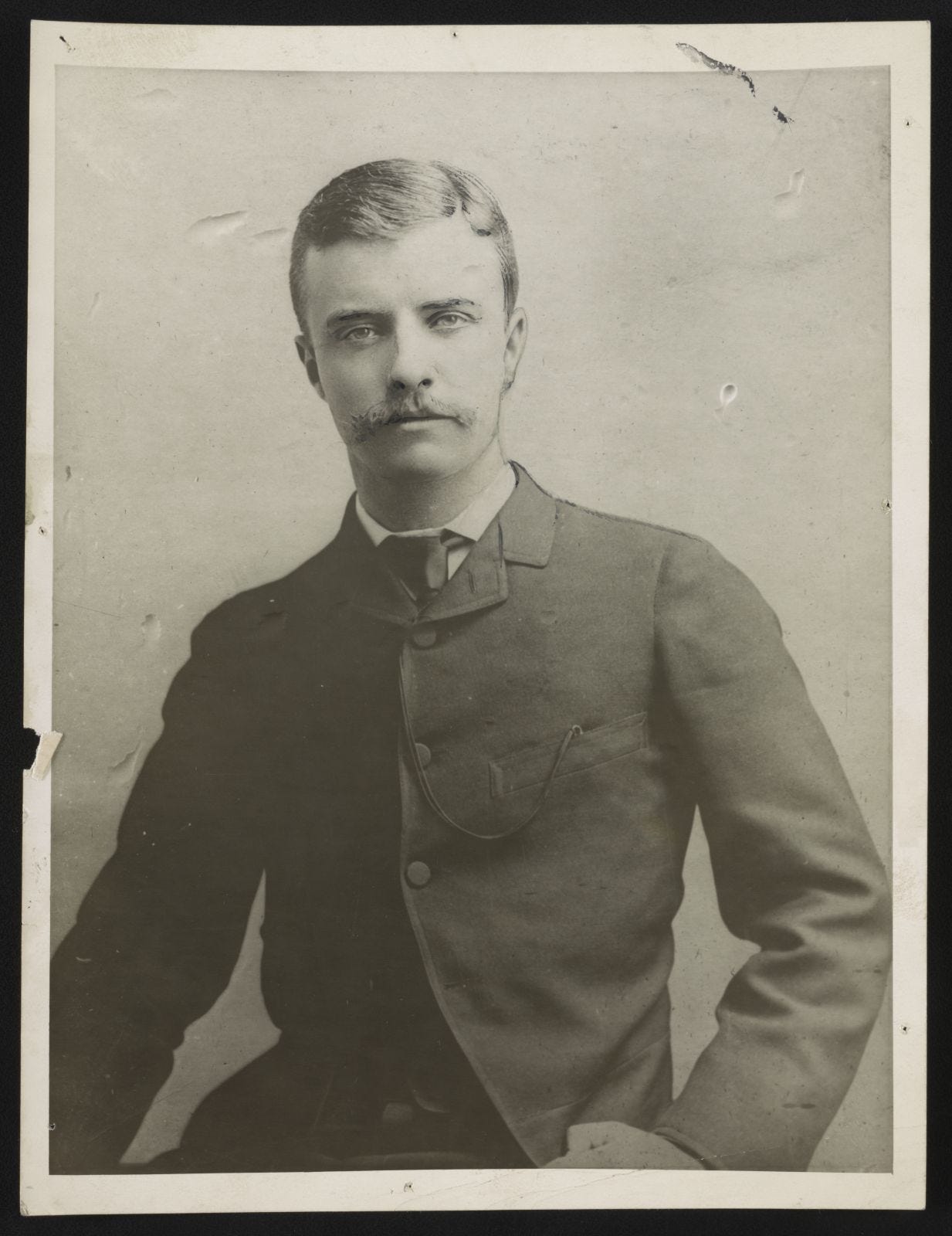
Once Roosevelt decided on the mustache, he didn’t turn back. His mustache would become a distinctive part of his political persona, as exemplified below with one of the earliest well-known portraits of him as a politician.
When he became president, Roosevelt joined a long line of presidents from his hero, Abraham Lincoln, the first bearded president, that sported facial hair in the late 1800s and early 1900s. From 1861 when Lincoln was in office to 1913 when Taft left office, only two presidents didn’t have facial hair during that time (Andrew Johnson and William McKinley).
The almost ubiquity of facial hair in the White House, which hasn’t occurred since Taft left office in 1913, was indicative of some societal beliefs at the time, suggesting that the ability to grow a beard demonstrated the right to rule.
Although beards have long been considered an example of masculinity, during the Gilded Age and Progressive Era, facial hair took on “new political urgency: beards indicated which bodies fit within bounds of political citizenship, and, just as importantly, which bodies did not,” as Sarah Gold McBride, author of Whiskerology: The Culture of Hair in Nineteenth-Century America, notes.
We have no indication that Roosevelt wore a mustache to demonstrate his manliness—though today it is seen that way—or that he adhered to the societal belief that the beard was a symbol for “why white men were both superior, and crucially, best-suited to political and social rule,” to quote Gold McBride’s summation of the cultural philosophy.
If anything, Roosevelt might have felt the opposite! Abraham Lincoln was one of his heroes, a man he looked up to—and Roosevelt wasn’t a huge fan of Lincoln’s beard. As president, he thanked Emily Tuckerman for her Christmas present of two photographs of Lincoln, adding, “How I wish Lincoln had shaved his face during the Presidency as he did during the time of the Lincoln and Douglas debates! But the Homeric lords, also, in reality wore ‘chin whiskers’!”
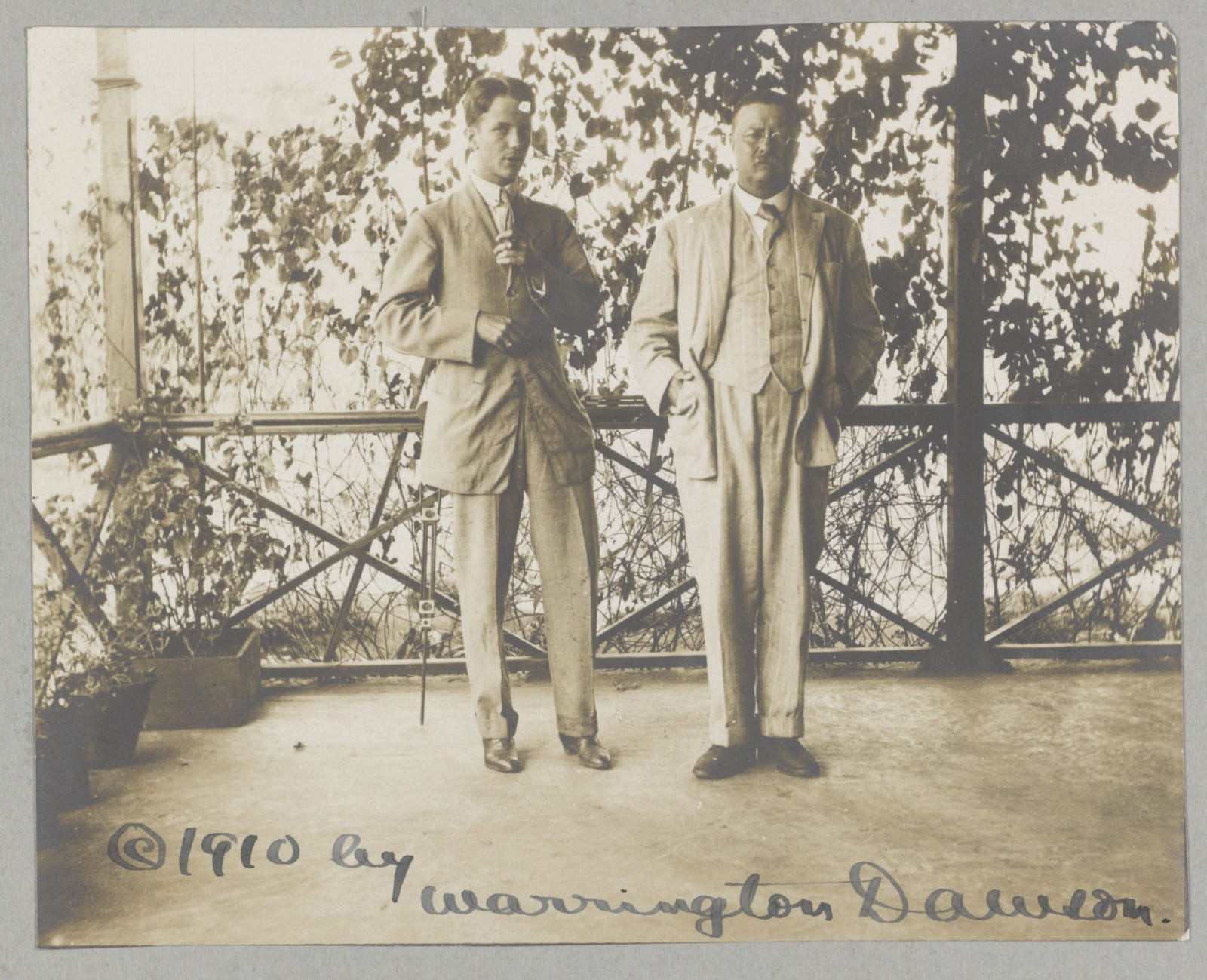
In addition to Lincoln, Roosevelt also commented on his son’s attempt to grow facial hair in a letter when Kermit tried to follow in his father’s footsteps and grow a mustache during the Smithsonian-Roosevelt expedition in Africa. Roosevelt wrote to his daughter Ethel, “[H]e is also growing a mustache — but as yet you have to be rather attentive in order to see it plainly.”
We think we may have found a picture of this elusive mustache (see below)—and Roosevelt is right that it is very faint. Let us know if you agree!
We’ll conclude this look at Roosevelt’s facial hair with a quotation about his mustache carved in Mount Rushmore, which measures twenty feet in length! When justifying to Congress the need for additional time and money to complete Mount Rushmore, sculptor Gutzon Borglum quipped, “Was God a creative artist or a bureau engineer? A million years from now, who is going to care how many hours it took to carve Teddy Roosevelt’s mustache?”
This is fabulous! Great job, Rachel! The chronological photos are splendid! I'm not sure I would have recognized TR in the side view from 1878, but I am so glad you included it. Thanks for an illuminating and amusing post!