Friday Fun
Theodore Roosevelt and Picnics

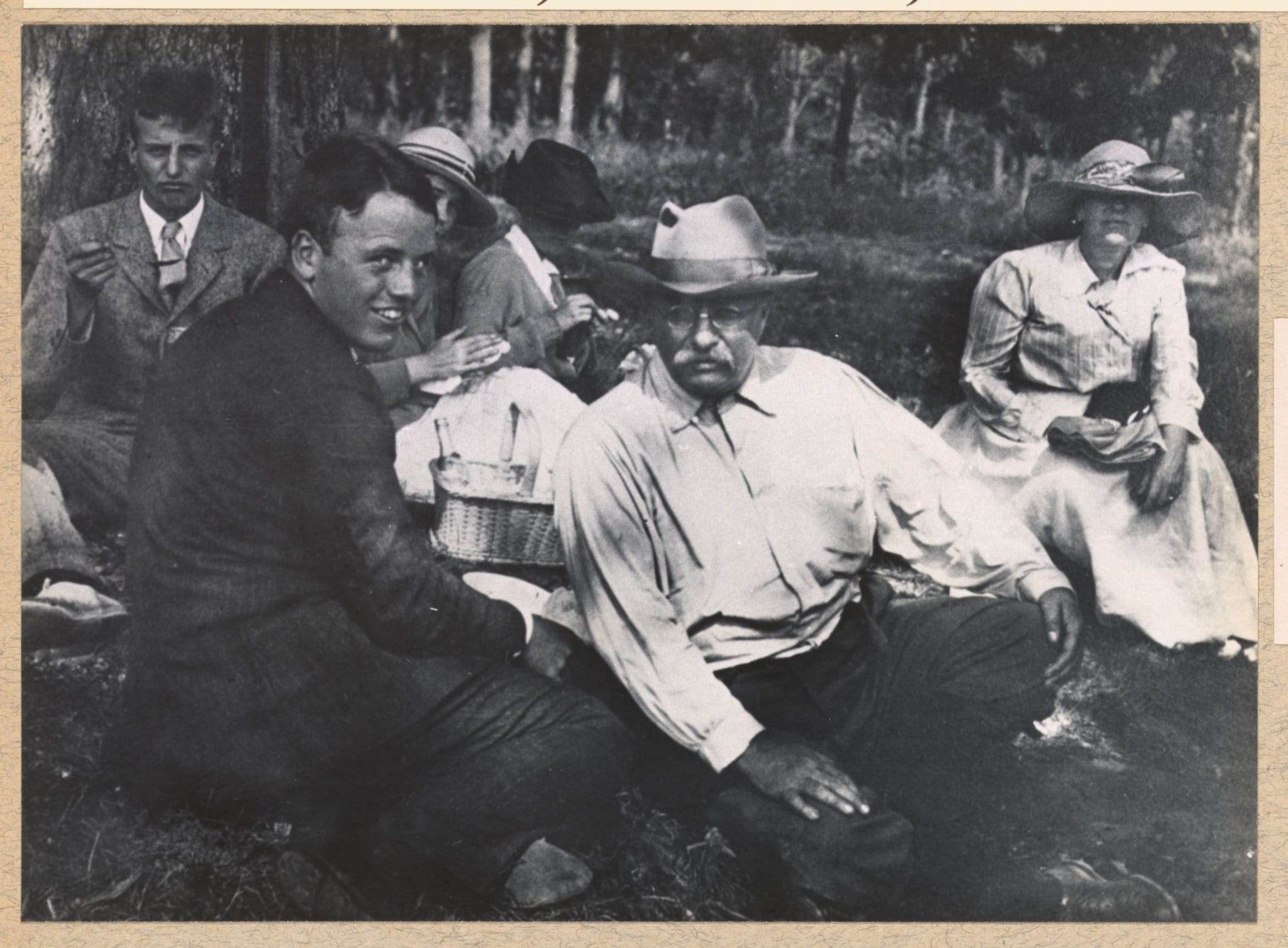
Yesterday was International Picnic Day, so we thought it would be quite fitting to devote today’s Friday Fun post to Theodore Roosevelt and picnics. By the Gilded Age and Progressive Era, picnics had become quite popular for all social classes. And unsurprisingly, Roosevelt loved a good picnic.
Throughout his life, summers meant picnics for Roosevelt. There are at least twelve records in the digital library in which Roosevelt writes to someone else about a picnic. We have included several of our favorite letters in this post, but if you’d like to read the others, you can find them and other picnic-related records here.
As a child, Roosevelt, his parents, his siblings, and plenty of cousins would vacation at “Tranquility,” a summer cottage in Oyster Bay on Long Island. As his sister Corinne describes in My Brother, Theodore Roosevelt, “One of our greatest delights was to take the small rowboats with which we were provided and row away for long days of happy leisure to what then seemed a somewhat distant spot on the other side of the bay, called Yellow Banks, where we would have our picnic lunch and climb Cooper’s Bluff, and read aloud or indulge in poetry contests and games which afforded us infinite amusement.”
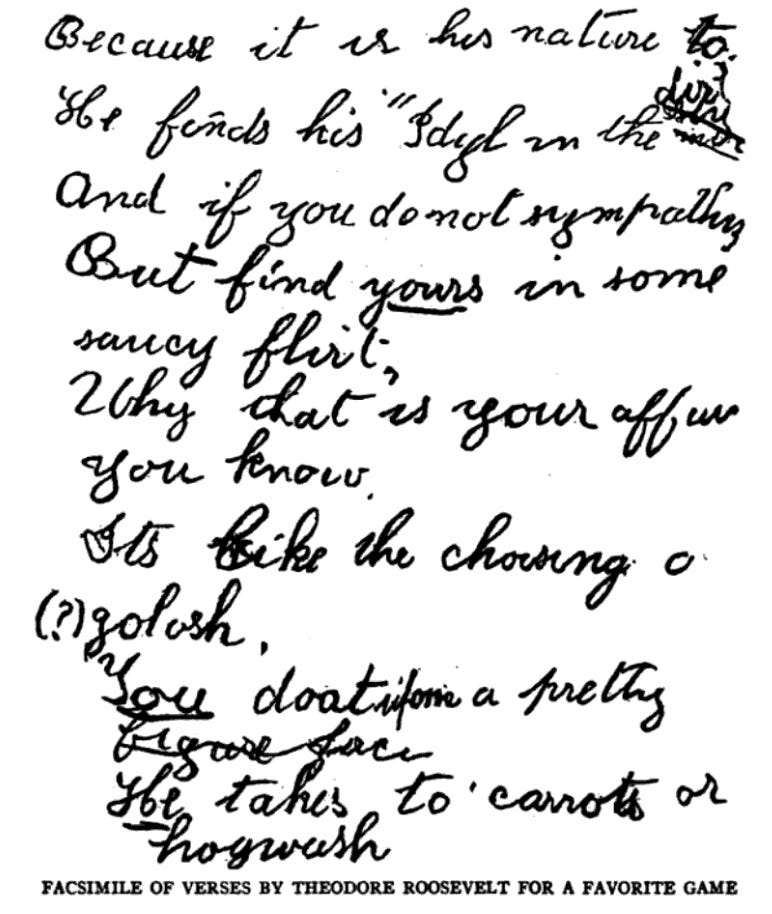
One of their favorite picnic games was called Crambo. According to Corinne, “We each wrote a question and each wrote a word, then all the words were put into one hat and all the questions into another, and after each child had drawn a question and a word, he or she was obliged to answer the question and bring the word in a verse.”
Corinne included one rhyme that Roosevelt created in 1875 when he was sixteen years old in response to the question, “Why does West [their cousin] enjoy such a dirty picnic?” The word he had to include was golosh—the British spelling of galosh!
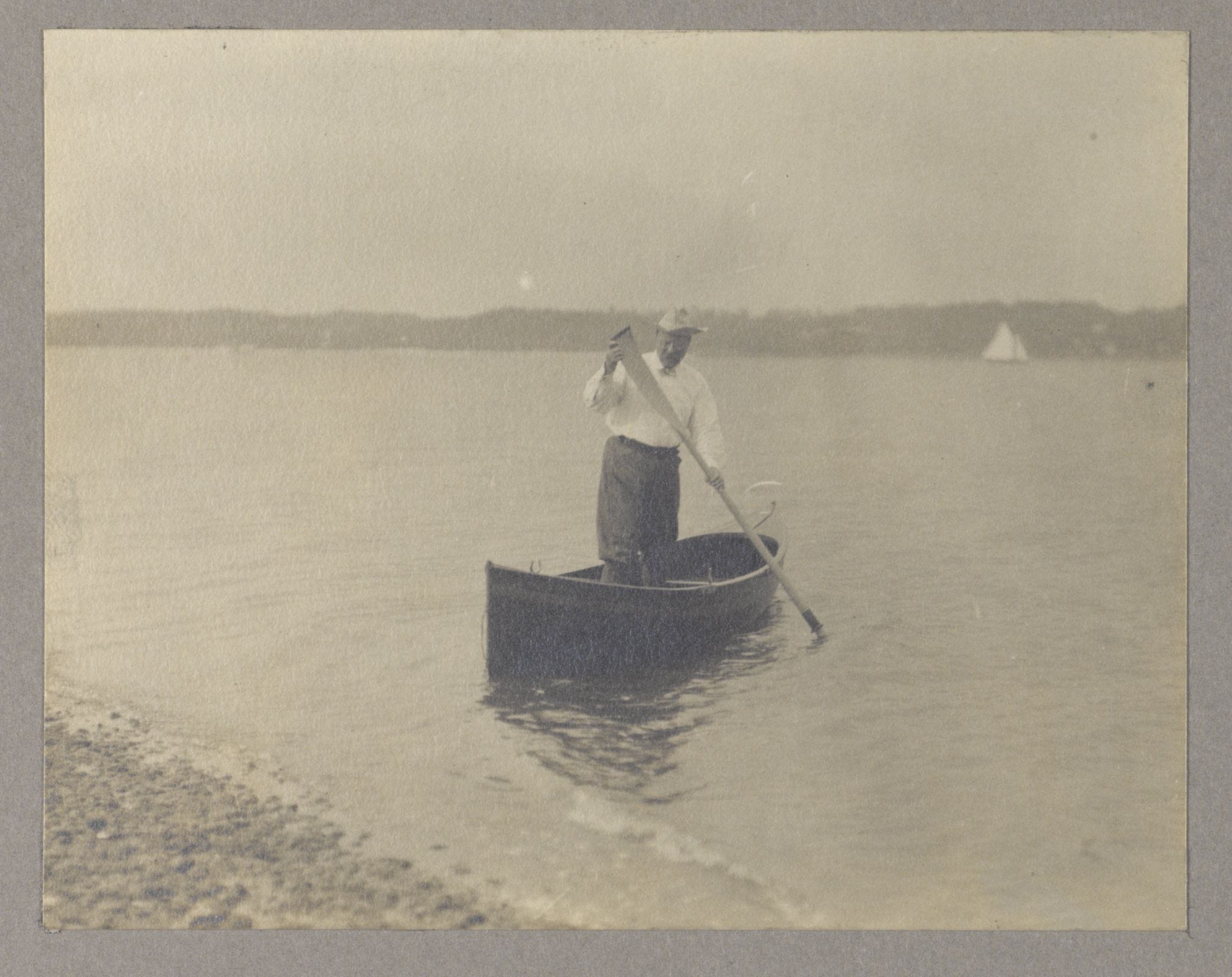
When Roosevelt had his own children, he went picnicking with them, which often included rowboats as when he was a child. In addition to some pleasant memories, the picnics also left other more distasteful memories as well. As one example, Edith suffered from a bad sunburn on her neck and arms after a 1896 picnic, which I’m sure we all can relate with!
Picnics were Roosevelt’s chance to be a boy again, which Edith didn’t always take as kindly to. A few months before Roosevelt became president in 1901, he wrote to his older sister Bamie about a picnic in Oyster Bay: “We have been having great fun here. Edith and I ride a great deal and also row. The other day we took all the Roosevelt children together with Laura and the Richardsons and John McIllhenny off on an all day picnic in the boats.”
As Roosevelt related, he permitted several of the children to go wading, which turned into swimming. When they returned, their mothers, Edith and Laura, were not impressed. According to Roosevelt, “The children were all given hot ginger and sent to bed on their return home, and on the part of both mothers there was evident a most sincere regret that it was not possible to give me hot ginger and send me to bed!”
Despite risking Edith’s displeasure when picnicking with the children, Roosevelt eagerly continued to do so, even as president. As Roosevelt related in a 1903 letter to his sister-in-law, Emily Carow: “I wish you could have seen [Archie and Nick] the other day, after one of the picnics, walking solemnly up, jointly carrying a basket, and each with a captured turtle in his disengaged hand.”
But occasionally, Roosevelt went on picnics without the children. As Roosevelt wrote to Patty Selmes in 1899 when he was governor of New York, “[D]uring June and the first part of July I got most of my afternoons to myself and occasionally a day, when I would usually take Mrs. Roosevelt in a row boat, with a basket of lunch and a couple of good books, and we would row for six or seven miles down the Sound and come back at dark, or later if the moon was right.”
Roosevelt similarly wrote to James Rudolph Garfield in July 1904, “It was delightful having Gifford [Pinchot] here on the 4th of July. He and I and Mrs. Roosevelt took an all-day picnic in a rowboat.”
Roosevelt even sometimes participated in night picnics, as he relayed in a 1905 letter to his daughter Alice: “I have had all of the boys off on one night picnic, which proved a signal and happy success, as they accepted the sand & sandflies as merely aids to enjoyment . . .”
But night picnics weren’t just with the children, as Roosevelt mentioned an evening picnic with Edith in a 1906 letter to his friend, Massachusetts Senator Henry Cabot Lodge: “We are about to have an evening picnic in the boats. I always especially welcome anything in the boats, because it gives me a chance to row Edith, so I get some exercise without having tired her out.”
Even when it was winter, Roosevelt was thinking about picnicking. When American socialite and author Francis M. Wolcott wrote Roosevelt of her plans to send him a thermos, Roosevelt replied, explaining his plans for the “bottle”: “Mrs. Roosevelt and I will use it on our picnics next summer.”
Picnics were so important to the Roosevelt family that his daughter-in-law, Eleanor Butler Roosevelt, vividly remembered her first experience on a Roosevelt family picnic years later in 1928.
Eleanor thought she liked picnics, but she never had experienced a Roosevelt picnic until she was married. She was amazed by the haste at walking toward the row boats, the necessity to quickly claim one of the boats with a comfortable seat, and most notably the unpleasant taste of the clams prepared as food.
When she attempted to hide the clam that was too rubbery for her taste underneath a log, she wasn’t fast enough for Roosevelt who caught her in the act. His response is worth quoting in its entirety.
“You aren’t as persistent as Archie when he was small. The first time he ever ate a clam on a picnic he chewed for a time, then had three sandwiches, half a dozen cookies and an orange. About an hour later he came to me and asked what he should do with the poor dead clam. It was still in his mouth.”
Eleanor’s first picnic with the Roosevelts had a strenuous end. Although it had taken them two hours to row to the little beach, it took them five hours to row back due to a headwind. Even though the boat in which Roosevelt was rowing Edith sprang a leak, “everybody considered that the picnic had been a great and glorious success.”
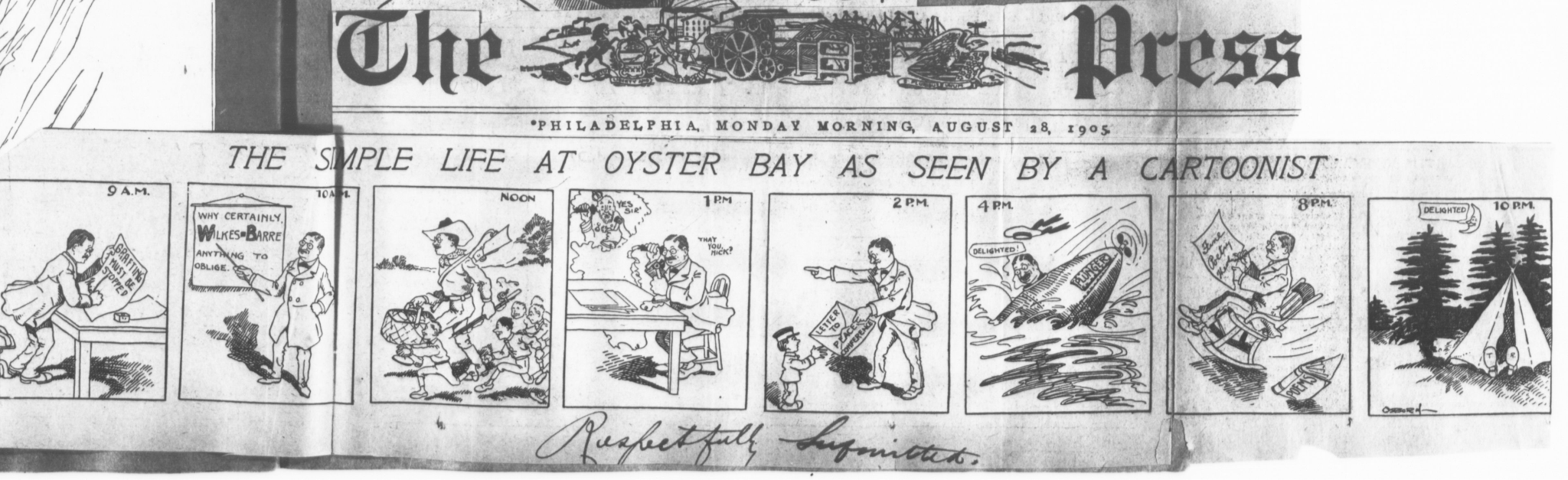
Even non-family members knew about Roosevelt’s love for picnics, including the press which sometimes depicted Roosevelt picnics in political cartoons. We’ll close with one of them entitled “The Simple Life at Oyster Bay as Seen By a Cartoonist.” Look carefully at the noon drawing—you’ll see a picnicking Roosevelt!