Friday Fun
Theodore Roosevelt and Fireworks

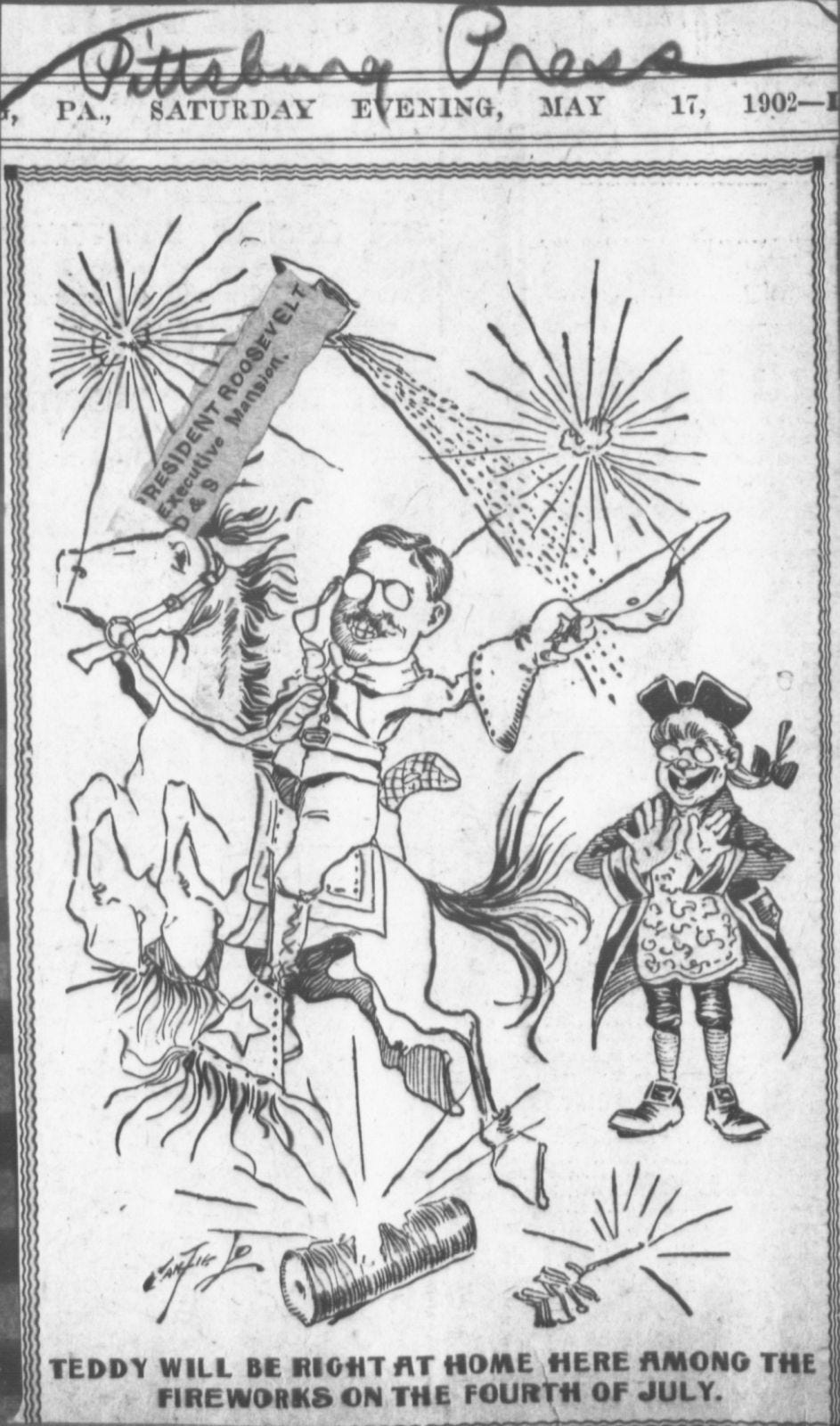
Tomorrow is America’s 250th birthday, and we know that people across the country will be celebrating with parades, barbecues, and, of course, fireworks.
In honor of the Fourth of July and the Semiquincentennial, today’s Friday Fun post will be about Theodore Roosevelt and fireworks. We have been planning for this post for a while, and we are excited to finally be able to share it with you!
Fourth of July celebrations were big affairs in the Roosevelt family and often included fireworks. As Roosevelt’s valet, James Amos, wrote in his book Hero to His Valet, “When he was President he usually had a Fourth of July celebration at Oyster Bay. He was usually at home at that time of the year. . . . He had music, fireworks, games, etc.”
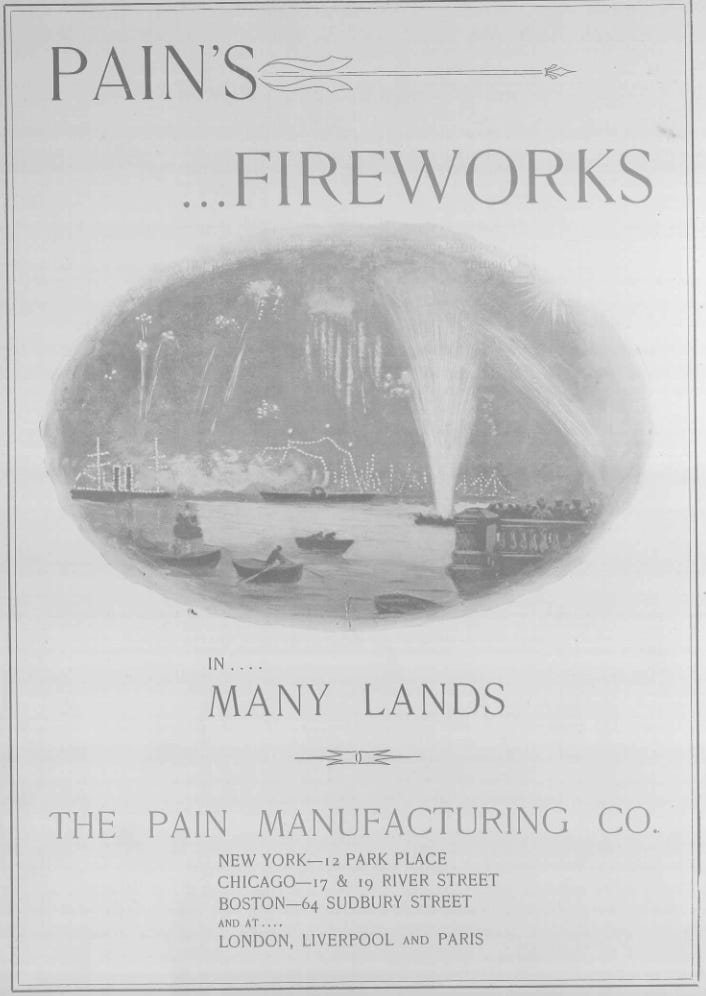
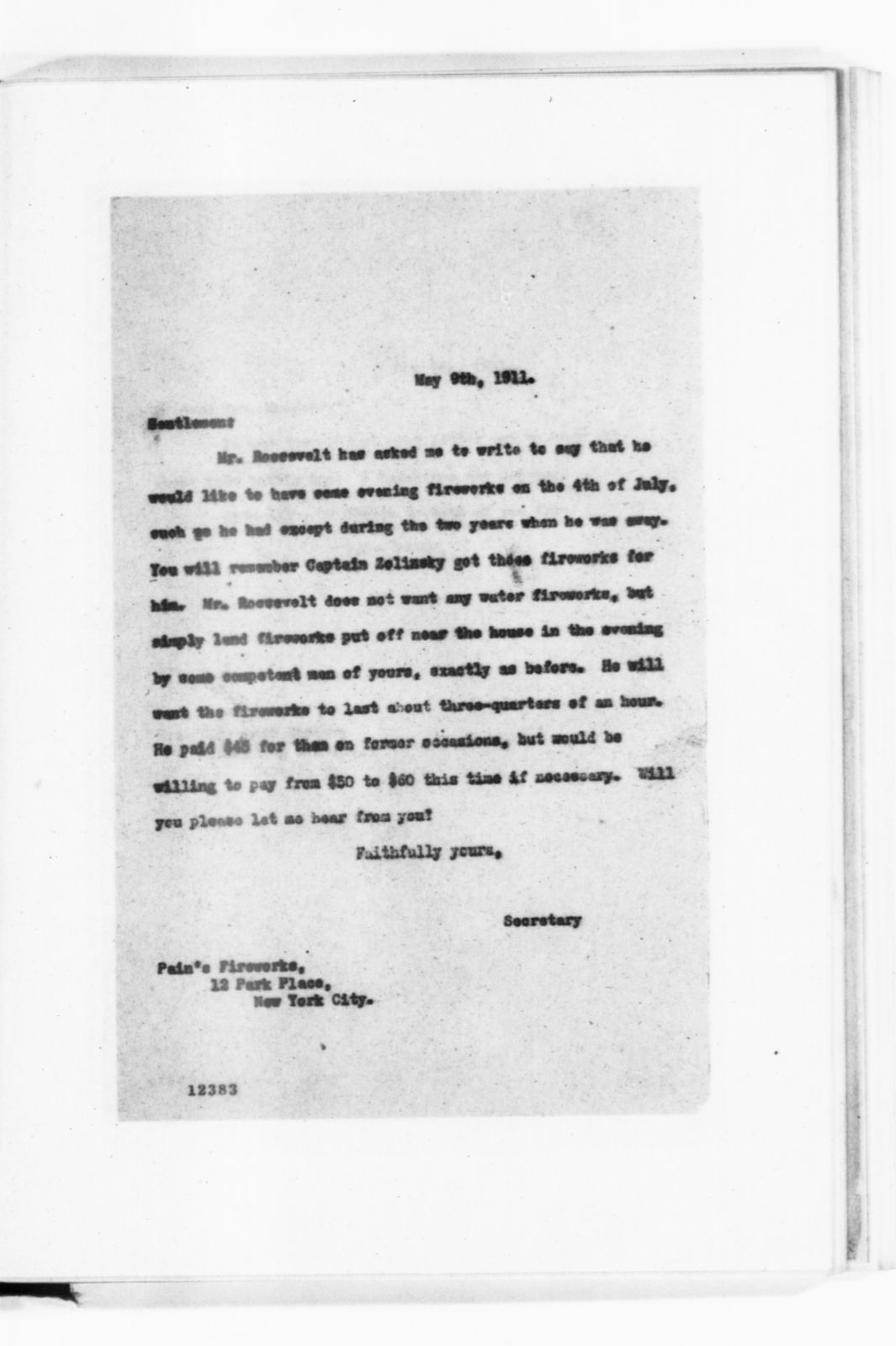
Roosevelt’s secretary, Frank Harper, likewise indicated in a 1911 letter to the Pain Manufacturing Company, one of the largest wholesalers of fireworks around the world in the early 1900s, that fireworks were a long-standing Roosevelt tradition for the Fourth of July.
Prior to 1911, Roosevelt had paid forty-five dollars (roughly $1,500 in purchasing power today) for fireworks that lasted around forty-five minutes in the past. But in 1911, he was willing to pay more—up to sixty dollars, or over $2,000 in purchasing power today. He also didn’t want water fireworks, just land fireworks.
When the Pain Manufacturing Company replied in the affirmative to Harper’s letter, they also provided a catalog in case Roosevelt wanted to pick out the fireworks himself. If he did not, they were willing to ship him “a very creditable display for any amount you may designate.”
In turn, Harper responded letting the company know that the Roosevelts wanted the manufacturer to pick out the display for them, although they didn’t want any torpedoes or cannon crackers.
Unfortunately, the Roosevelts never did end up having fireworks at their house in 1911 due to an illness in the family, Harper informed the company. Charles A. Rodgers of the Pain Manufacturing Company sent Harper, Roosevelt’s secretary, a brief note in reply explaining they would keep the order open, should the Roosevelts be able to renew the order in the future as anticipated.
Although the 1911 exchange is the most detailed one in the digital library related to fireworks, it’s not the only one. We also have his recollections of other fireworks celebrations in previous years, including as early as 1872 when he was thirteen years old.
That year, Roosevelt wrote to his aunt about the fireworks he and others shot off around Fourth of July, noting they shot off firecrackers, torpedoes, balloons, Roman candles, “flowerpots,” “bengolas,” or bengal lights. Roosevelt reported that they kept the house “in an exceedingly lively condition.” He even got some burns, writing, “We [boys] each got his fair share of burns.”
Ten years later, when Roosevelt was a young married man, he wrote to his mother Mittie about Fourth of July with the Lees: “In the evening it rained but, in spite of that, dear, patient, Mr. Lee set off innumerable rockets, mines and roman candles, with a face of damp, resigned misery.”
As Roosevelt and “twenty of the more diminutive Chestnut Hillers” watched the fireworks, they enjoyed ice cream and strawberries. Later in the evening, Roosevelt reported “playing bear” with the young children, which he would later do with his own children. As he told his mother, his acting started to get a little too realistic, and some of them worried that Roosevelt really was a bear!
When he became an adult, Roosevelt delighted in sharing the experience of fireworks with his children. As he wrote to his sister Anna “Bye” in 1893 when he had four children (nine-year-old Alice, five-year-old Ted, three-year-old Kermit, and one-year-old Ethel), “The children loved the fireworks—silly Kermit remarking, with an eye to edibles, that perhaps he might ‘eat the firecrackers’! The name struck him as suggestive.”
The Roosevelts often hired attendants like those from Pain Manufacturing Company to oversee the fireworks show. But they also had their own very special attendant: Sailor Boy, the family’s Chesapeake Bay dog.
As Roosevelt mentioned in Outdoor Pastimes of an American Hunter, Sailor Boy not only loved guns “but also fireworks and rockets” and exercised “a close and delighted supervision over every detail of each Fourth of July celebration . . .”
And it wasn’t just family and friends who enjoyed the annual Roosevelt fireworks display. As Frederic Gregory Mather of the American Canoe Association informed Wiliam Loeb, he could see the president’s house from his house and “last summer, I enjoyed your fireworks,” even though they were belated.
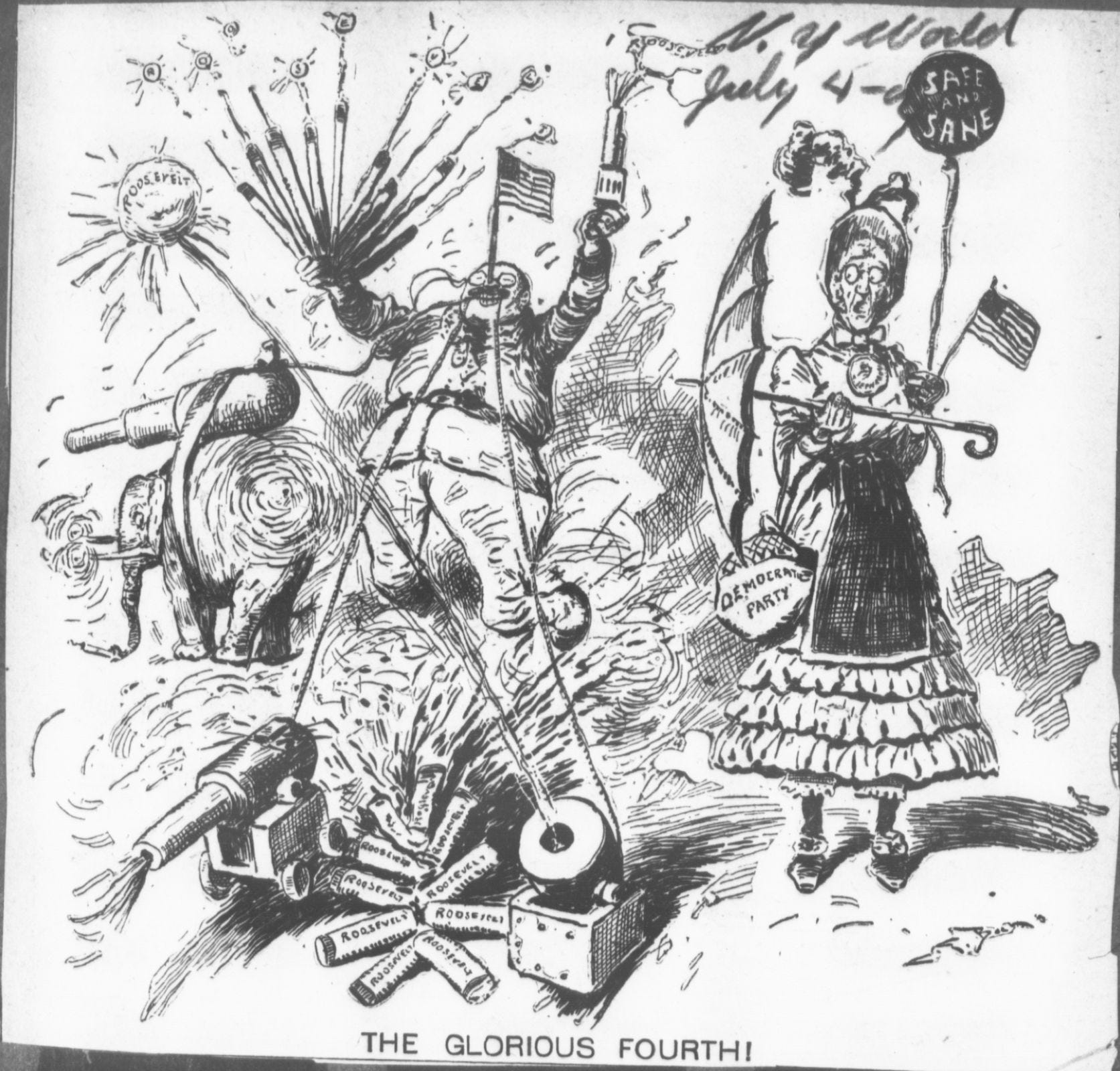
We loved all of these stories about Roosevelt and fireworks, but perhaps our favorite record in the digital library related to Roosevelt and fireworks is below. We don’t know about you, but we’d love to see a display like this as part of a fireworks show!
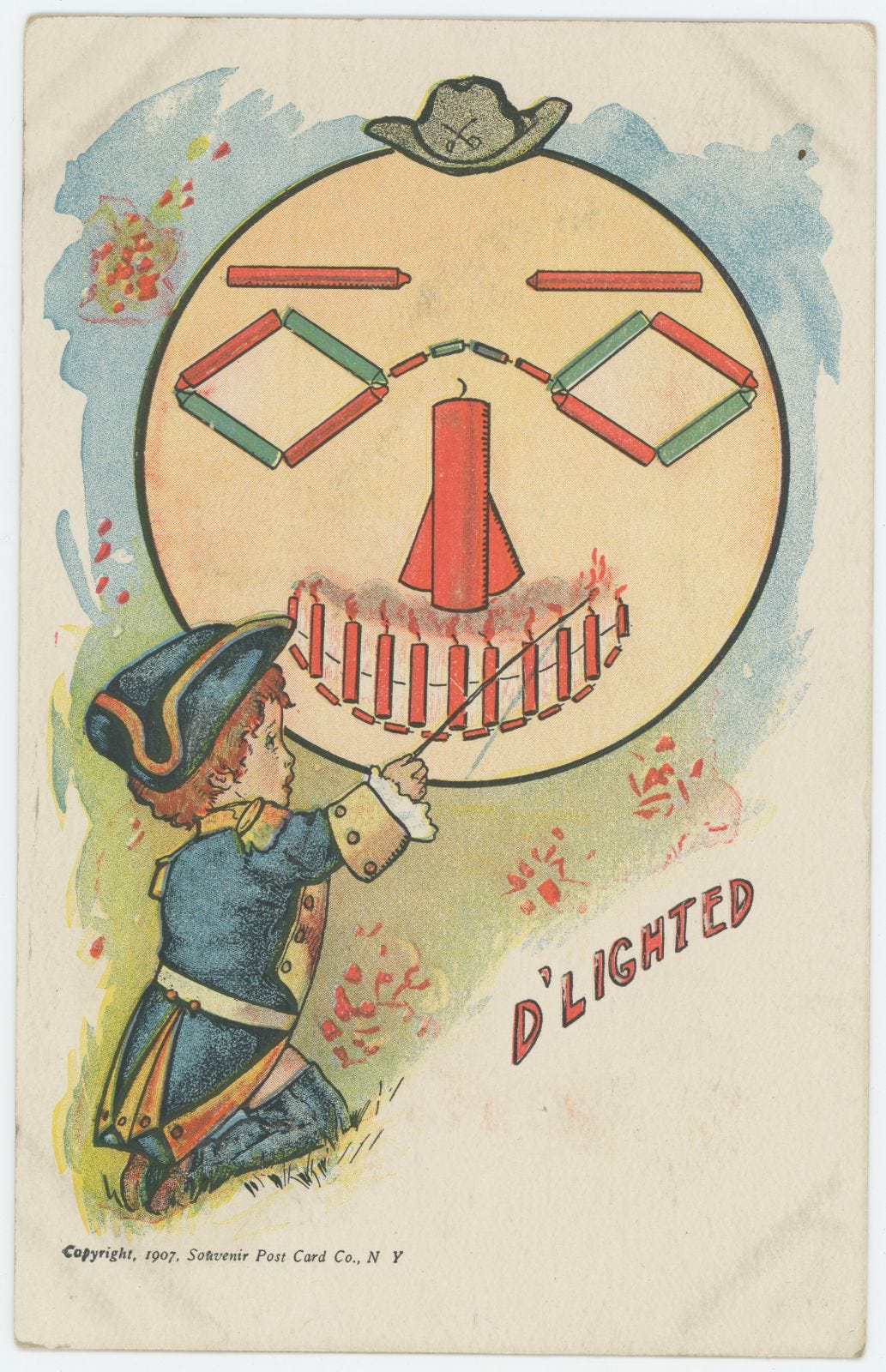
We hope everyone has a wonderful Fourth of July weekend, especially celebrating America’s 250th birthday this year! May you enjoy your fireworks displays just as much as Roosevelt!