
Friday Fun
Motherhood

This Sunday is Mother’s Day, so we’re dedicating this Friday Fun post to Theodore Roosevelt and his thoughts on motherhood.
Before we begin, it’s worth noting that Mother’s Day was first celebrated on May 10, 1908 during Roosevelt’s presidency so we think it’s especially fitting to write about Roosevelt and his opinions about mothers almost 118 years later. (As a brief note, Mother’s Day was not nationalized as a holiday until Woodrow Wilson’s presidency in 1914.)
There are a variety of materials related to motherhood in the digital library, including pictures of Edith and her children particularly in the years after Roosevelt became president. But one of our favorite records is an image of Edith and the children dated 1890 when Roosevelt was a civil service commissioner.
Why we love this photograph so much is because it depicts Edith as a young mother when she was either twenty-nine or thirty years depending on whether the photograph was taken before or after her birthday in August 1890. Our best guess is thirty because baby Kermit looks closer to a year old, and his birthday was in October 1890.
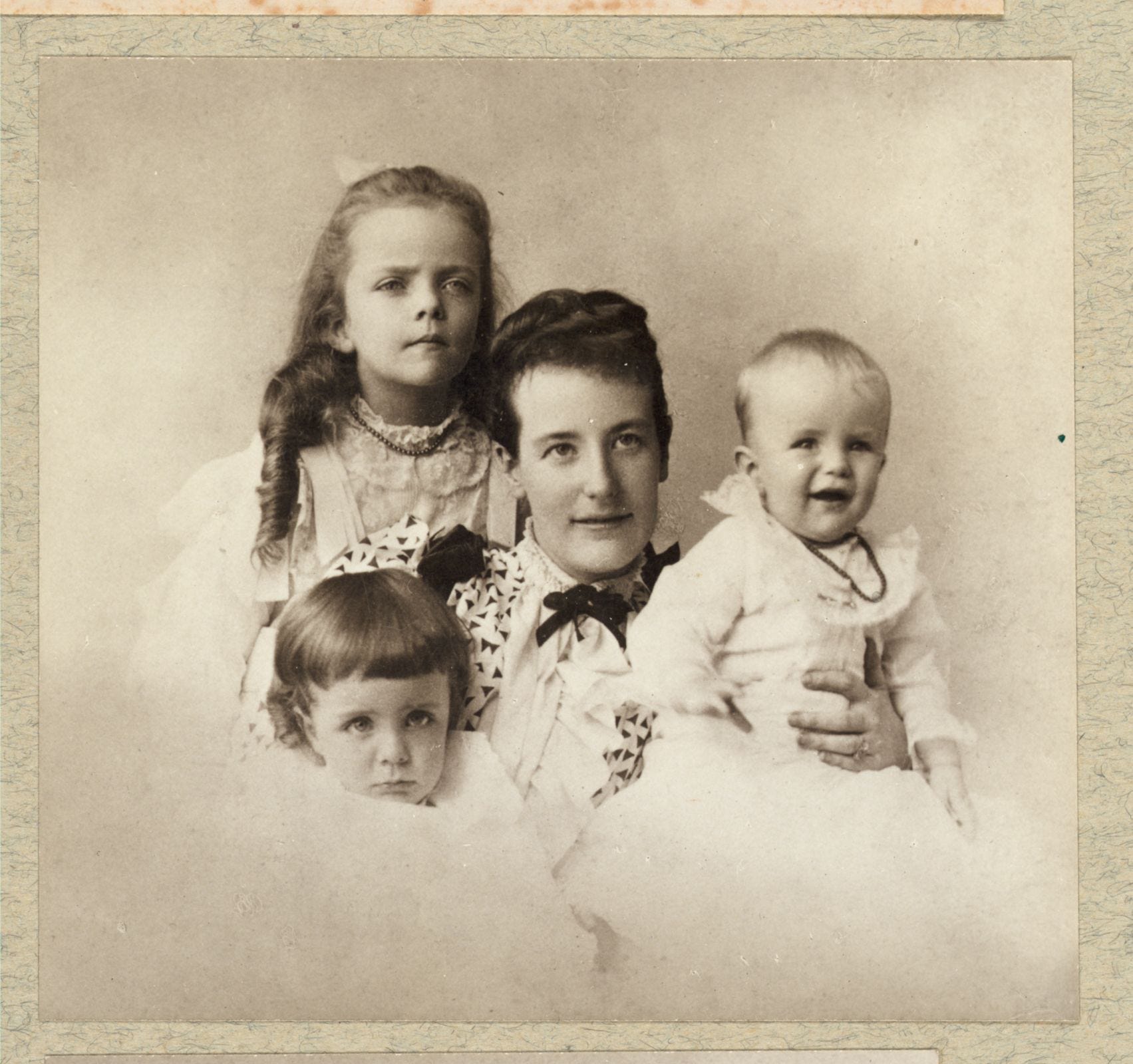
We think this picture captures what Roosevelt especially adored about Edith—the way she raised their children, though of course he respected her for more than just being a mother. For Roosevelt, mothers like Edith played a key role in the future generation of Americans.
In fact, he saw the home—and specifically the role mothers played in the home—as essential to creating a nation of good citizens. In 1911, Roosevelt delivered a speech at the University of California Berkeley entitled, “The Home and the Child” in which he spoke extensively about the importance of good fathers and mothers:
“It is so elementary it seems hardly necessary to say everything else in our civilization rests upon the home; that all public achievement rests upon private character; that the state cannot go on onward and upward; that the nation cannot make progress unless the average individual is of the right type, unless the average American is a pretty decent fellow and unless his wife is a still better fellow. It will not be possible otherwise for the nation permanently to rise.”
Roosevelt believed the United States could not be a great nation without great moms, but he also realized how hard it was to be a mom. As he stated in a 1905 address to the Congress of Mothers, “I believe you mothers have got the heroic touch in you . . . . Yours is the work which is never ended. No mother has an easy time . . .”
Given Roosevelt’s respect for women, including his own mother, Mittie, and his appreciation for motherhood, it probably comes as no surprise then that Roosevelt regularly praised Edith for raising their family and for being a wonderful mother. As an example, in 1890, he told Edith’s sister Emily, “[In]deed we really have a perfect home.”
And six years later, he wrote to his sister Bamie, “Edith finds that the mere conscientious care, of the kind she always gives, in the matter of the children’s dancing classes, doctors, studies &c &c takes up almost all her time; indeed she does too much, and is beginning to look pulled down.”
It was hard for the family when Edith traveled, but Roosevelt tried his best to be a good substitute mother, serving in a role he called “vice-mother,” a term he used often in correspondence as in the case of this 1903 letter to Kermit.
Roosevelt also wasn’t afraid to ask for help from another substitute mother, his younger daughter Ethel, who frequently assisted with her two younger brothers, Archie and Quentin, as she got older.
During the same 1903 trip, Roosevelt wrote Edith, “[Ethel] is a little mother to Quentin; she always calls him ‘sweetheart.’” (We also love this letter because Roosevelt signed it, “Your own lover.”)
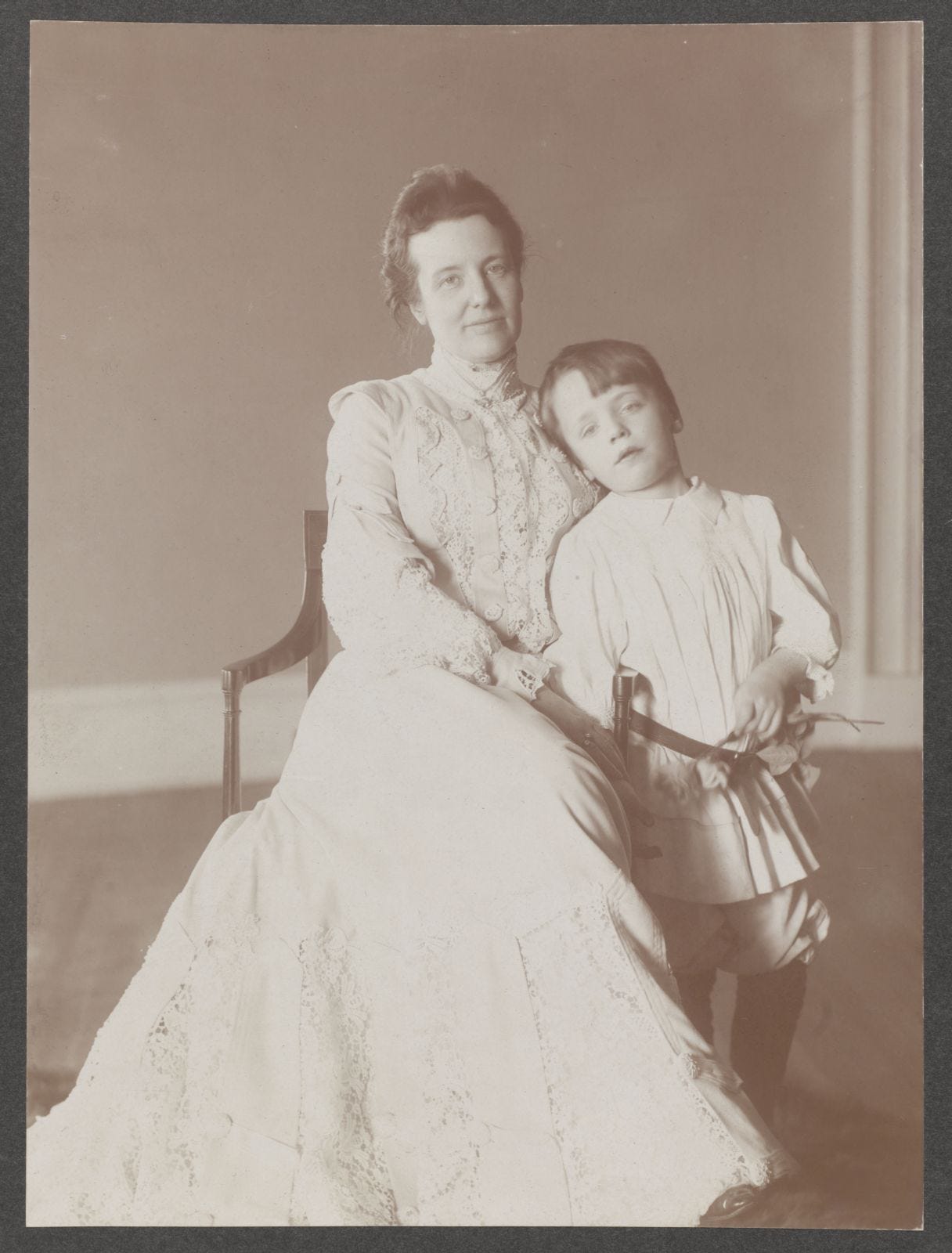
And speaking of Quentin, being the youngest, he especially felt her absence, as Ethel wrote in a 1906 letter to her mother: “He said that it was funny how queer the house felt when Mother wasn’t here.”
Even after his own children were grown, he emphasized the importance of motherhood, writing in a February 1912 article about women’s rights and suffrage for The Outlook, “Motherhood must be protected; and the State should make the security of the mothers its first concern.”
But even though Roosevelt was traditional in his conception of motherhood with women staying home to take care of the children, he still was progressive to a certain extent. He saw marriage as a “partnership in which each partner is in honor bound to think of the rights of the other as well as his or her own.”
And this concept of partnership extended to child-rearing in Roosevelt’s mind. As he wrote in a 1907 letter to Mrs. E. H. Merrell, “[T]he father . . . if he is worth his salt, must in every way back up the mother in helping bring up the children.”
Roosevelt definitely did this himself. He loved interacting with his children, their friends, and their cousins, going for scrambles, telling ghost stories and cowboy stories, and playing bear to name a few, looking to his own father Thee as an example. As he wrote in a 1901 letter to Sarah Bancroft Leavitt, “Unconsciously, I always find I am trying to model myself with my children on the way he was with us.”
Roosevelt was a smart man and didn’t give Edith (or other mothers for that matter) advice about how to mother—except in one instance we found in the digital library. He believed mothers should allow children to “run their own play,” advice his friend Jacob Riis “everlastingly rejoiced in.” (Ironically, Roosevelt had gotten the advice originally from Riis, as he mentioned in his reply to Riis.)
Although Roosevelt accomplished many things in his incredible career, he never forgot the important role Edith played as a mother in creating a happy home life for the Roosevelts. When their daughter Ethel became a mother in 1914, Roosevelt succinctly wrote, “Ethel, thank Heaven, takes after her mother, and reproduces the home life she inherited . . .”