
Friday Fun
Theodore Roosevelt and Fishing

For this month’s Voter’s Choice, the results were inconclusive, so we opted for Roosevelt and fishing since it has been a previous request. So without further ado, we present you Roosevelt, the fisherman.
We know Theodore Roosevelt as many things, but we don’t often talk about how he was a fisherman. This may be a more modern omission, as President Herbert Hoover wrote in his book Fishing for Fun—and to Wash Your Soul, “President Theodore Roosevelt, President Cleveland and myself—with slight egotism!—I think, are the only Presidents who had been lifelong fly fishermen before they went to the White House” (71).
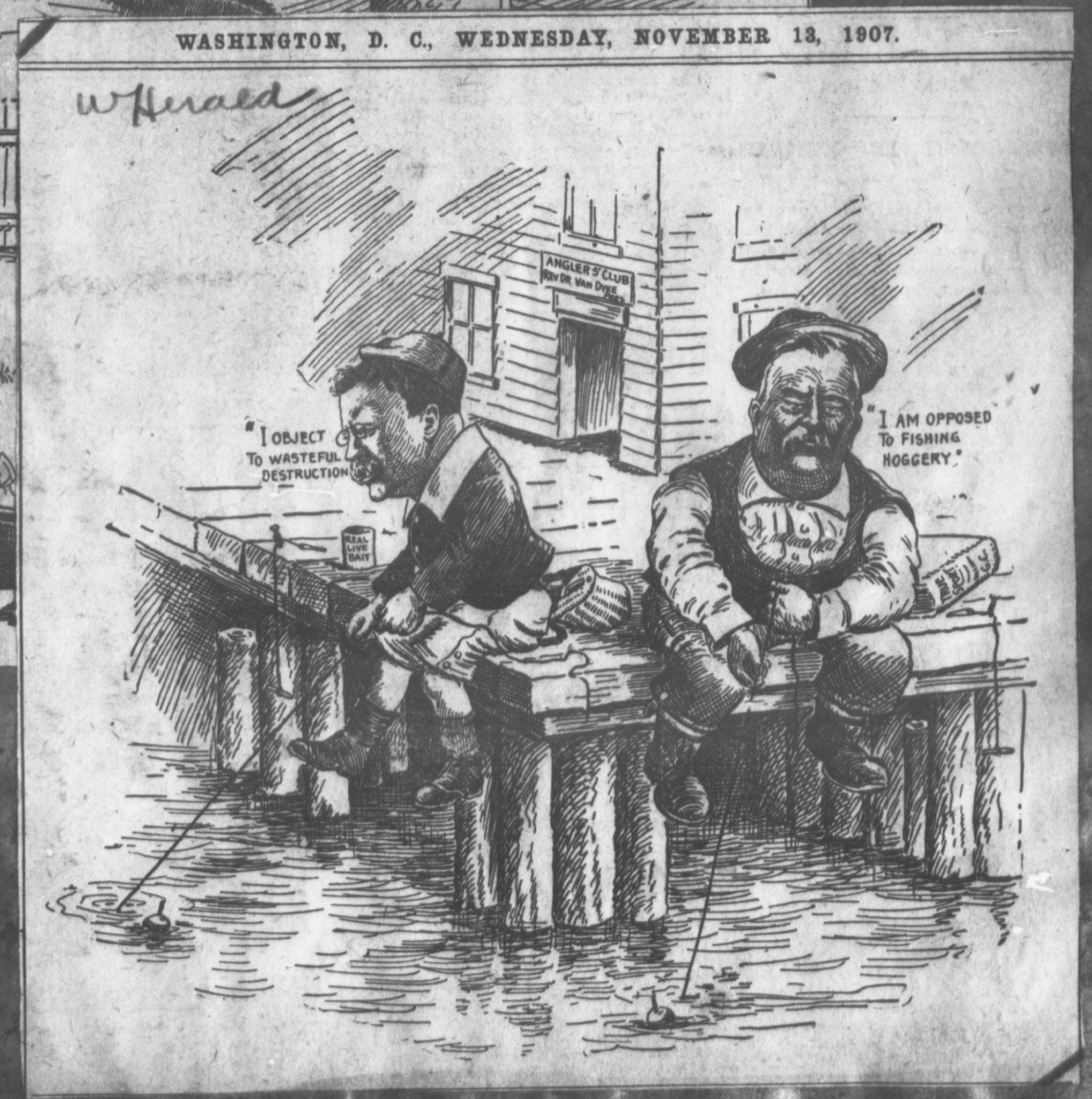
Or it may be, as Roosevelt’s great-grandson, Tweed Roosevelt, argued that “fishing did not offer TR anything like the challenge of big game hunting, nor did fishing produce that same kind of high.” Even Roosevelt didn’t consider himself a fisherman, writing in 1911, “Alas! I am not an angler at all; but I do love nature in all her moods and wild creatures . . .”
Fishing as a Child & Young Adult
But Roosevelt grew up fishing. In Tweed Roosevelt’s words, “Theodore Roosevelt started out a fisherman and wound up a hunter.” Indeed, much of Roosevelt’s connection to fishing comes from his childhood and young adulthood.
As Edward Stratemeyer noted in American Boys’ Life of Theodore Roosevelt (1906), the Roosevelt children vacationed at “Tranquility,” a mansion on Long Island “set in a grove of beautiful trees.” Roosevelt learned to hunt, ride, boat, and fish there, away from New York City.
As he got older, he went farther afield, including the Adirondacks in 1871 when he was twelve years old when he went camping and trout fishing with Hilborne West, known as Uncle Hill, his mother’s half-sister’s husband; his father, Thee Roosevelt; his brother, Elliott Roosevelt; and his cousin, James West Roosevelt, known as West.
Although others in the party successfully caught a fish, Roosevelt himself wasn’t, even losing his fishing pole briefly before he recovered it. They ate the eight trout the others had caught over a fire one evening for dinner, and Thee read aloud from James Fenimore Cooper’s Last of the Mohicans.
In addition to this camping trip, other examples of Roosevelt fishing in the digital library include a letter to his sister Bamie when he was seventeen years old in which he explained that he felt that a fishing rod—unlike a firearm—tended to “produce a feeling of respectability.” Obviously he changed his view later in life!
Roosevelt continued to fish as a college student. One fellow student at Harvard remembered Roosevelt’s obsession with animals and natural history well, noting that he had both a gun and a fishing rod in his room and “often spoke of using them.”
Roosevelt even told his friend, Henry Davis Minot, with whom he went birding, about having a fun time at camp in July 1877, the summer after his freshman year at Harvard, and mentioned fishing although the majority of the letter was devoted to birds: “I enjoyed myself very much at camp, getting both deer and trout . . .”
But after college, the majority of Roosevelt’s time outdoors was spent hiking, exploring, or hunting, and he largely didn’t fish. The one exception was with his children.
Fishing with His Children
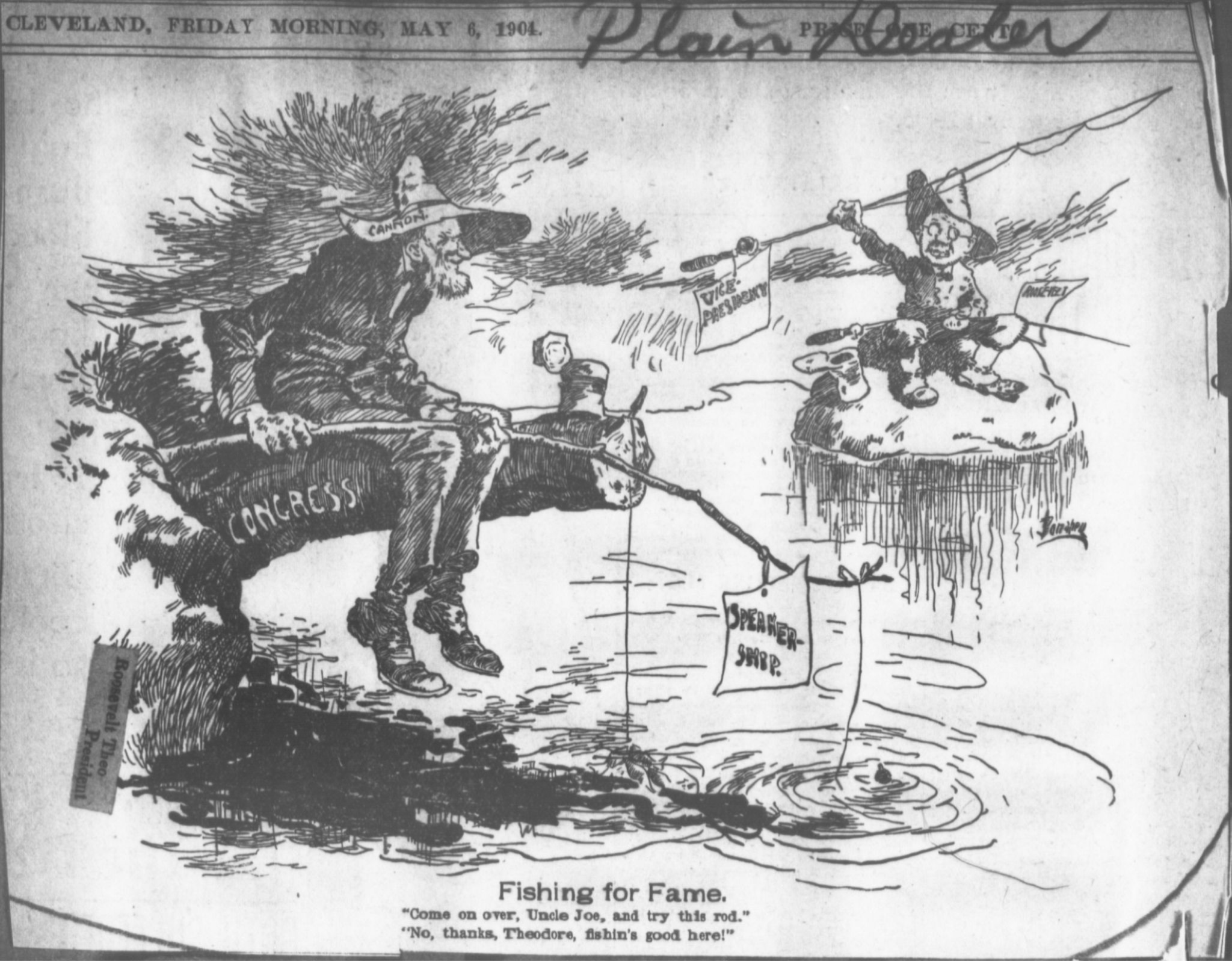
As mentioned above, the majority of fishing Roosevelt did as an adult was with his children. In addition to being a successful politician, Roosevelt was also an involved father. And he loved any opportunity to spend time with his offspring, particularly outside and at the family home, Sagamore Hill, in Oyster Bay, New York.
As the Methodist minister in Oyster Bay remembered, “Mr. Roosevelt was very fond of fishing, swimming and boating. One summer I took some boys camping down on Long Island Sound on the shore near that of Sagamore Hill. Colonel Roosevelt was a diligent, enthusiastic, successful fisherman, and his children took to the water as ducks do.”
One of Roosevelt’s sons, Quentin, enjoyed finishing so much that he wrote an essay about it when he was ten years old describing his ideal day fishing. Although he didn’t mention his father, we feel confident it was Roosevelt who first taught Quentin how to fish.
While the Methodist minister believed Roosevelt’s fishing with his children indicated his enjoyment of fishing, we think how much of it was an interest in fishing and how much of it was an interest in spending time with his children is up for debate.
Tweed Roosevelt likewise believes Roosevelt fished with his children not because he was particularly interested in fishing but rather because “he enjoyed being with excited, happy children.”
Other Fishing Adventures
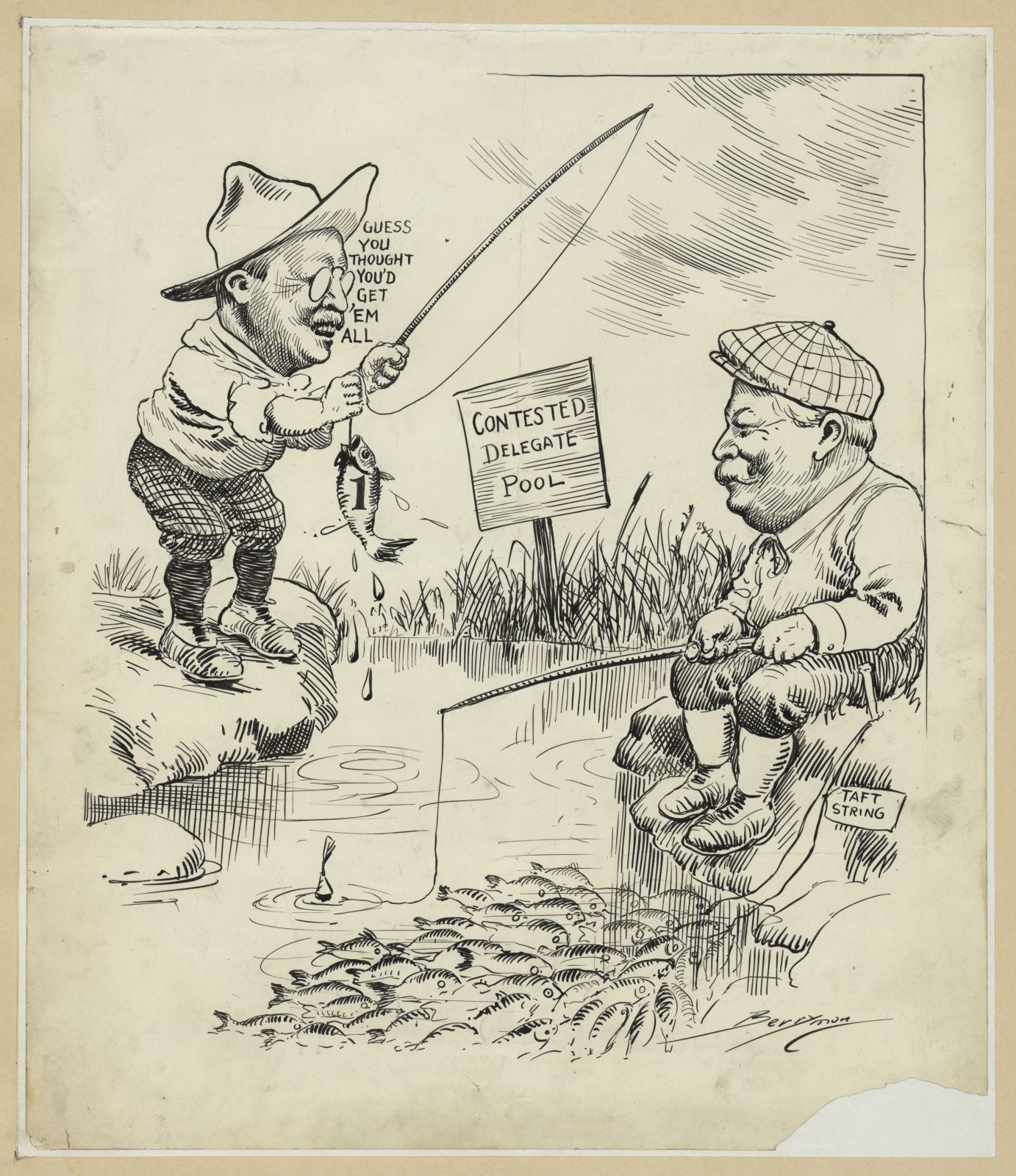
Occasionally Roosevelt did go off fishing on his own like when he visited Yellowstone National Park. As the chief game warden remembered, “It was in the spring that President Roosevelt visited us. The fishing being pretty good then, he would start out almost every morning with his rod and line, and be gone all day. We wanted to accompany him, of course, but he gave us to understand that he preferred to be alone.”
But even the game warden wondered how much these outings were for fishing and how much they were for peace and quiet: “Toward the end of his visit he ceased to take the fishing tackle with him on his solitary tramps. I have an idea that the fishing was merely a pretext to get out alone amid the noble calm and impressiveness of the big woods and hills to revolve momentous matters in his mind.”
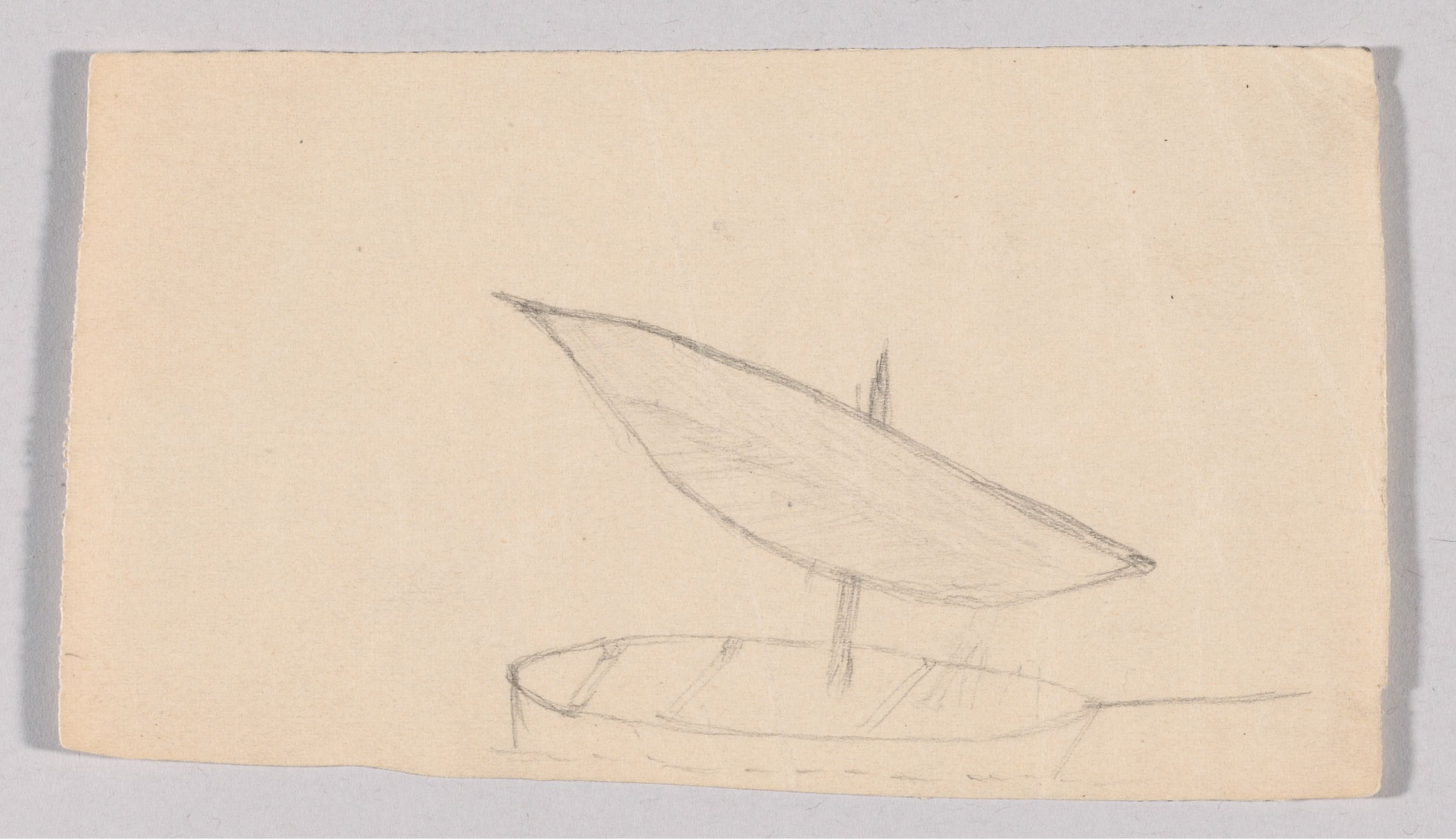
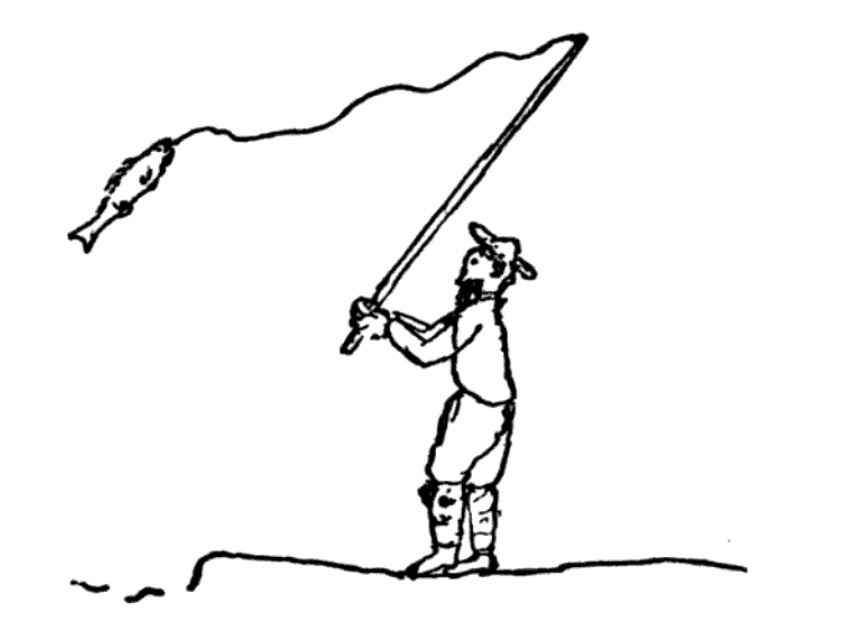
But even though Roosevelt himself rarely fished, he still enjoyed eating freshly caught fish. For example, see his drawing below of Dr. Alexander Lambert fishing in 1907 in Louisiana.
The one fishing expedition of note that Roosevelt participated in as an adult was hunting manta rays (called “devilfish” during Roosevelt’s time) off the coast of Florida in March 1917—what Roosevelt considered the “big game of the seas.”
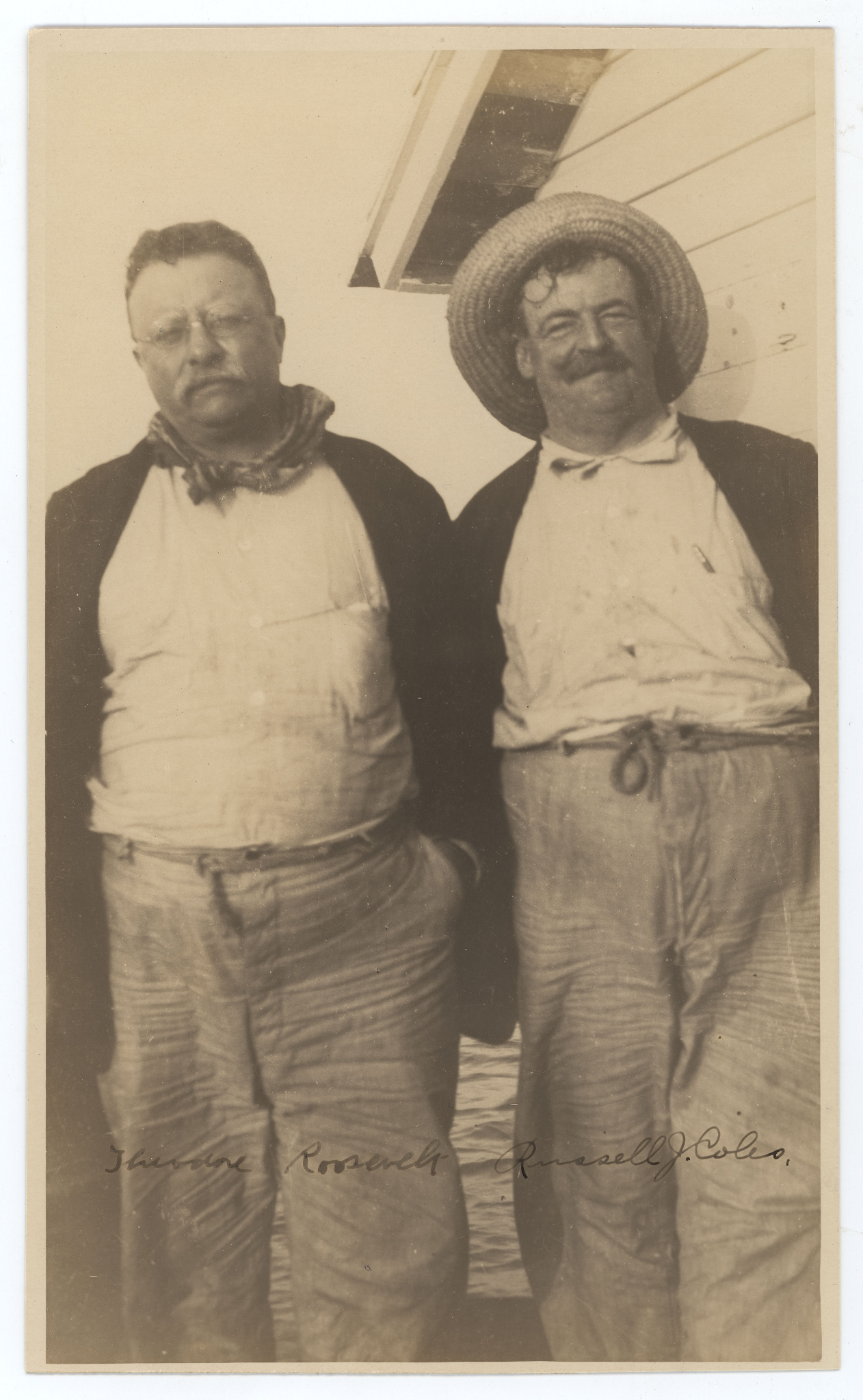
Less than six months before, in late November 1916, Roosevelt had accepted an invitation to go on the “Devil fish hunt” with well-known ichthyologist Russell J. Coles and expressed great excitement not about fishing but about the hunt. As he wrote in a postscript in a December 1916 letter, “You can’t imagine how eagerly I am looking forward to our hunt!”
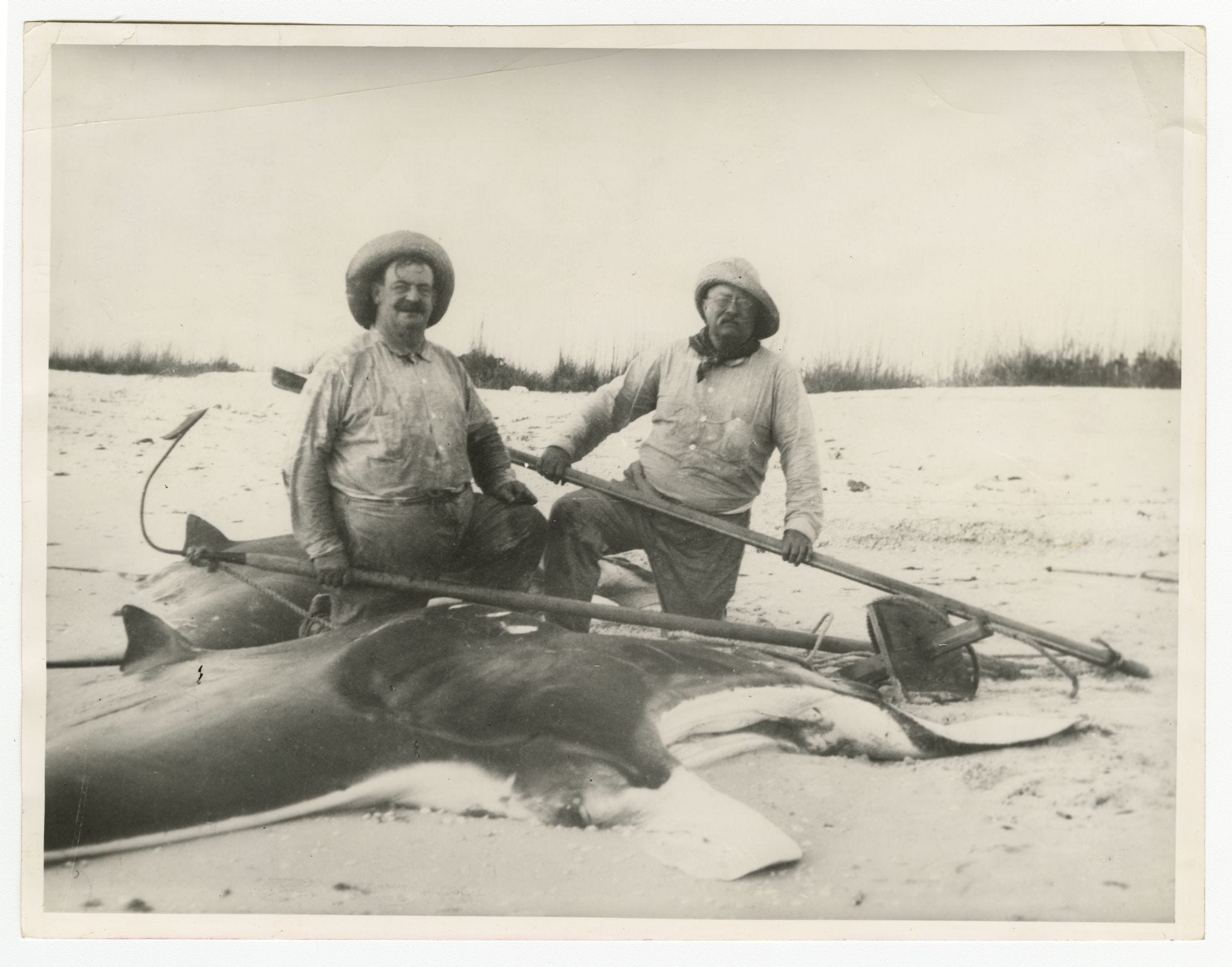
The crew found manta rays on their first day out on March 26, 1917. While Roosevelt missed hitting the first manta ray he tried to harpoon, he succeeded shortly thereafter. When they came to shore, they realized it was a smaller male so they headed back out, and Roosevelt successfully harpooned a female. In the picture below, we believe the female is in front, and the male is in the back.
One of the last letters Roosevelt wrote was to Coles on January 1, 1919, just five days before his death. In the letter, he was planning another trip with Coles in March 1919. He also wanted to bring Archie along to cheer him up after his injury during World War I. Of course, Roosevelt never went on this trip with Coles since he died on January 6, 1919.
But even if Roosevelt didn’t love fishing, some of his children and in-laws did. For example, his eldest son Ted and son-in-law Richard Derby especially enjoyed fishing. Ted’s recipe for sauteed trout was even included in a cookbook for campers.
As a final note, even if Roosevelt didn’t consider himself an angler, it probably shouldn’t come as a surprise that he has a fish named after him: the highland darter, Etheostoma teddyroosevelt.