
Friday Fun
Magic and Merriment

(We have a lot of content on our original website blog at theodorerooseveltcenter.org that you may not have seen. Dr. Hansard has adapted and updated the following material from one of his own posts from a few years ago.)
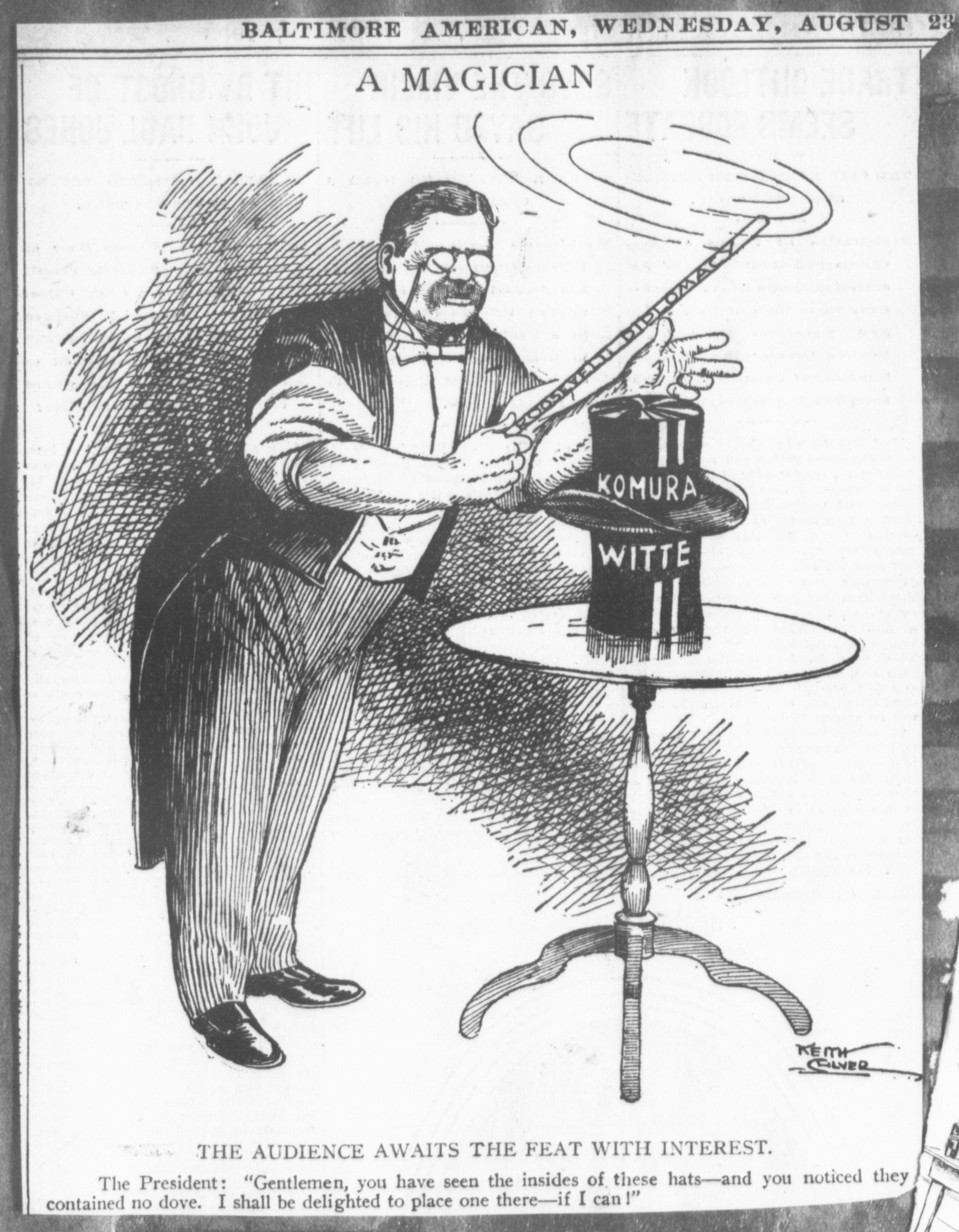
In the Gilded Age and Progressive Era, magic was one of the most popular forms of entertainment. Young or old, rich or poor, the live performance of magic was in many ways democratizing. As a result, the visual language of magic was very much a part of the cultural zeitgeist as well. Theodore Roosevelt was at least once depicted as a magician himself, in this 1905 cartoon referencing his work negotiating an end to the Russo-Japanese War:
Then, as now, magic was especially popular with children and families. It is no surprise, then, that Roosevelt, who had a sometimes childlike personality, visited magic shows with his own children on several occasions, and wrote down his thoughts about how much he enjoyed them!
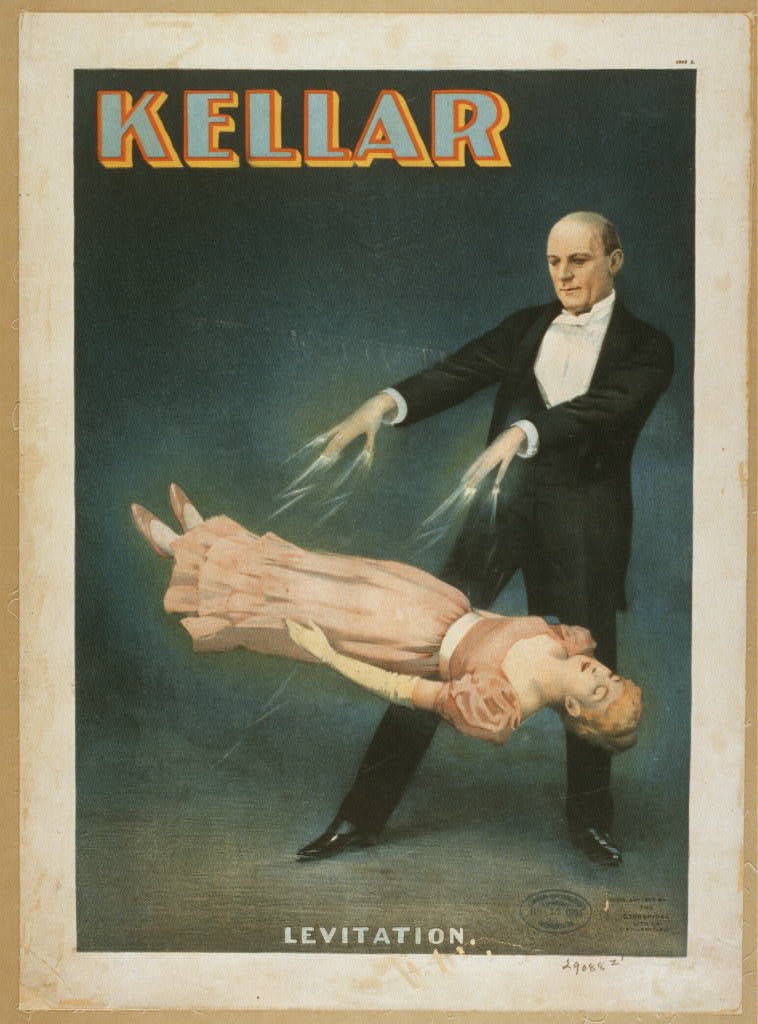
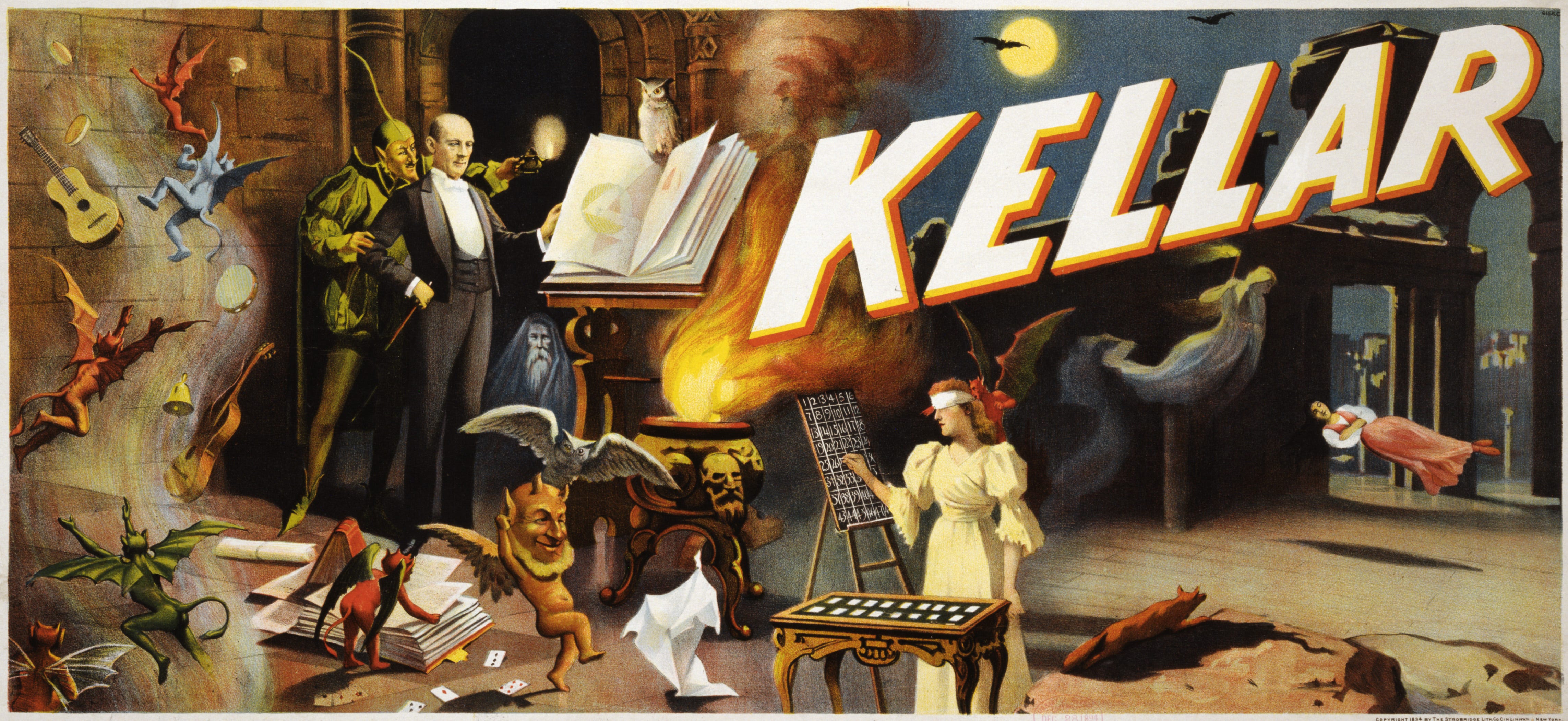
On January 17th, 1904, Roosevelt took his children Ethel, Quentin, and Archie to see a show by the famed Harry Kellar, known as “Dean of American Magicians.” Kellar became a sorcerer’s apprentice as a teenager, traveled the world for decades beginning in the 1870s, and became especially famous for his own take on a popular levitation illusion. That day, he performed a number of tricks and involved Ethel in one known as “The Nested Boxes.” It is difficult to fully explain the conjuring process but suffice it to say that Ethel found it delightful, as did her father. “There is no use in anybody’s ever telling me about anything supernatural! It could not be half so wonderful as the things I saw today,” he wrote to Kermit after seeing Kellar’s performance.


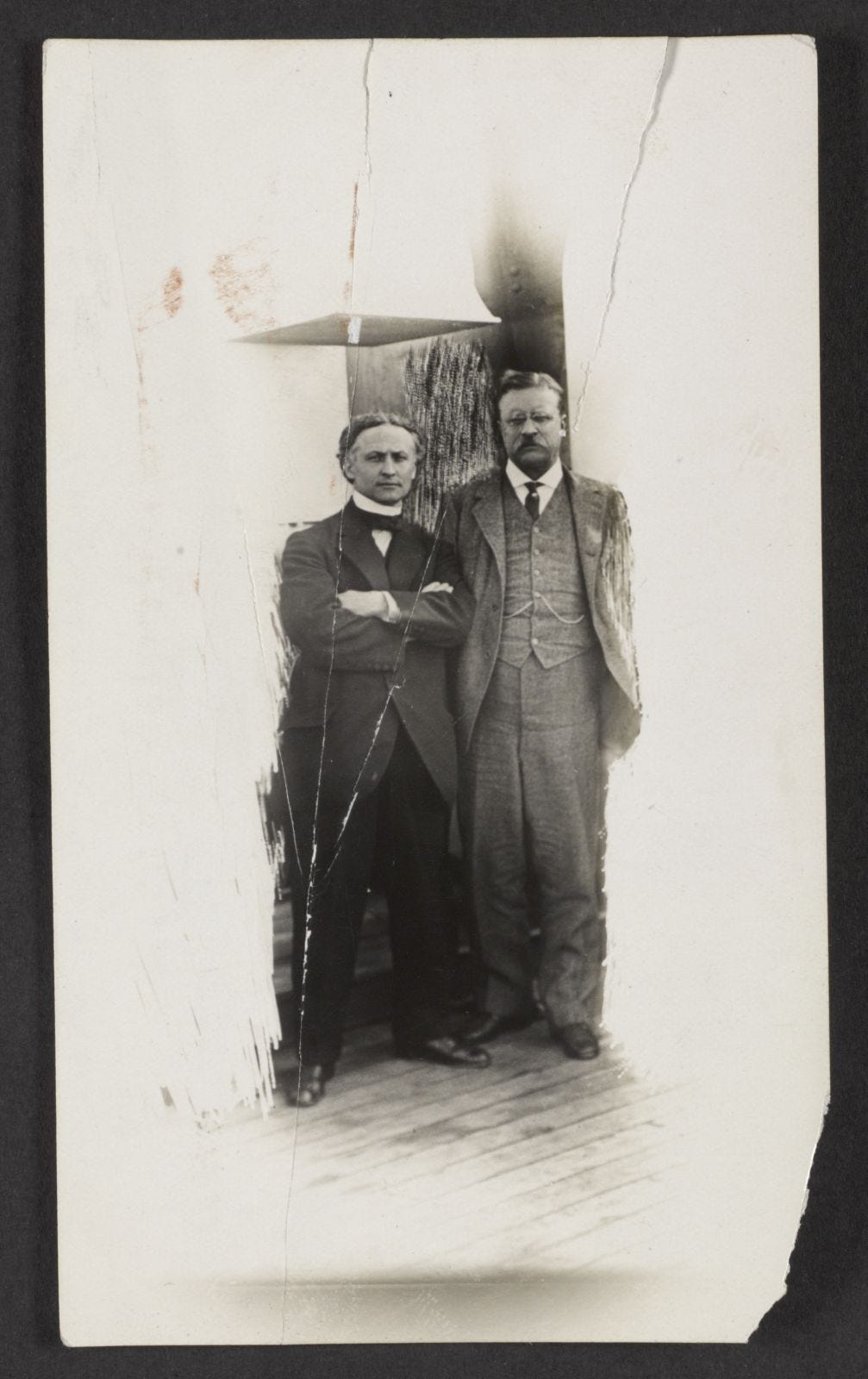
Certainly, the most famous of Roosevelt’s magical encounters was with the master himself, Harry Houdini. In 1914, Roosevelt and Houdini crossed paths when they were both returning from Europe to the United States aboard the S.S. Imperator. (According to one source, Houdini had performed for Roosevelt at least once before, at the Chicago World’s Fair.) Houdini learned in advance that he would be aboard the same ship as Roosevelt and began concocting an elaborate performance. In a spirit writing trick for the ages, Houdini used his connections to obtain the unpublished press copy of the map of Roosevelt’s journey down the River of Doubt. He used previously obtained letters from a deceased passenger of the Titanic, British spiritualist W. T. Stead, to forge a spirit signature. He coaxed Roosevelt into asking the spirit in writing, “Where was I last Christmas?” Then in the slates appeared the answer “Near the Andes,” with a pointing arrow and the signature of the spirit, already written. Roosevelt was later described as “dumbfounded” by the trick and went to his grave not knowing how it had been pulled off; the details of Houdini’s deception were not revealed until 1926.
Although in some ways the most remarkable, Roosevelt’s experience with Houdini was not his last. In June 1915, he responded to a letter from Belle Roosevelt (his daughter-in-law, married to his son Kermit) discussing their amazement at a particular juggling-based magic trick, of which neither of them could deduce the method. He then describes other magic he has seen through the years, and how such illusions have awed him:
I have seen things done that couldn’t be done. But they were done. I saw one man put a rabbit in a paper bag – it squirmed inside its bag – and hand it to Ethel. But it was a small bouquet when the bag was opened. I saw another man throw a fishing line into its audience, and then on the bare floor; and before my eyes a wriggling gold fish grew onto the hook, and when detached and put in a globe of water, it swam agitatedly around.
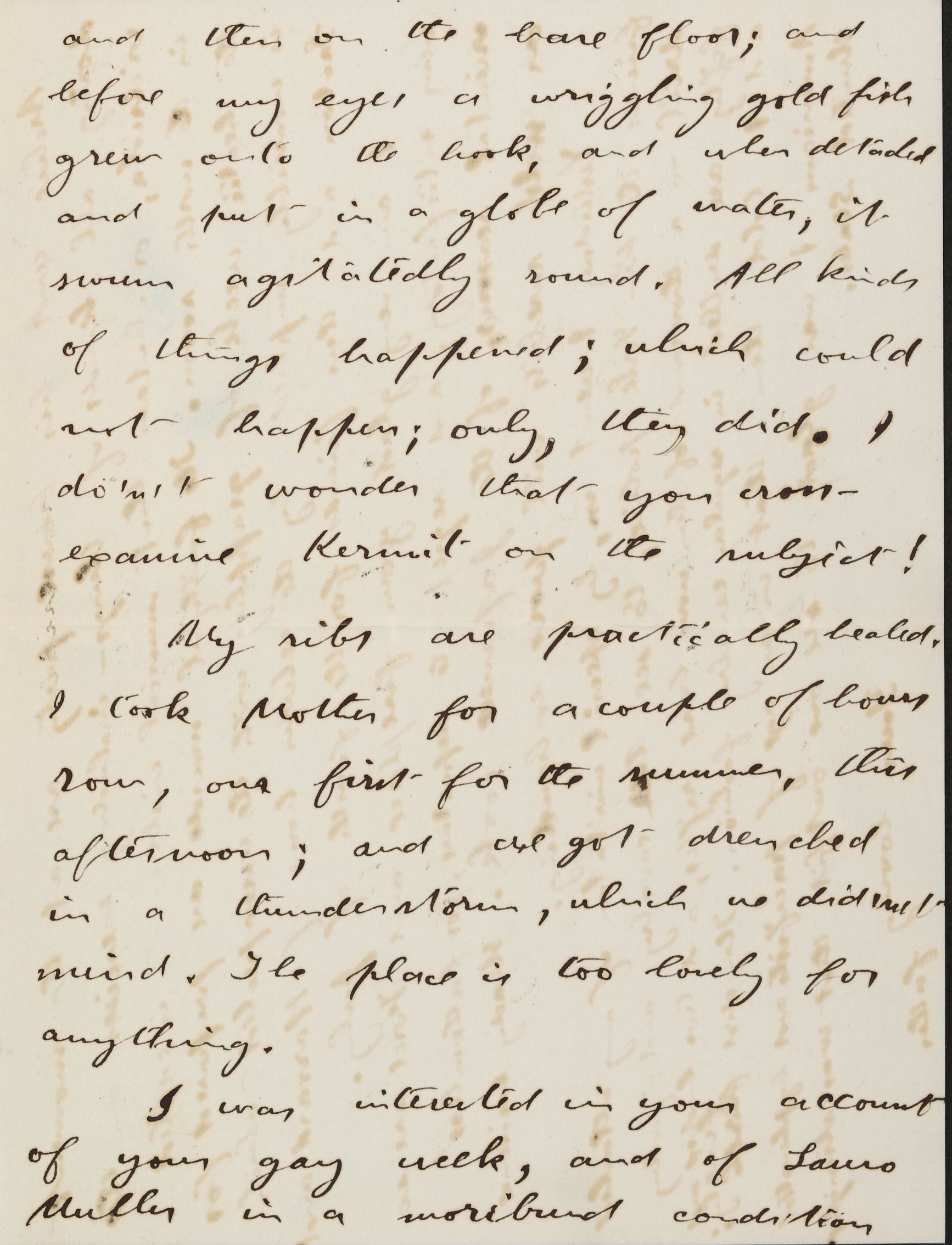
Roosevelt closed the topic with a simple, straightforward review of magic in aggregate: “All kinds of things happened; which could not happen; only, they did.” For a man who saw and experienced so much, it feels quite wholesome that he could still be wowed by prestidigitation!