
The Anthracite Coal Strike
How The Square Deal Saved The Day

On May 12, 1902, the Anthracite Coal Strike began in Pennsylvania. Of the approximately 150,000 coal mine employees (miners, engineers, maintenance, and others) in the region, more than 100,000 struck, with 30,000 leaving the region entirely and 10,000 returning to Europe. Production ground to a halt and the threat of a coal shortage was imminent.
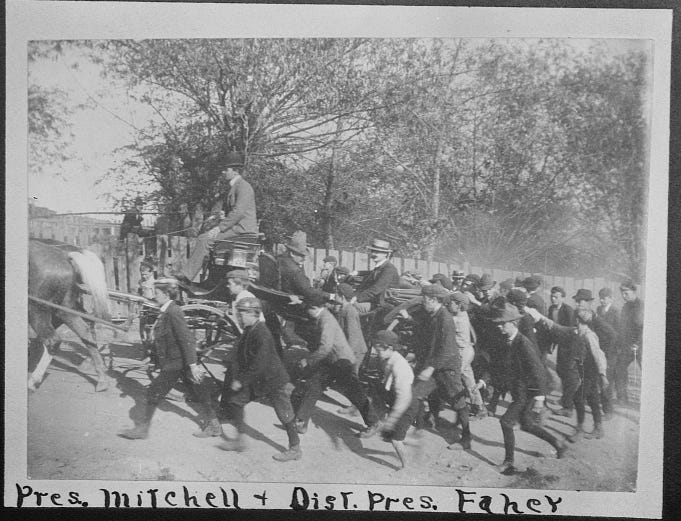
Fresh off a series of victories in smaller strikes in 1897, 1899, and 1900, which resulted in a tenfold explosion in membership from 10,000 to over 100,000, the United Mine Workers (UMW) struck yet again in 1900. The miners (whether they were members of the UNW or not) sought three things, primarily: higher and fairer wages, shorter workdays, and corporate recognition of the union. Up to this point, mine operators had generally refused to work directly with labor leaders, often working through intermediaries of congressmen and/or other capitalists. 1902 was no different, and operators still refused to recognize unions. Worse still, in the wake of the previous strikes, they had closed ranks, consolidated ownership, and cornered the market, and thus felt confident in refusing to accede to any workers’ demands.
This stalemate caused the strike to drag on for months, with both sides digging in their heels. Precedent mostly dictated that the strike should be broken by force. Violent acts perpetrated by both labor and capital were an ever-present threat in the latter decades of the nineteenth century. Often, corporations hired the Pinkerton Detective Agency to both infiltrate organized labor (as in the case of the Molly Maguires in the 1870s) and to commit violence against strikers (such as in the Homestead Strike in 1892). In extreme cases, governors and presidents ordered the military to break strikes forcefully. In the Great Railroad Strike of 1877, governors in several states sent in militias or the National Guard. When those efforts could not end the nationwide strike, President Rutherford B. Hayes sent federal troops (some under the command of General Philip Sheridan) to cities across the nation to quell the uprising. In the Pullman Strike of 1894, when strikers obstructed the flow of U.S. Mail, President Grover Cleveland ordered the Army to collapse the strike. In the case of the Anthracite Coal Strike, the miners were opposed by a full trifecta of local police forces, the Pennsylvania National Guard, and the privately operated Coal and Iron Police.
There was, however, also some precedent for intervention. Congress, primarily looking to court the labor vote, established a Federal Bureau of Labor within the Department of the Interior in 1884 to generate reports on labor conditions. In 1888, it was established as its own Department, although without a corresponding Cabinet position. And most recently, in 1900, Senator Mark Hanna (R-OH), who himself owned bituminous coal mines, had led a successful mediation effort (with the help of J. P. Morgan) between miners and mine operators that turned out to be a prelude to the strike of 1902. During the 1902 strike, John Mitchell offered multiple proposals for neutral arbitration, in particular through the National Civic Federation, but George Baer, the president of the Reading Railroad and representative of the mine operators as a whole, refused to accept any notions of mediation at all.
Anthracite coal was a primary source of heating for homes and businesses. Therefore, a shortage would cause much suffering should the strike drag on through the winter. Which of course also meant that it would be a disaster politically. President Roosevelt was conscious of both sides of that issue. Perhaps above all, Roosevelt truly and honestly believed in honoring his concept of the Square Deal. So, rather than send armed forces to beat the miners down, he decided the federal government should, for the first time, act as a neutral mediator. It is important to note that for Roosevelt, applying the Square Deal philosophy in this case wasn't just about working fairly with organized labor or the corporations. It also provided an opportunity to get results for the general public. “It was essential that organized capital and organized labor should thoroughly understand that the third party, the great public, had vital interests and overshadowing rights in such a crisis, as that through which we just passed,” he later wrote.
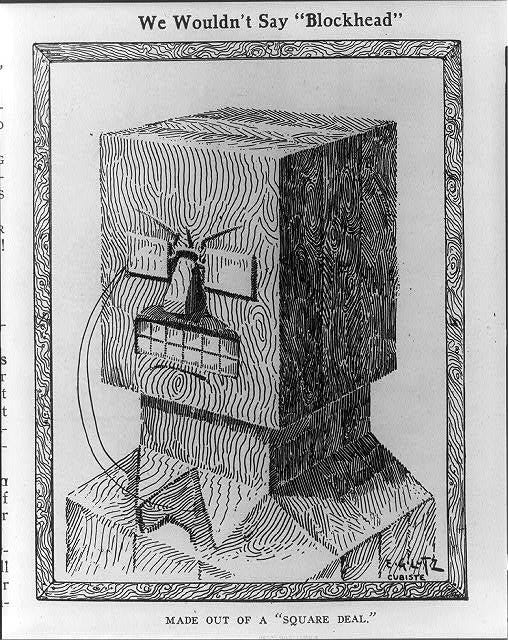
And so, in June, President Roosevelt began seeking his advisors' counsel, both to investigate the facts of the strike, and to offer potential avenues for ending it. This process continued for months, with Roosevelt being pulled in all directions by the Commissioner of Labor, the Attorney General, the Secretary of War, the miners, and the operators. Finally, in October, Roosevelt – who was confined to a wheelchair due to a serious injury from a trolley accident – called a conference with representatives for all parties. He proposed that in exchange for ending the strike immediately, he would create and support an independent commission that would investigate and offer a compromise. Mitchell and the UMW refused because they did not trust the coal operators to hold up their end of the bargain. The conference ended without having reached a solution. At this point, the situation was so dire that Roosevelt considered nationalizing the mines.
Roosevelt and others – including former president Grover Cleveland, who had agreed to assist – still believed an independent commission was the best solution. As in 1900, it was J. P. Morgan who would step in to help craft the solution, in no small part to protect his own interests. He and Secretary of War Elihu Root worked together to develop a proposal with concessions to the concerns of each side. Miners were to return to work while the commission investigated. Each side was to present their case to the commission independently so that the operators could continue to say they were not recognizing or working with the union. The commission would have representatives and experts in multiple fields. The UMW was permitted to set some ground rules. Once all parties had agreed, Roosevelt publicly announced the commission. On October 23, the Anthracite Coal Strike ended, after 163 days of work stoppage.
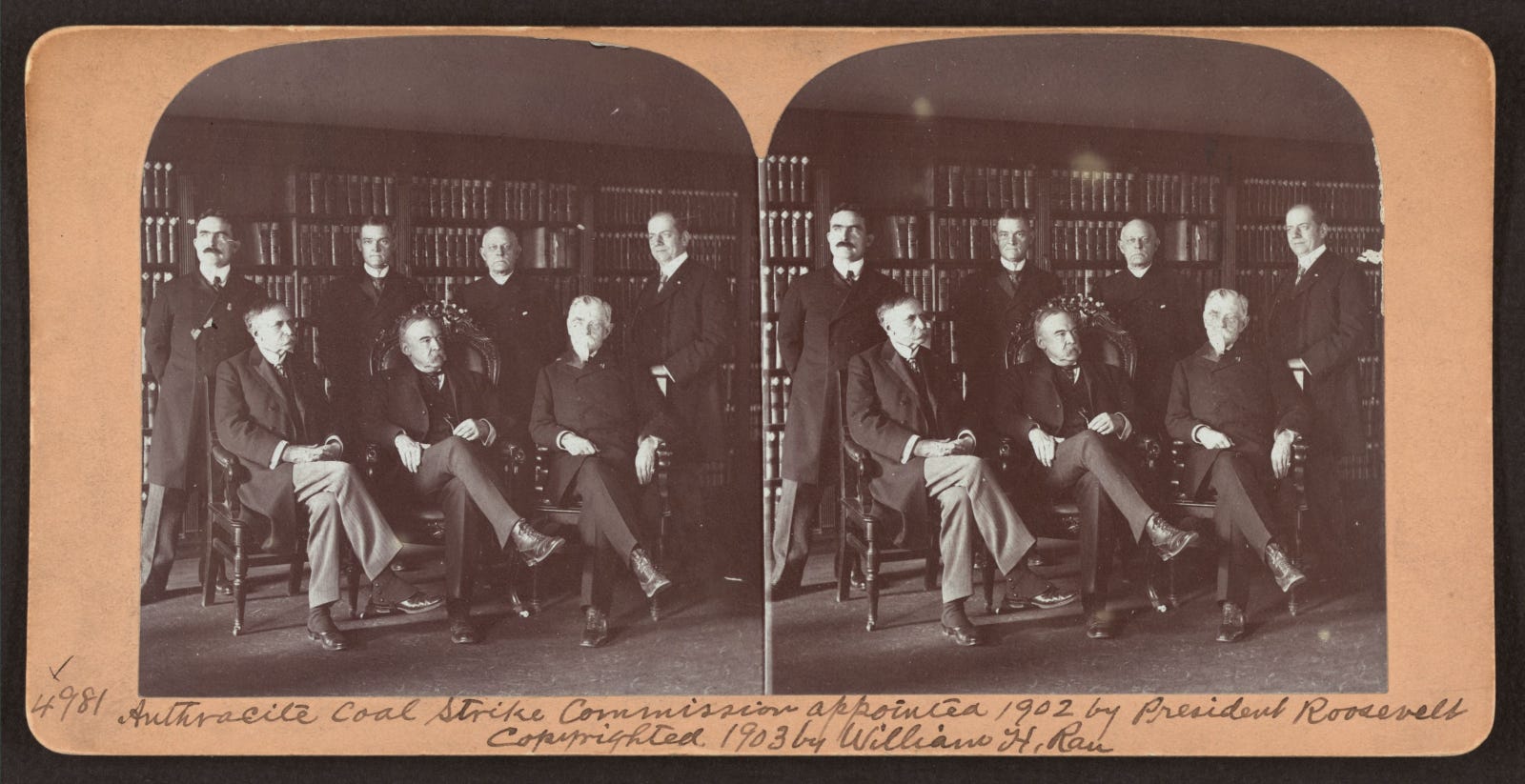
The commission comprised of seven men, representing expertise in mining, business, sociology, and law. The commission worked for three months, interviewed more than five hundred people, and produced more than ten thousand pages of testimony. They also collected data on wages and the cost of living from the Department of Labor. George Baer made closing arguments for the operators and Clarence Darrow for the miners. Ultimately, the commission found the best course of action was to split the difference between the demands of the miners and the operators. Miners had asked for workdays to be reduced from ten hours to eight – the commission recommended nine. They asked for a twenty percent wage increase – the commission recommended ten percent. They demanded recognition of their union – the commission recommended a permanent arbitration board of six men, three from each side. Both sides agreed to all terms, and President Roosevelt enforced them.
The Anthracite Coal Strike was a major turning point in both the labor movement and the role of government in public life. Despite winning only a compromised version of their initial demands, organized labor generally saw the results of the mediation to be a massive victory, especially in the long term. Membership in both the United Mine Workers and other unions skyrocketed yet again, with workers feeling that unions could not only represent their interests but that their efforts could prove successful. President Roosevelt, too, felt that the results were fair, just, and successful. He believed it was the government’s duty to act on behalf of the public above all else. Developing the power to mediate these kinds of disputes was paramount. “I made every effort to get the two sides to agree. When I failed, I decided that I would act myself. I held that where the public necessity was national and imperative it became the duty of the Chief of the Nation to act,” he explained in 1916.
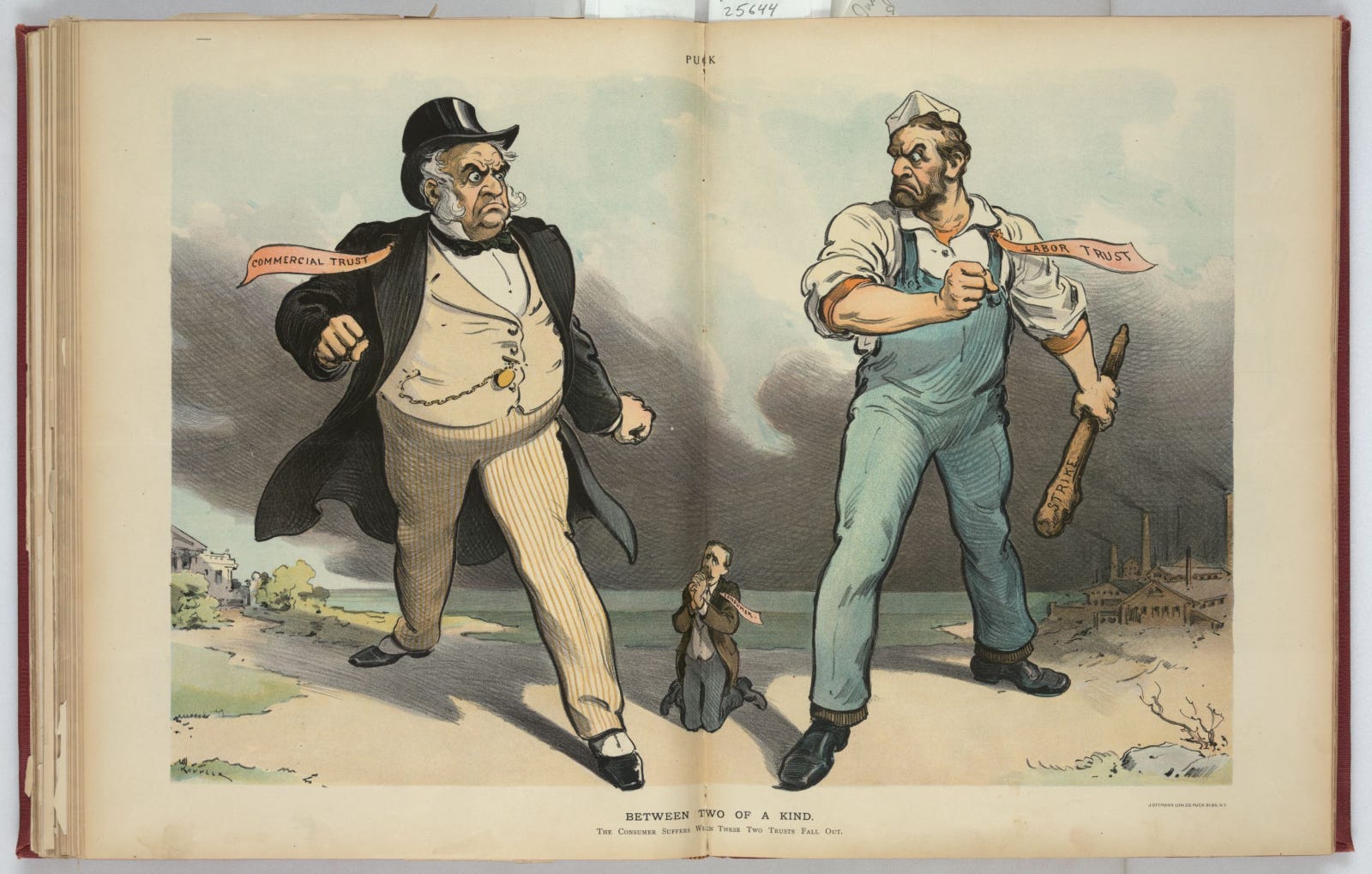
Great write-up. I love the political cartoons.
Do you think this set the stage for his participation in mediating the Russian/Japan dispute at the Portsmouth Treaty? Both parties requesting his involvement?
As far as labor disputes go, in those days businesses were more monopolistic, privately held, less efficient, susceptible to scabs, more violent, and able to withstand long strikes. Today, publicly held companies are run on a thin margin, have global competition, a sophisticated labor force, and no history of the impact of strikes in the corporate brain. Since the 70s, I have been involved in a few. The impact to both sides is harsh. Reagan was one of the first to play the National security card when he shutdown the air traffic controllers.
My favorite resource these days is to look up oral interview transcripts from those interviewed in the 70s. It gives you a first-hand look into the era.
Maybe some similarities today with Trump going to the Middle East and diplomacy. Both Republicans born in New York City. Both married more than once. Both almost celebrities outside of being president and larger than life