

by Rachel Lane
We all know that Theodore Roosevelt was a great horseman, but you might not know just how important horses were to Roosevelt.
Horses featured prominently throughout Roosevelt’s life from Little Texas, the horse Roosevelt was riding when he led the charge up Kettle Hill during the Spanish-American War, to Bleistein, the horse Roosevelt “liked best, because of his good nature and courage,” during his time in the White House.
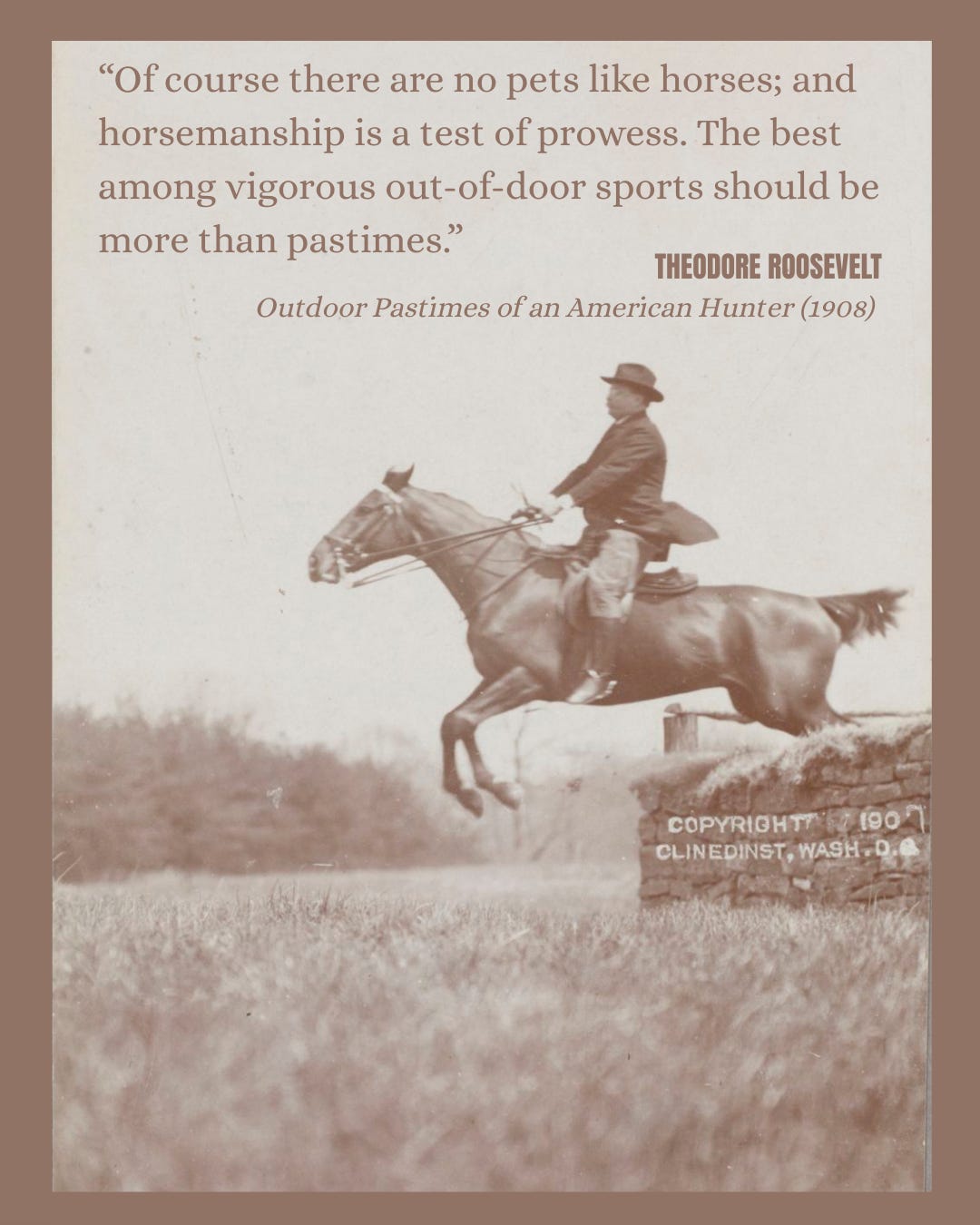
Today’s #WednesdayWisdom, which comes from the 1908 edition of Outdoor Pastimes of an American Hunter, speaks to Roosevelt’s love of horses: “Of course there are no pets like horses; and horsemanship is a test of prowess. The best among vigorous out-of-door sports should be more than pastimes.” And for Roosevelt, it was certainly true that horsemanship was more than just a pastime!
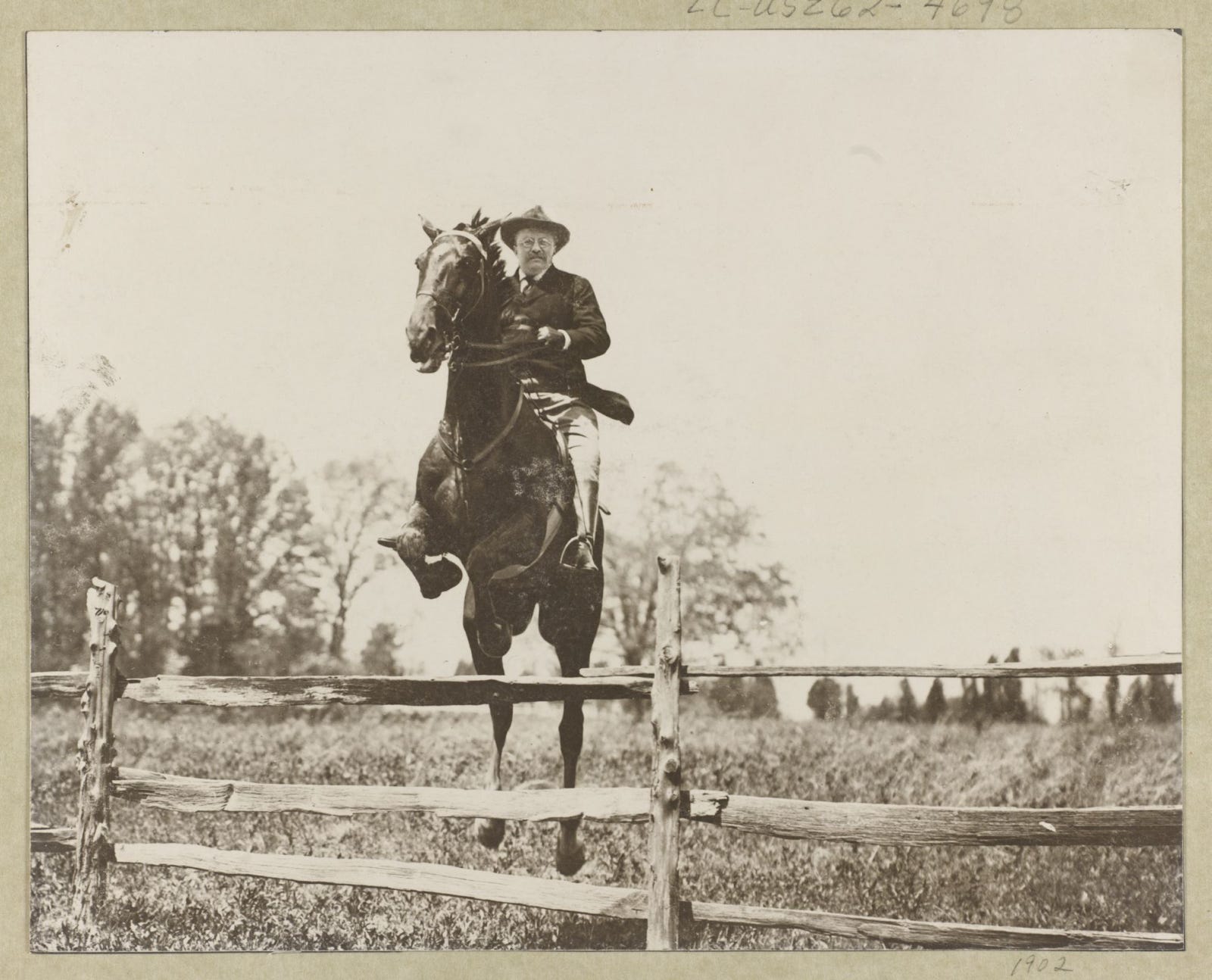
He was the first president to be photographed while jumping on horseback in a series of twelve photographs taken on May 17, 1902 at the Chevy Chase Club. The photograph above Roosevelt particularly liked, calling it “the best picture I ever had taken or expect to have taken” and distributing copies of the photograph to cabinet members.
As one contemporary source noted, the photograph was “taken in 1-2,000 part of a second,” which was considered high-speed at the time and was used for photography of sports, and yes, galloping horses. One child who observed Roosevelt high jumping that day reported, “I tell you, but I never saw a president ride like that!”
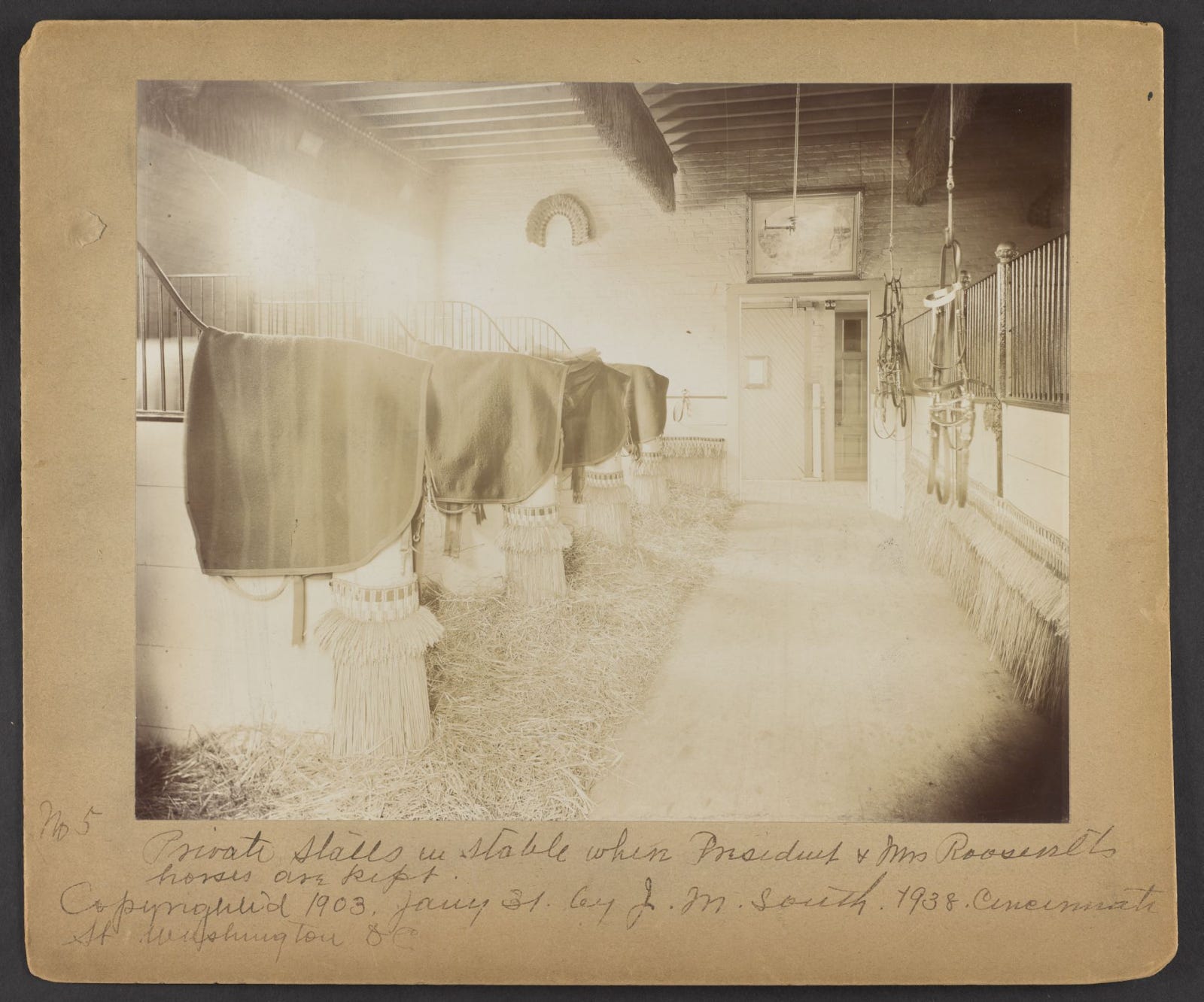
Roosevelt was also the last president to use the White House stables for his entire term as William Howard Taft converted the stables into a garage for automobiles in 1909 shortly after assuming office. In 1911, a new brick garage located off the White House grounds was built. Roosevelt reportedly said when offered an automobile, “The Roosevelts are horse people.”
For Roosevelt, horses were an important component of the strenuous life. In another chapter of Outdoor Pastimes of an American Hunter, he wrote, “To ride a horse over rough country after game always implies hardihood and good horsemanship, and therefore makes the sport a worthy one.”
In addition to prizing horsemanship in himself, he wanted the entire family to be good equestrians, including his nephew, William Sheffield Cowles, Jr. And Roosevelt spent plenty of time riding with Edith and the children, regularly mentioning riding horses in letters to family and friends.
But despite his best efforts, Roosevelt couldn’t make all of his children good equestrians. As Roosevelt wrote in a 1911 letter to his sister Bamie, “[Quentin] rides Edith’s huge horse with much enjoyment, but with none of the natural taste for horsemanship that the other three boys have.”
Even late into his life when all Roosevelt felt he could stand was a “ ‘clergyman horse’ of the safest type,” he was riding horses because they enabled him “to go about the country and see the woods and wildflowers,” as he wrote in a 1918 letter to Kermit.
Read more about Roosevelt’s reflections on horses and horsemanship in Chapter XI: At Home of Outdoor Pastimes of an American Hunter (1908) here.