
Wednesday Wisdom
Promises Made, Promises Kept

#WednesdayWisdom
While on his “Great Loop Tour” in 1903, President Roosevelt made several stops in his old stomping grounds of North Dakota. He made brief remarks at each stop, whizzing through as he made his way along what would be a nine-week-long journey of fourteen thousand miles, with stops in twenty-five states.
In Fargo, on April 7, Roosevelt delivered an address regarding American actions in the Philippines, where North Dakota had sent many troops during the Spanish-American War.
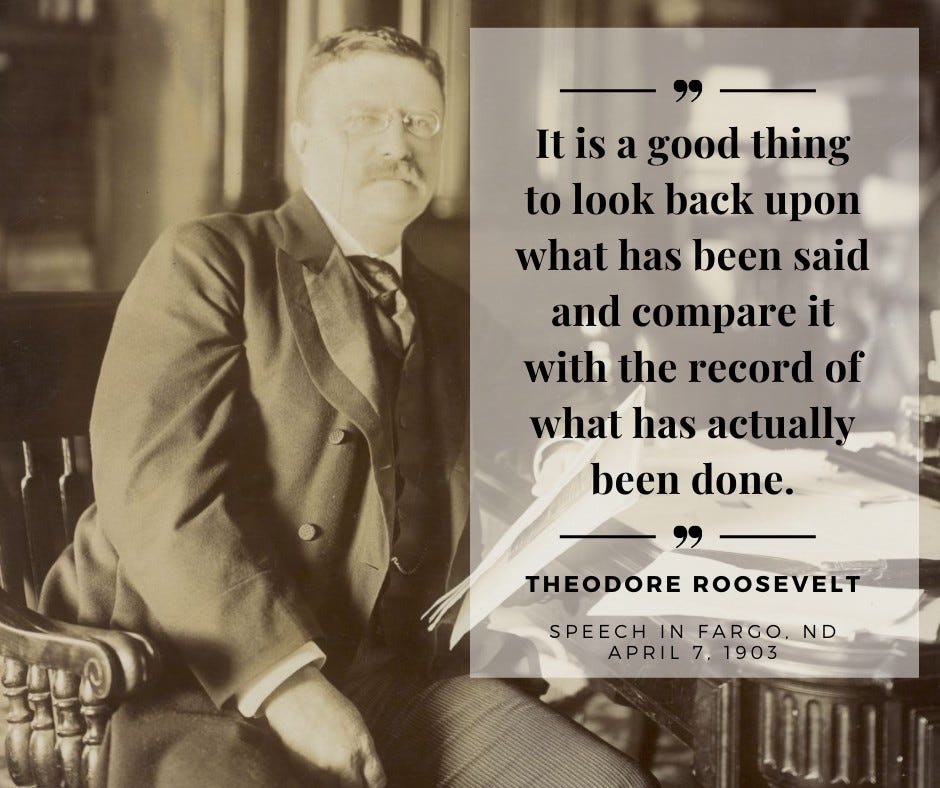
Beginning by extolling the soldiers of North Dakota and Minnesota, Roosevelt moved on to justifying the actions of the United States military in the Philippines, which had come under harsh criticism from some. As far as Roosevelt was concerned, they had been promised for a reason, and the fact that those promises were kept was a good thing. Roosevelt argued that the promises made by President McKinley regarding the military and civil administration of the Philippines - specifically, that the insurrection would be put down and that free and fair democratic rule would be implemented - had been kept. The brutal force used to achieve this was necessary, said he, because things would have been worse had order not been restored.
“It is a good thing to look back upon what has been said and compare it to what has actually been done,” said the president. “If promises are violated, if plighted word is not kept, then those who have failed in their duty should be held up to reprobation. If, on the other hand, the promises have been substantially made good; if the achievement has kept pace and more than kept pace with the prophesy, then they who made the one and are responsible for the other are entitled of just right to claim the credit which attaches to those who serve the Nation well.”
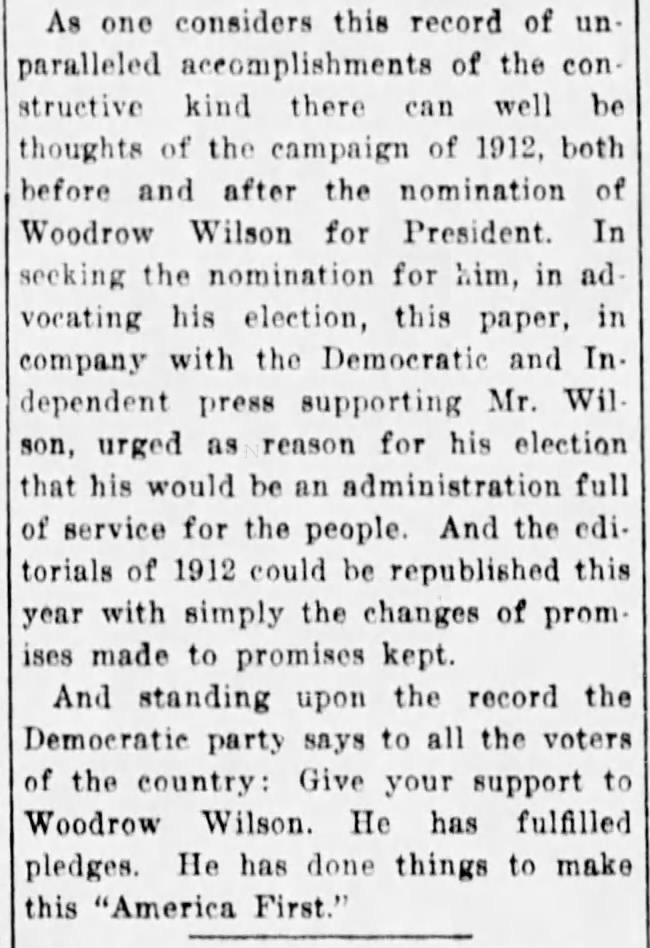
Although he didn’t say the exact phrase, Roosevelt was evoking the theme of “promises made, promises kept,” which remains an important political tool today. It perhaps most associated with President Donald J. Trump, who has used it frequently. But versions of the phrase can be found as far back as 1879, and it was being used as a commercial advertising slogan by the turn of the twentieth century. By 1916, it was being used as a political slogan by supporters of Woodrow Wilson - who also campaigned on an “America First” slogan, as Trump would do a century later.
Read the full address by Roosevelt in Fargo in our digital library: https://www.theodorerooseveltcenter.org/digital-library/o289707/
Please take the time to send this week's "The Bully Pulpit" Wednesday Wisdom via e-mail to all of our National Senators, our National House of Representatives, the Pentagon, the Supreme Court Justices, and the President. The words that former president Theodore Roosevelt spoke and lived by, need to read by those whom have been elected to serve our nation. 1. To remind them of their political responsibilities are serve ALL Americans; and 2. To remind them of the political promises they made, and whether their promises were "promises kept." Thank you.