
Tracking Down Sources
A Peek Behind The Curtain

Today’s post is going to be a bit different than usual. Instead of delving deep into an aspect of Theodore Roosevelt’s life and times, this post will be a look behind the curtain of our research process.
We’ve gotten a request to explain how we track down sources, so we decided to devote some time to talk about what it takes to put together a post as well as add information to records in the digital library. If there is anything about our process you’d like to know more about in a future post, let us know!
As any historian could tell you, research is an iterative process. We are constantly learning more about Theodore Roosevelt every day. Part of this discovery means updating—and if needed, correcting—previous material we’ve created as we learn more.
We believe this is an essential step in our goal of creating a comprehensive archive of historic materials by and about Theodore Roosevelt, including letters, cartoons, photos, films, scrapbooks, diaries, newspaper articles, and more.
Although there are many different ways we could approach this post, we decided to tackle this topic of tracking down sources and updating and correcting records by looking at some specific examples in the digital library.
Photograph of Theodore Roosevelt’s Children with Pets
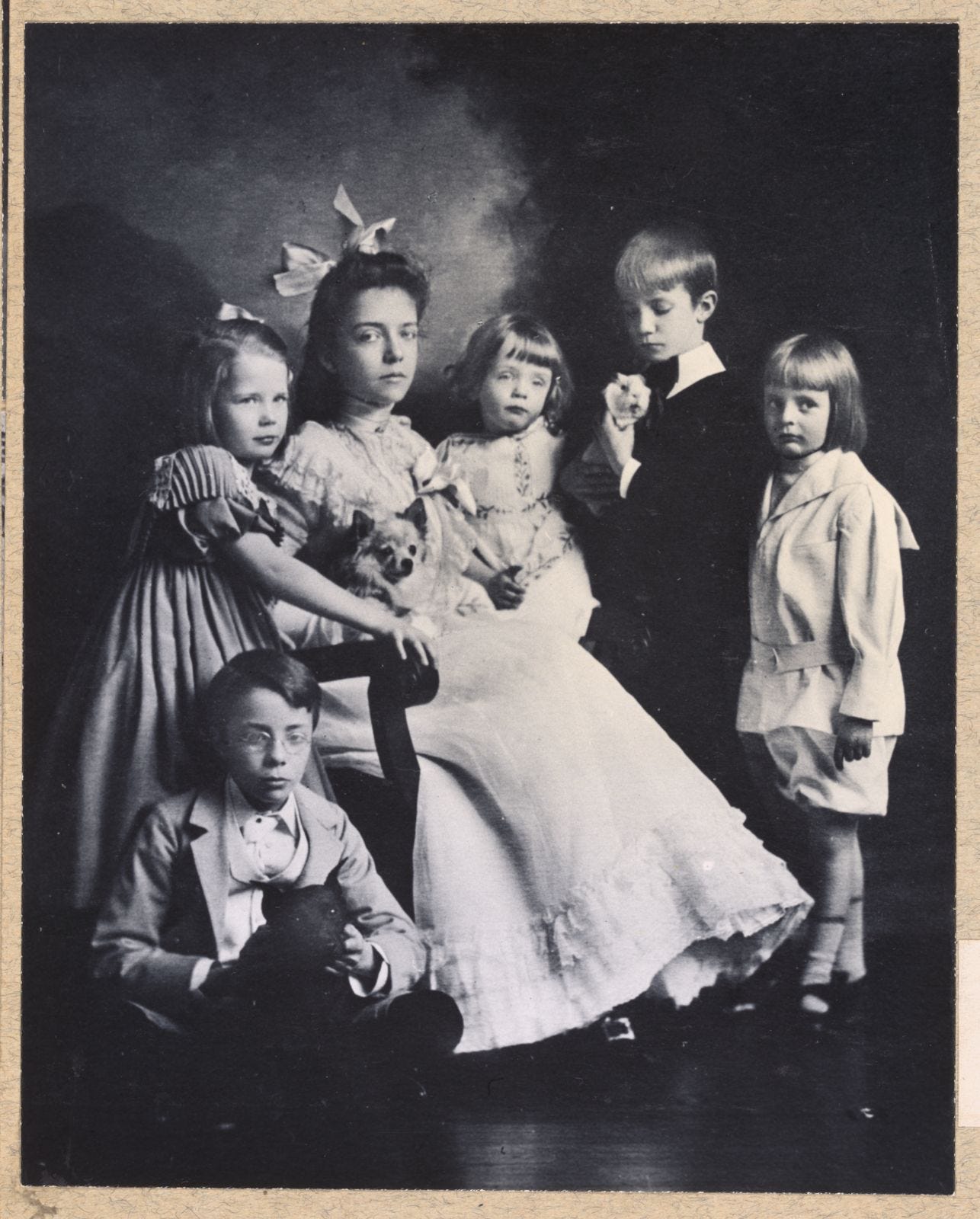
When we create metadata for items in the digital library—what we call cataloging—we include the best information we have at the time. We work hard to track down the exact creator, recipient (if applicable), date of creation, and so forth.
In some cases, we don’t have enough information to pinpoint an exact date, so we include a range based on internal clues. It could be a relatively large range, such as 1850-1900, or it could be a smaller range as in the case of something that we know was written during Roosevelt’s presidency from 1901 to 1909 but are unsure beyond that.
The photograph above of Roosevelt’s children and their pets is a good example of how we update information in the digital library. When it was originally cataloged, the best information we had at the time indicated the photograph had been taken while Roosevelt was governor of New York or vice president. Thus, the date range chosen was 1899-1901.
But while researching for our post about guinea pigs, we discovered new information and were able to give the photograph an exact date—February 17, 1900—which we updated accordingly in the digital library.
As is clear, the original information was accurate (taken between 1899 and 1901), but we were able to include more specific information upon further research. After all, February 17, 1900 does fall within the range of 1899-1901!
Teddy Roosevelt for President Campaign Poster
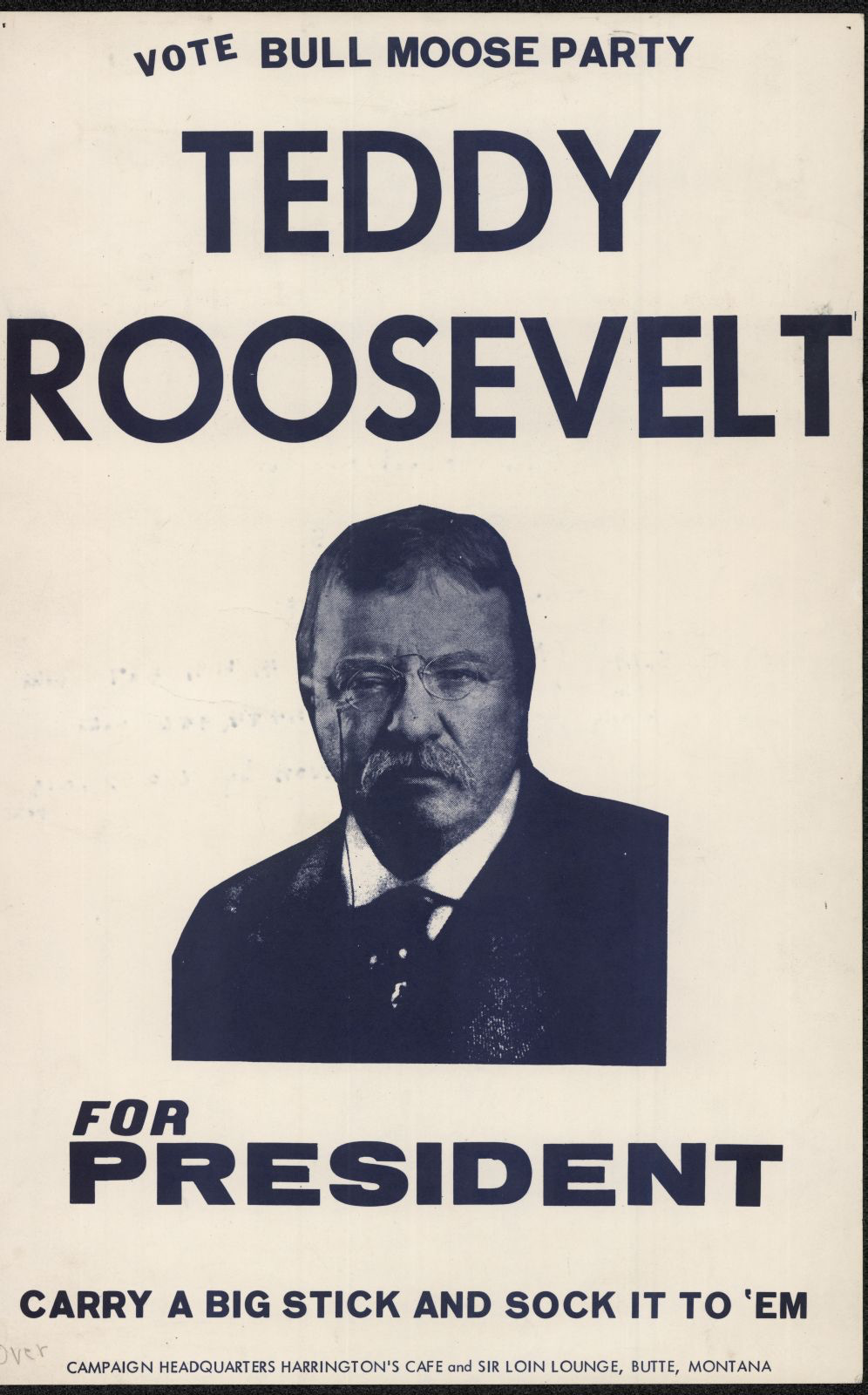
In other cases, though, we need to correct something we previously identified wrongly. If you’ve been subscribing to our Substack for at least a month, you likely saw the image above in a Friday Fun post about Roosevelt’s nicknames.
Unlike the post about guinea pigs where we discussed the photograph of Roosevelt’s children and their pets in detail, we didn’t discuss the poster above at all in the post. Rather, it was just intended as a good illustration of Roosevelt’s nickname as “Teddy” depicted in memorabilia.
As a result, we didn’t delve into any additional research about the poster and merely included the citation for the poster, which identified the date of creation as 1912 and the poster as from Roosevelt’s Progressive Party campaign. This is incorrect as we have since learned thanks to one of our attentive readers.
One of the clues about the incorrect date is that the cafe and lounge mentioned at the bottom of the poster as the campaign headquarters—Harrington’s Cafe and Sir Loin Lounge—didn’t open until the 1960s. (And one of the owners of that cafe and lounge wasn’t even alive when Roosevelt died in 1919!)
As we discovered in our research when we started to investigate the cafe and lounge, Harrington’s Cafe was a local favorite in Butte, Montana established by husband and wife Bill and Rita Harrington in the late 1950s. The Sir Loin Room appears to have been added in 1964, according to an advertisement in the June 20, 1964 edition of the Montana Standard.
While it seems like the room was open starting in June, the official grand opening was in December 1964. By the next year, the dining room and lounge were well-established and appeared in an advertisement in the Montana AFL-CIO, a trade center union.
Although we tried to track down why this poster was created in the first place, we didn’t have much luck—although we know it isn’t the only one. We’re aware of at least one other piece of fake campaign memorabilia, but there might be more!
Even though the poster isn’t from Roosevelt’s time, he did visit Butte, Montana in 1903 while he was president and received two commemorative gifts from the people of Butte—a cup and a vase.
Letter from Theodore Roosevelt to Lincoln Steffens
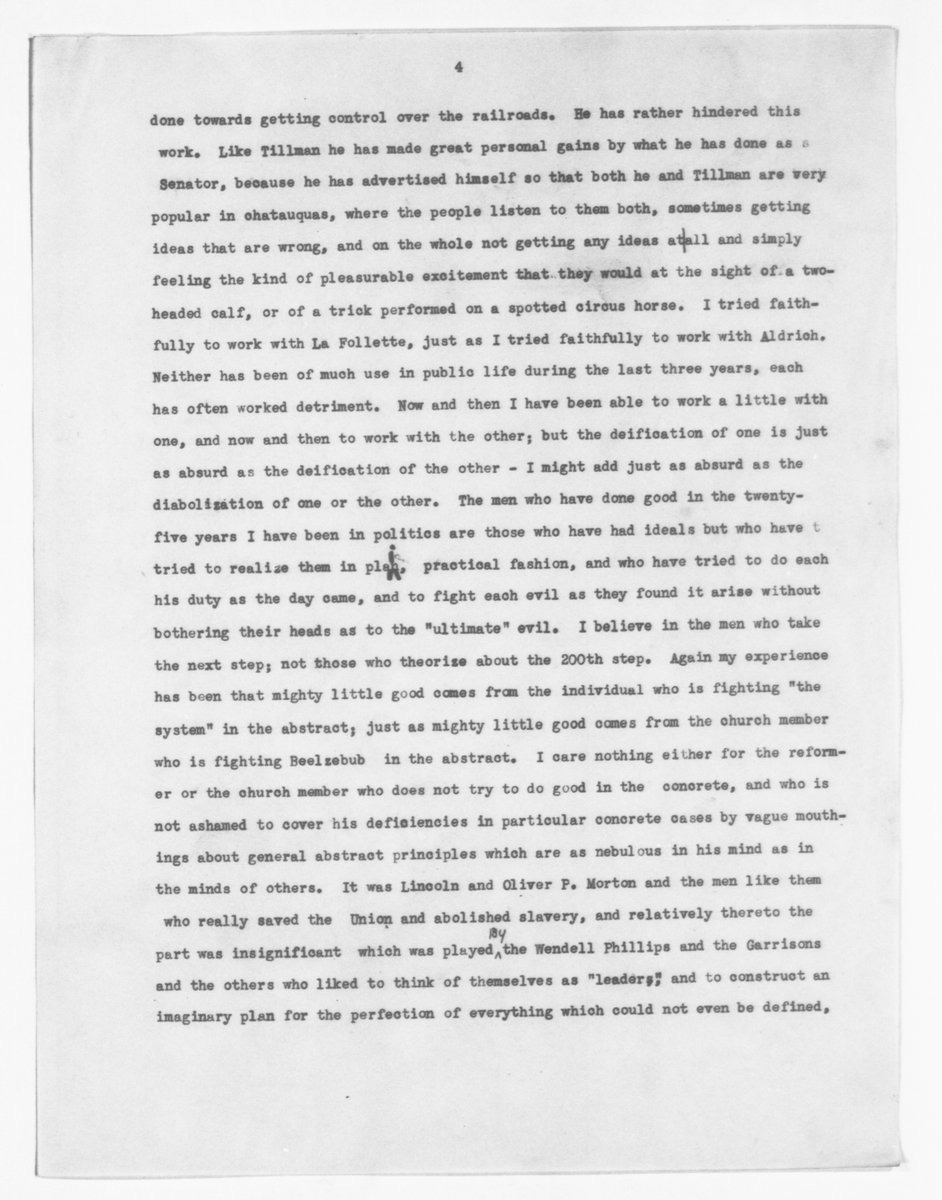
As a final example, the letter above depicts both our process of preliminary metadata as well as provides a sneak peek into the research process for our Substack posts.
If you click on the hyperlink to view this letter, you’ll see that it has limited metadata, or information about it. That’s because it hasn’t yet been fully cataloged. Because it doesn’t have a description or FAST subject headings yet, you have to read through the letter yourself to discover information about it.
That means if you were trying to search about Roosevelt’s opinions regarding effectiveness in public life or his thoughts on Senators Ben Tillman or Bob La Follette in the digital library, this letter wouldn’t appear as of right now. (This is one of the many reasons full cataloging is so valuable!)
But it’s still possible to stumble upon the letter—i.e., it’s available online and not tucked away in a physical archive—as we did while reading through letters from Roosevelt to Steffens because it’s published in the digital library.
As you’ve likely noticed, we cover quite the gambit of topics in our Substack, and each piece presents a new opportunity for us to search the digital library and other resources like digitized newspapers or historical records to tell a new story about Theodore Roosevelt.
In some cases, we know exactly what we want to write about as in the case of our post about Roosevelt’s extracurricular activities at Harvard University. In those instances, it’s easy to pinpoint which search terms to use and which sources to pinpoint—like Roosevelt’s diary—in the digital library.
But in other cases, we discover ideas for posts just from spending time in the digital library. The letter above is an example of this approach. As mentioned above, I came across this letter and its contents by happenstance.
While reading through the letter, I discovered a true gem of a phrase Roosevelt penned—“I believe in the men who take the next step; not those who theorize about the 200th step”—which became our most popular Wednesday Wisdom post thus far.
Because I found the quotation so poignant myself, I figured it would resonate with our audience, and it became the inspiration for a full post. And while I am most proud of running across this particular quotation because I feel it does such a great job at encapsulating Roosevelt, it’s hardly the only example.
Another recent post about Roosevelt as an old school naturalist was inspired by coming across Roosevelt’s letter to Frank Chapman in which the former expresses his wish that he could devote himself exclusively to work as a naturalist.
Of course, these three examples are just a small sampling of our research process. There’s many more we could include in future posts if there’s interest. Just let us know!