
"A Great Many Sharks Here"
Theodore Roosevelt and Sharks

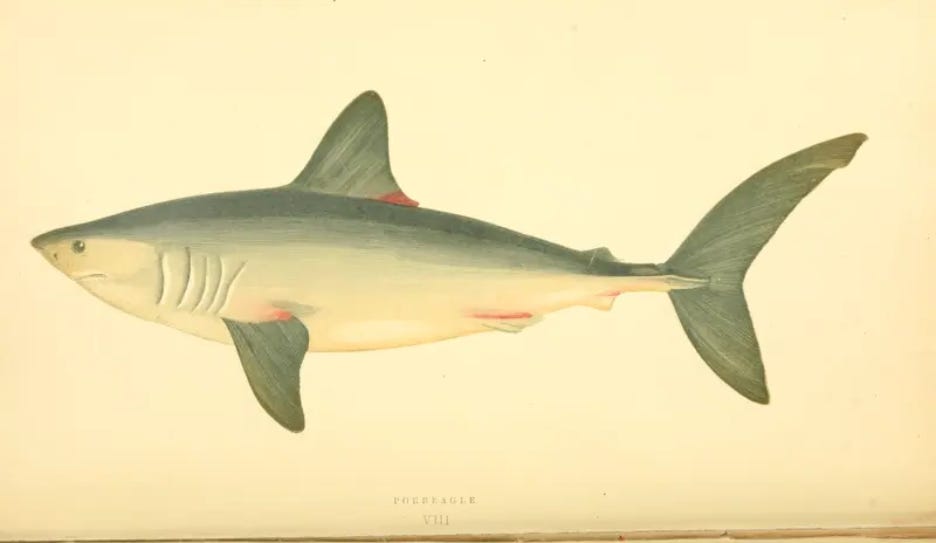
In honor of #SharkWeek, we’re devoting this Friday Fun post to Theodore Roosevelt and sharks. In case you missed them, we’ve also covered Roosevelt and other animals in previous posts, including guinea pigs, bees, alligators, and our personal favorite, snakes.
Perhaps one of Roosevelt’s earliest encounters with a shark (if not the earliest) was when he was ten years old and headed to Europe with his family in 1869. As he noted in his diary when they were at sea on May 19, “Warmer. Read and played. We saw two ships one shark [several] gulls and the boatswain (sea bird) so named because its tail feathers are supposed to resemble the warlike spike with which a boatswain (man) is usually represented.”
The next example we found of Roosevelt encountering sharks came from his time as a Rough Rider. While he and his men waited to depart for Cuba in Tampa Bay, Roosevelt mentioned a close encounter his men had with a shark in a letter to his then six-year-old daughter Ethel on June 10, 1898: “This afternoon we let the men swim, and hundreds went into the water; but there are a great many sharks here, and finally one big fellow came so close that the men got hastily back into the boats.”
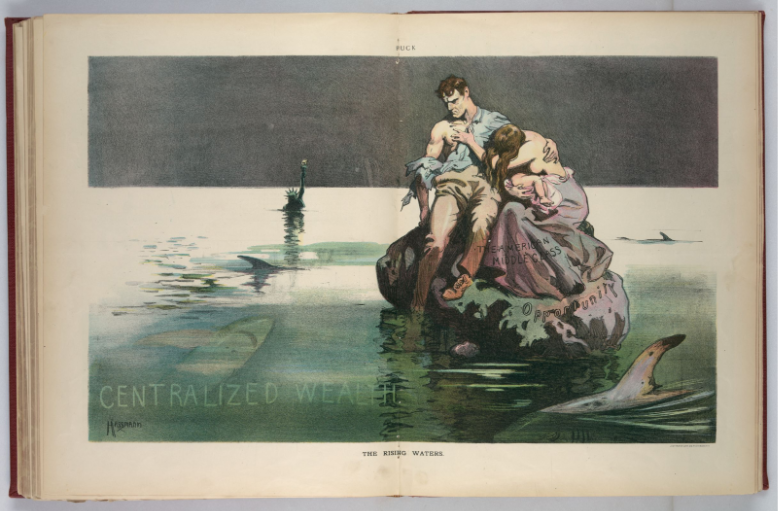
Twenty years later, Roosevelt wrote to his son Quentin from Aden, Arabia (now Yemen) in 1909 right before departing on his African expedition about several men who had more than a close encounter with sharks. (As a side note, the entire letter is worth reading, as Roosevelt delightfully describes feeding a baby gazelle with a bottle!)
“We passed two boys each of whom had lost an arm, and a man who had lost a leg. I made inquiries and found that the sharks were very bold and fierce in the harbor and carried off a good number of people; and as there were plenty of sharks in the fish market it was evident that the people of Aden in their turn ate many of their enemies!”
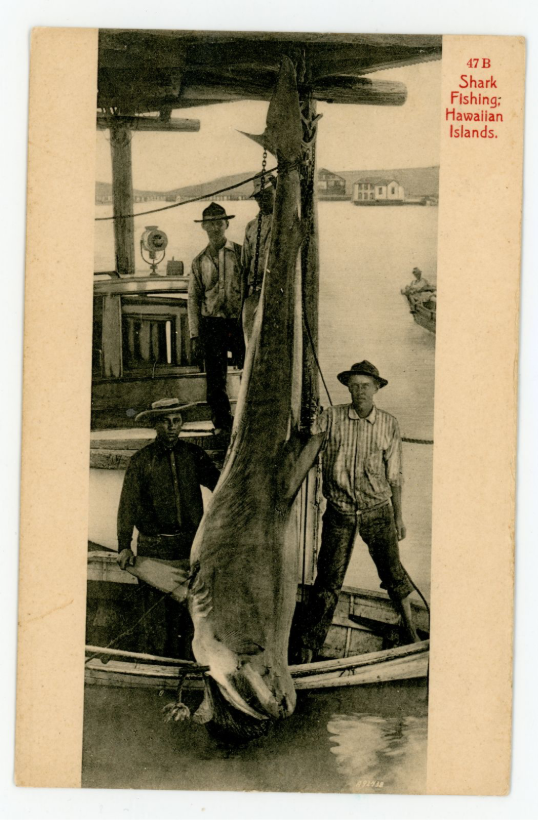
One of Roosevelt’s last personal encounters with a shark was in 1915 when he visited one of the bird reserves he helped to establish as president. When describing the shallows of the channel, Roosevelt wrote, “When a swim was proposed as our boat swung at mid-anchor in mid-channel under the burning midday sun, Captain Sprinkle warned us against it because he had just seen a large shark.” Although Sprinkle knew of very few men killed by sharks, he knew of two in the Mississippi Sound and didn’t think it was safe.
While we don’t know if Roosevelt personally encountered any sharks after this 1915 trip, we do know he corresponded and later went hunting for manta rays with Russell J. Coles, a well-known ichthyologist, late in his life.
And unsuprisingly, sharks were a common topic of conversation between Coles and Roosevelt. In one of Roosevelt’s first letters to Coles, written in 1916, he expressed his desire for Coles to write a book about sharks. We’ve included Roosevelt’s quotation in full below.
“Nobody has given us anything worth while about sharks, whereas the Salmon and Tuna and other ordinary fish have been written to death. You have the gift of expression, and the gift of narration. Why will you not write a book known by some such title as ‘Dangerous Game of the Sea’, giving us your full experience with sharks, their habits, about the danger of fishing for them, and about everything concerning them. . . . A book of this kind would be the best contribution to both sport and natural history than any human being could now write.”
Although he never wrote the book Roosevelt wanted, Coles did write to him two months after the United States joined World War I about his proposal to use shark meat as food to assist with the war effort. The proposal even made it to the federal food administrator, later president Herbert Hoover, as one newspaper article noted.
As far as Roosevelt’s manta ray—what he called “devilfish”—hunt with Coles in March 1917, Roosevelt talked about shark behavior with his fellow fishermen, including Coles. (If you missed our previous post about the manta ray hunt, you can check it out here.)
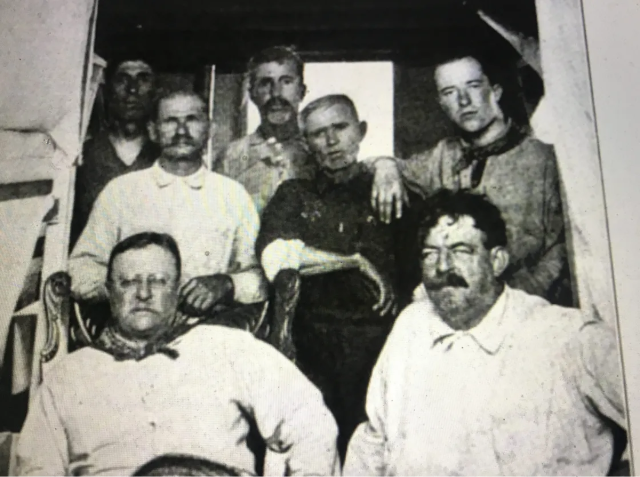
As Roosevelt reported in an appendix to A Book-Lovers Holidays in the Open, the fishermen told Roosevelt that sharks would attack adult loggerhead turtles and green turtles. As Roosevelt wrote, “I knew that sharks gulped down small turtles whenever they met them, but I had not realized that they attacked big ones.”
Coles gave a specific example of one adult turtle he had found that had been attacked by a shark, which he believed to be a white shark. There was a semicircle two feet long and one foot deep torn out of the side of the turtle. (The shells of loggerhead turtles typically measure three feet although some large ones can reach four feet.) As Roosevelt said, “[That] gives a good idea of the width and depth of the shark’s bite.”
Roosevelt had such a good time with Coles and the other fishermen that he planned a trip the following year to go shark hunting. Initially, Coles hoped Roosevelt could join him at Cape Lookout, North Carolina in June 1918, but the month finally decided upon was March 1919, as Roosevelt confirmed in an October 1918 letter.
Of course that trip never happened since Roosevelt died on January 6, 1919. And one of the very last letters Roosevelt likely received before his death was a letter dated January 2, 1919 from Coles discussing more details about the trip, including his hope that Roosevelt’s wife Edith could join as well. (One of the last letters Roosevelt wrote was to Coles on January 1, 1919, and he mentioned the March trip.)
We’ll close with one of our favorite examples of Roosevelt’s mention of sharks in his writings, one that we think is particularly apt for Shark Week. As he wrote in what is considered American Ideals II, also called Administration—Civil Service, “Even the most enthusiastic naturalist, if attacked by a man-eating shark, would be much more interested in evading or repelling the attack than in determining the precise specific relations of the shark.”